

Turning the Tide: Nigeria’s Bold Bid to Curb Plastic Waste through Industry Reform
Written By Maxine Ansah

|
Getting your Trinity Audio player ready...
|
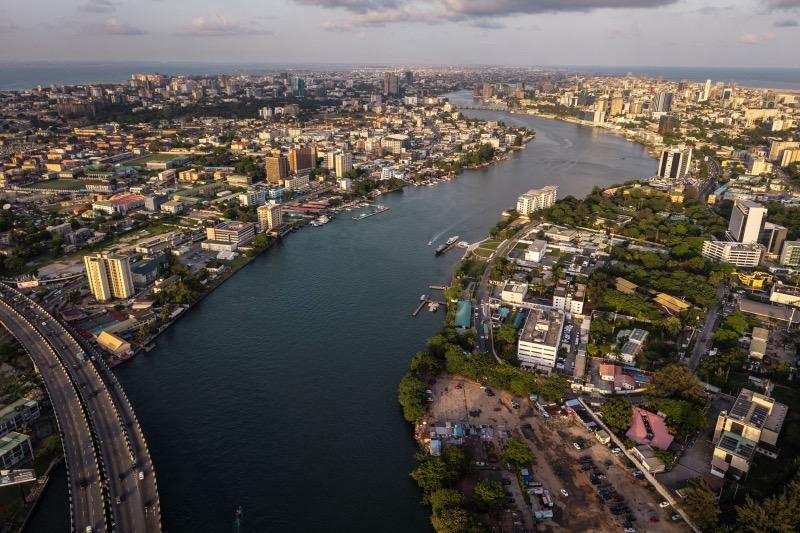
Walk down a side street or along a canal in Lagos, Nigeria’s bustling commercial capital, and the sight is hard to miss: empty water sachets, used takeaway containers and other discarded plastic packaging littering the environment. This visible clutter is a symptom of a wider plastic pollution crisis affecting Africa’s most populous nation.
With a population of over 227 million, Nigeria faces mounting pressure from unchecked plastic waste. Most of it is either burned, dumped in the open or ends up in rivers and other water bodies, overwhelming already stretched municipal waste systems. But change may be on the horizon. Within the next few months, Nigeria is set to roll out a new set of regulations that will shift the responsibility for plastic waste management from the state to the companies that produce and profit from plastic packaging.
These forthcoming rules are based on the principle of extended producer responsibility; a model pioneered in Europe more than 30 years ago. With support from the United Nations Environment Programme (UNEP), Nigeria has crafted regulations that will require producers, importers and distributors of plastic packaging to fund and participate in waste management efforts. Packaging accounts for a staggering 63 per cent of the country’s plastic waste, according to the National Guideline for the Implementation of the Extended Producer Responsibility Programme on Packaging (Plastic).
“In essence, extended producer responsibility shifts the burden of waste management to the producers, adopting the polluter pays principle,” explains Innocent Barikor, Director General of the National Environmental Standards and Regulations Enforcement Agency.
The regulations will compel companies to fund non-profit producer responsibility organisations, which will spearhead efforts to curb pollution from packaging. These organisations will also push for alternatives to plastic, launch container reuse schemes and ensure plastics are easier to recycle. Additionally, producers will be required to use a minimum amount of recycled material in their packaging.
UNEP has been closely involved in the initiative, offering technical guidance on how best to structure and implement the regulations. The project has received financial backing from the Government of Japan and the Norwegian Retailers’ Environment Fund.
Barikor says more than 40 food and beverage companies, alongside representatives from the plastics industry, have already joined the Food and Beverage Recycling Alliance, a national producer responsibility organisation. Some companies are making visible changes: switching from coloured to clear plastic bottles for easier recycling, and using up to 50 per cent recycled content in packaging.
Still, challenges abound. Many producers are unaware of the new regulations and government capacity to track compliance remains limited. “We won’t be shy to say that we need more capacity and more support for logistics in order to make this happen,” Barikor admits. “However, with collaboration and support from other federal ministries, departments, private and international organisations, we are confident we can make a meaningful impact.”
The stakes are high. By 2029, Nigeria hopes to significantly increase the collection and recycling of plastic products. One target is for bottles made from polyethylene terephthalate (PET), a common plastic, to contain at least 25 per cent recycled material, up from the current average of 3 per cent.
Nigeria joins a growing list of countries leveraging extended producer responsibility to combat plastic pollution. France, which introduced such laws in the early 1990s, has seen success. Today, it recycles 67 per cent of household packaging and 27 per cent of plastics, according to Citeo, a leading French producer responsibility organisation. That is well above the global plastic recycling rate of just 9 per cent, as reported by the Organisation for Economic Co-operation and Development (OECD).
French regulations have also driven innovation. Businesses are now investing in refill programmes, more sustainable product designs and alternative materials. Experts say Nigeria could see similar outcomes if the programme is well implemented and integrated with broader policy changes.
“There is no single solution to plastic pollution,” says Elisa Tonda, Chief of UNEP’s Resources and Markets Branch. “But extended producer responsibility is one of several important tools because it helps channel much-needed financial resources and business solutions into addressing this mounting crisis.”
Nigeria’s initiative is part of a global shift. Since 2018, UNEP’s #BeatPlasticPollution campaign has been advocating for a collective and just transition to a world free of plastic pollution. As Nigeria joins this effort with a strong push from industry and regulatory reform, it offers a promising example of how developing countries can lead bold action on environmental sustainability.