

Addiction Stole His Dream. Recovery Gave It Back: Nkumbu’s Fight for a Future
Written By Maxine Ansah

|
Getting your Trinity Audio player ready...
|
Six months ago, Nkumbu was wandering the streets of Lusaka, gripped by self-doubt and spiralling further into alcohol addiction. Today, he stands on the other side of a long and difficult road, having just completed his final medical school exams and celebrated six months of sobriety.
“I still can’t believe it,” says the 24-year-old. “Six months ago, I was wondering if I would ever make it in life. But today, I’m here.”
Nkumbu’s story begins with a dream familiar to many young Africans: to become the first doctor in his family. But the pressures of adolescence and the grip of social anxiety drew him toward alcohol while still in secondary school.
“My first girlfriend, I met her while I was intoxicated, so I thought this really worked,” he recalls.
What started as a coping mechanism quickly became a weekend habit, and by the time he entered university, his dependence had deepened. He dropped out of medical school twice.
Raised by his aunt following the death of his parents, Nkumbu remembers her silence the day he was suspended from school.
“She didn’t say a word on the drive home. That should have been the wake-up call,” he says. “But I had lost all faith in myself.” The drinking worsened, consuming his days and nights, until he walked through the doors of Sanity House.
Sanity House: Building a Community of Care
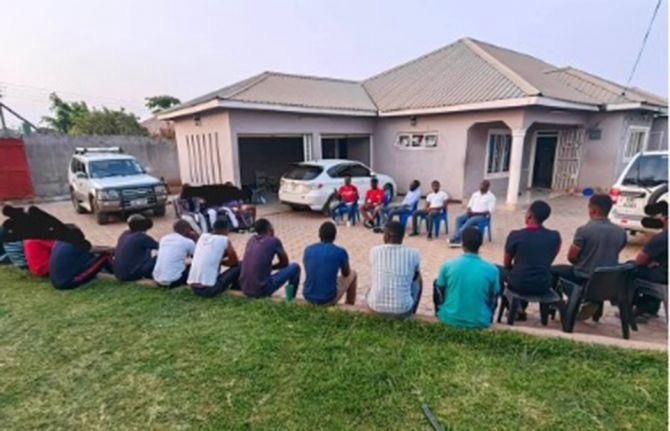
Sanity House, located in Lusaka, offers far more than rehabilitation. It is a place of community, safety and healing for people who use drugs. The centre provides integrated medical, psychosocial and vocational services, creating a supportive environment where clients are not only treated, but mentored. Many of the staff, including House Manager Daniel Mbazima, are themselves in recovery and serve as powerful examples of what is possible.
The work at Sanity House is urgent. A 2022 bio-behavioural survey revealed high HIV prevalence among people who inject drugs in Zambia: 7.3 percent in Lusaka, 21.3 percent in Ndola and 12.2 percent in Livingstone. Routine testing at Sanity House shows that 26 percent of clients who use illicit drugs are living with HIV, compared to the national average of 11 percent (UNAIDS, 2023).
Despite an estimated 30,000 people injecting drugs in Zambia and over 1.3 million people living with HIV, access to harm reduction services remains limited. This is due to stigma, the criminalisation of drug use and insufficient investment in community-led responses. Sanity House stands as one of the few models breaking these barriers by linking addiction recovery with vital health services, including HIV, TB and Hepatitis C prevention and treatment.
The Power of Second Chances
For Nkumbu, Sanity House was more than just a place to detox. It was where he rediscovered his worth.
“The other patients reminded me how great I am. Thanks to them, I began to believe in myself again,” he says.
Now a youth advocate appearing on Zambian television, Nkumbu shares his story to raise awareness about the dangers of substance use among young people. With humour, he speaks of his first love, now a pilot in South Africa.
“Maybe she flew past me,” he laughs. “I’ve got to get myself together first. I’m trending now; maybe she’s even seeing it.”
The statistics are sobering, but so is the transformation that is possible when people receive the right support.
“Rehab is one day at a time. One day turns to ten, ten to a month. And now, six months later, I’m back in class,” he says.
Investing in Prevention, Investing in People
As the world marks the International Day Against Drug Abuse and Illicit Trafficking under the theme “The Evidence is Clear: Invest in Prevention”, UNAIDS is calling for urgent action to decriminalise drug use and scale up harm reduction services. Evidence shows that approaches such as needle exchange, opioid agonist therapy and overdose prevention reduce HIV transmission and improve health outcomes. Yet these interventions remain underfunded and inaccessible in many countries, including Zambia (UNAIDS, 2024).
Daniel Mbazima sees the consequences of underinvestment every day.
“Lasting change requires sustained community support and investment,” he says. “We need more programmes that link addiction recovery with essential healthcare. Stigma is still one of the biggest obstacles. People are afraid to seek help.”
Clinton Kruger, once a client at Sanity House and now a peer mentor, shares a message of hope.
“Recovery is possible. I am living proof of that. All it takes sometimes is one person who believes in you. Don’t give up on us. You are not alone. There is help and there is a way forward.”
A Path Forward
Nkumbu knows just how lucky he is. “I could have caught HIV, or worse. But I didn’t. I’m lucky. And now I get to help others.”
His story is not just about recovery. It is about the power of dignity, community and evidence-based care. As Zambia and the world grapple with rising drug use among young people, the path forward is clear. By investing in prevention, scaling up harm reduction and supporting community-led services like Sanity House, we can build a future where more young people like Nkumbu get the second chance they deserve.