

Madagascar launches $7 million nature-based project to shield coasts from climate shocks
Written By Maxine Ansah
|
Getting your Trinity Audio player ready...
|
Antananarivo – In a significant step towards climate resilience, Madagascar has unveiled a $7.1 million initiative designed to protect its fragile coastal zones by restoring vital ecosystems and supporting sustainable livelihoods in communities already facing the brunt of climate change.
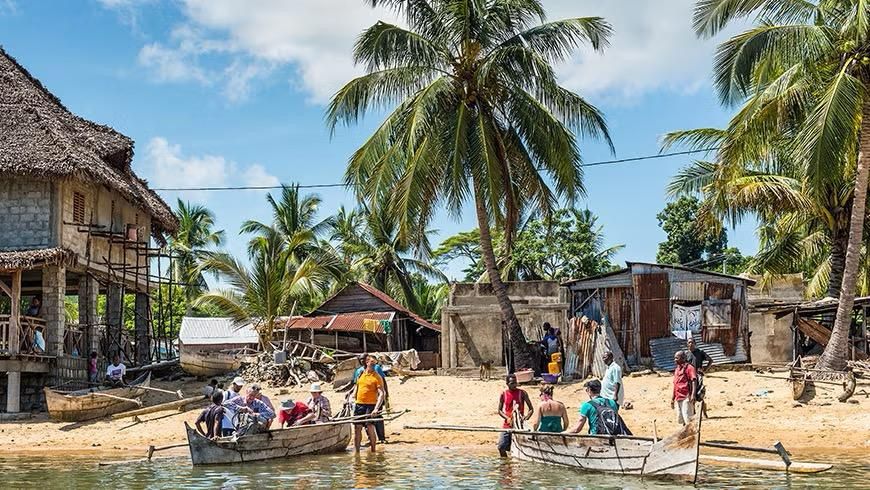
Launched on 15 July at Hôtel Le Louvre Antaninarenina, the project, titled Scaling Up Ecosystem-Based Adaptation for Coastal Areas in Madagascar, will directly benefit nearly 100,000 people across four vulnerable coastal regions: Boeny, Menabe, Diana and Atsimo Atsinanana. These regions, home to rich biodiversity and essential fisheries, are increasingly threatened by rising sea levels, stronger cyclones and coastal erosion.
The Ministry of Environment and Sustainable Development will implement the project, supported by a USD 7.1 million grant from the Global Environment Facility (GEF) alongside cofinancing of USD 27 million. The UN Environment Programme (UNEP), continuing its long-standing partnership with Madagascar, helped develop the initiative and will act as the implementing agency.
Restoring nature to protect people
Madagascar’s coastal ecosystems – mangroves, coral reefs and coastal forests – act as natural barriers against extreme weather and erosion while supporting over three-quarters of the local population through fishing, farming and non-timber forest products. Yet pressures from deforestation, overfishing and climate change have weakened these defences.
“Restoring mangroves means protecting the coastline, supporting sustainable small-scale fishing, creating natural carbon sinks and preserving nesting sites for rare species,” said Hahitantsoa Tokinirina Razafimahefa, Secretary General of Environment and Sustainable Development, during the official launch. “In other words, it means acting on adaptation, mitigation, food security and biodiversity conservation all at once”.
The project will use ecosystem-based adaptation (EbA) approaches to strengthen resilience in communities and ecosystems alike. Planned activities include restoring 3,000 hectares of mangroves and coastal forests and rehabilitating 2,000 hectares of degraded watersheds. This restoration will be carried out through community-based methods in close partnership with Regional Directorates for Environment and Sustainable Development (DREDD).
Building sustainable local economies
Beyond environmental restoration, the initiative aims to create economic opportunities that are both sustainable and climate resilient. Twenty ecosystem-based businesses will be established with a focus on empowering women and youth through training, technical assistance and equipment. These businesses will operate in fields such as sustainable fisheries, aquaculture, beekeeping, ecotourism and rainfed agriculture.
Paz Lopez-Rey, UNEP’s Programme Management Officer for the project, emphasised the broader impact: “The project will strengthen local governance for integrated coastal zone management, while ensuring the integration of ecosystem-based adaptation into key regional and municipal planning tools. But it will go further than that; it will lead to a national strategy to scale up ecosystem-based adaptation in other vulnerable coastal areas of the country”.
A shared global effort
The Global Environment Facility, which brings together multiple multilateral funds, has been a key supporter of the initiative. Since its creation over three decades ago, the GEF has provided more than $26 billion in financing and mobilised an additional $153 billion to help countries achieve environmental goals.
As Madagascar embarks on this ambitious effort, the project represents a concrete example of how nature-based solutions can simultaneously address climate adaptation, biodiversity conservation and sustainable livelihoods, ensuring that communities on the island’s vulnerable coasts are better prepared for the climate challenges ahead.