

Ruth Tedla’s Cracked Shells: A Bold Exploration of Gentrification, Culture, and Resilience
|
Getting your Trinity Audio player ready...
|
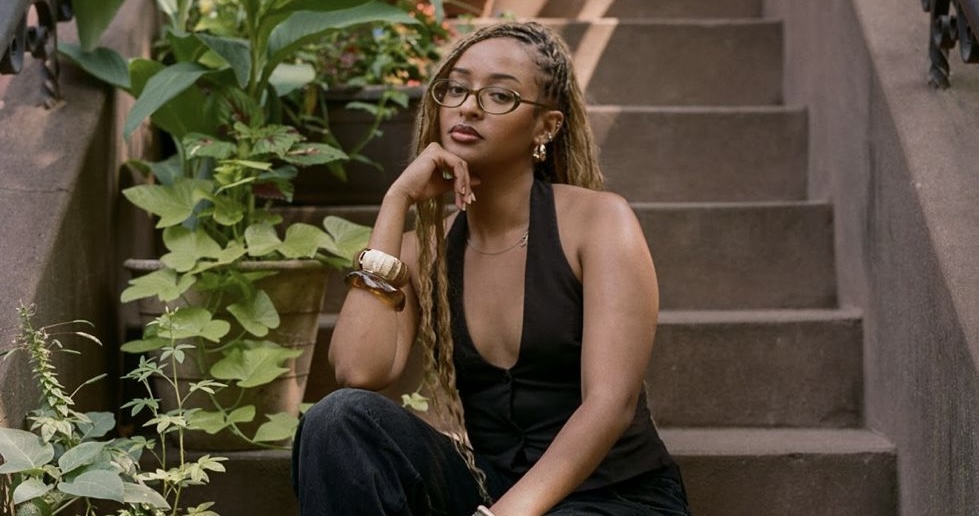
When Ruth Tedla speaks about her film Cracked Shells, it’s impossible not to feel the urgency and passion behind the story she’s telling. A filmmaker and photographer born in Ethiopia, raised in Botswana, and now shaping narratives across the United States, Ruth combines her immigrant experience with an acute understanding of cultural memory, identity, and resilience.
“The idea for Cracked Shells really began when I moved to the United States,” Ruth explains. “Having lived in different places throughout my life, I’ve always been fascinated by the power of space and the idea of ‘home’—how a place can shape the people who inhabit it.” Her journey led her to Washington DC, a city that immediately felt like home. But that sense of belonging was quickly overshadowed by the harsh realities of gentrification.
“Within just four years of being there for college, I saw the city rapidly change,” she recalls. “In my senior year, I moved off campus into a neighborhood that had historically been predominantly Black, but had transformed significantly. The contrast between what once was and what it was becoming was stark.”
This experience inspired Ruth to create a photography project, which later evolved into the powerful, full-length film Cracked Shells.
At the heart of the film is DC’s identity as “Chocolate City”—a moniker that reflects the city’s historic role as a hub of Black culture, art, and innovation. “DC’s identity as ‘Chocolate City’ is essential to understanding gentrification because it reflects the city’s history as a hub of Black culture, joy, art, and innovation,” Ruth notes. “But that legacy is now under threat… the erasure of ‘Chocolate City’ is not just a local issue—it’s a cultural and political one.”
Cracked Shells doesn’t just document change—it humanizes it. “I wouldn’t say gentrification ‘shapes’ Black communities—it disrupts and displaces them,” Ruth says. “The film captures these changes through a multigenerational lens. You hear from elders who have witnessed decades of transformation, as well as youth who are inheriting a city in flux.”
Dr. Lawrence Brown, acclaimed author and public health scholar, praised the film’s depth: “Cracked Shells is an intimate and intergenerational meditation on gentrification in Washington DC. The film investigates how gentrification impacts Black neighborhoods, political power, and people’s memories. It gives voice to the topic known as ‘root shock’—the psychological impact on people when they are forcibly or involuntarily uprooted.”
Dr. Tahira Mahdi, a psychologist and community leader, echoed that sentiment: “Cracked Shells clarifies the displacement, neglect, disrespect, and purposeful erasure of native DC folks who have long been asking, ‘Is anyone seeing this?’ and, more importantly, ‘Who is going to stop this?’ Beautifully shot and true to DC’s soul, the film ensures that we don’t perceive gentrification as an abstract, inevitable monster. Cracked Shells makes us think about humanity and culture—but also right and wrong.”
Resilience is another central theme. “These acts of resistance are resilience in action,” Ruth emphasizes. “They show that while gentrification threatens to erase history, people are committed to protecting their communities and passing that legacy forward.”
Her own African heritage plays a vital role in shaping the film’s perspective. “The African and African-descendant communities have been central to shaping DC’s identity… My own background as someone born in Ethiopia and raised in Botswana makes this especially meaningful to me, I see the ways that the African diaspora contributes to DC’s vibrancy and resilience.”
Though rooted in DC, Cracked Shells has global relevance. “Across Africa, cities are transforming rapidly, and with that change comes the risk of erasing cultural and historic communities… What happens in DC can help us recognize similar patterns elsewhere and remind us of the urgent need to protect culture, community, and memory wherever we are.”
Cracked Shells is already making waves with audiences. Its first DC screening at the Chela Mitchell Gallery drew nearly 200 attendees, followed by a panel with cast members that sparked deep discussions. The New York screening in partnership with Sounds of Spotlight highlighted parallels between DC and NYC’s own gentrification struggles. Upcoming screenings include:
- October 10: Public Welfare Foundation in DC, in partnership with ONE DC
- October 28: Morgan State University, Baltimore
All screening information is available at crackedshellsfilm.com.
Looking ahead, Ruth’s vision is expansive. “I’d love to focus on stories closer to home in Africa… My goal is to continue creating work that documents communities with care, uplifts underrepresented voices, and sparks conversations about identity and humanity on a global scale.”
With Cracked Shells, Ruth Tedla cements herself as a filmmaker and photographer not only documenting change but actively shaping cultural memory. Her work is a clarion call to preserve history, celebrate resilience, and ignite global dialogue—one frame at a time.