

Raila Odinga’s Final Journey: Tributes from Ruto, Kenyatta, Obama as Kenya Mourns

|
Getting your Trinity Audio player ready...
|
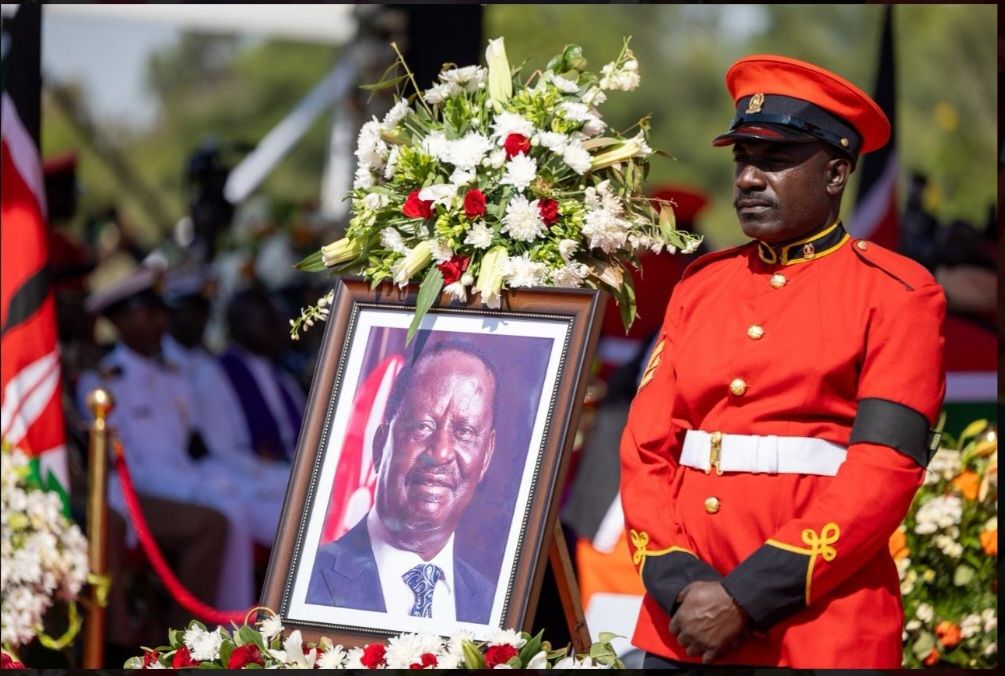
Kenya bade farewell to Raila Odinga on Sunday with a solemn Anglican service and burial in Bondo, near his family farm by Lake Victoria. The day passed largely without incident, a calm end to a painful week that saw at least five deaths and hundreds of injuries as crowds surged to pay their respects.
Odinga, 80, died on Wednesday in India, where he was receiving medical care. “Now finally Baba is home,” his son Raila Odinga Jr. said as the casket—draped in the Kenyan flag—rested beneath a marquee. After the main service at a local university, the cortege moved to a private interment, accompanied by a military band gun salute.
Tributes spanned continents. Barack Obama praised Odinga on X as a leader who chose reconciliation without abandoning core principles. President William Ruto, former President Uhuru Kenyatta, and former Nigerian President Olusegun Obasanjo attended the Bondo service.
The week’s grief turned deadly in multiple moments: on Thursday, police opened fire after crowds breached a stadium gate during the first public viewing; on Friday in Nairobi, two people died and more than 160 were injured at the state funeral; on Saturday in Kisumu—the political heartland of the Luo community—dozens of mourners were injured as the body arrived.
Odinga’s career traced Kenya’s post-independence political arc: once imprisoned for treason, he later became prime minister in 2008, entered historic truces with Kenyatta (2018) and Ruto (2024), and ran for president five times. For many Kenyans, including young mourners like Ainea Opilu, 25, the loss felt personal and disorienting.
For Africa’s public sphere, the day underscored a hard lesson: mass civic moments must be safe as well as symbolic. Honouring leaders while protecting citizens is part of the continent’s democratic maturation—and an area where investment, planning, and community stewardship can turn grief into better practice for the future.