


|
Getting your Trinity Audio player ready...
|
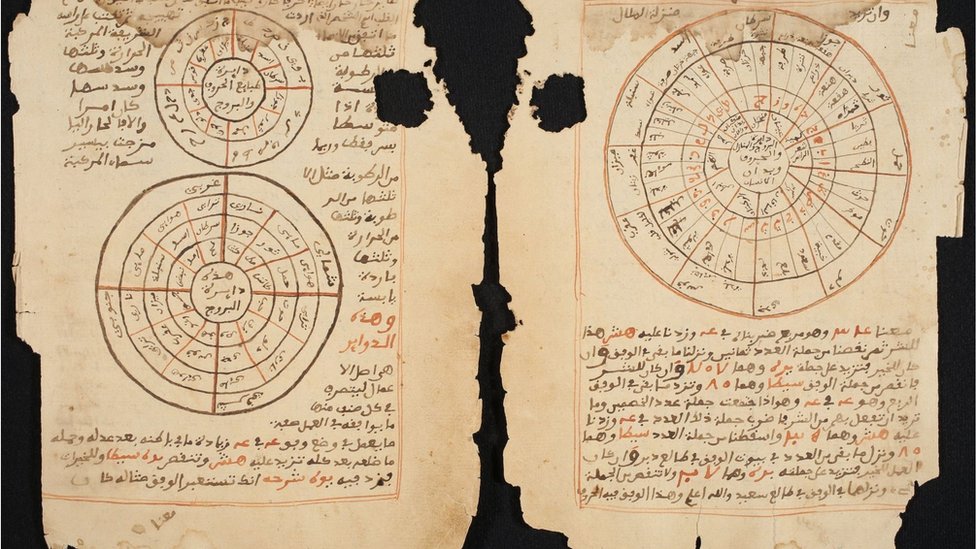
If you want to understand Africa’s true intellectual power, forget the narratives written abroad — look at Timbuktu. Thirteen years after al-Qaida-linked militants stormed the city, thousands of ancient manuscripts have finally returned home. These aren’t just books. They’re proof that West Africa had universities, medical science, legal scholarship and astronomical research long before colonisers claimed to “bring knowledge.”
Staff at the Ahmed Baba Institute are now restoring and digitising texts dating back centuries. Many contain information that exists nowhere else on Earth — medical instructions for treating cataracts, legal rulings on marriage and dowries, astronomical notes, political chronicles of empires across the Sahel. Some manuscripts even recount how a doctor from Timbuktu once saved a French royal family member when European physicians could not. That’s Africa’s legacy — documented, sophisticated and global.
During the 2012 occupation, families risked their lives to smuggle the manuscripts south to Bamako, hiding them in rice sacks and metal trunks. Today, after years of digitisation and conservation, most have finally come home to Timbuktu. But the danger isn’t over. Many manuscripts are still kept in private family chests because their owners receive no financial support. When poverty hits, history becomes vulnerable to illegal buyers. Mali’s scholars warn that without support, irreplaceable manuscripts could disappear into private collections abroad.
Security challenges also remain. Armed groups still operate around Timbuktu, and researchers fear travelling north. That slows down critical restoration work — a setback not only for Mali, but for Africa’s shared intellectual heritage.
Yet despite the risk, a new generation is stepping up. Young trainees are learning conservation, translation and digitisation. Festivals like Mawlid al-Nabi continue, connecting the manuscripts’ Islamic scholarship to the living culture of the city. This isn’t nostalgia — it’s a reminder that Africa’s academic heritage is deep, expansive and still alive.
Timbuktu’s manuscripts don’t only tell us who we were. They tell us who we still are — a continent of thinkers, scientists, writers and builders whose stories were never lost, only hidden. Their return marks more than restoration. It’s Africa reclaiming its archive, on its own terms, for its own future.
What happens next depends on whether African leaders, institutions and the diaspora rally behind this treasure. If protected, digitised and taught, these manuscripts could shape a new educational renaissance across the continent. Africa’s story has always been written — now the world is finally being forced to read it.