

Burkina Faso Claims Security Gains and Food Self Sufficiency Under Ibrahim Traoré as 2026 Agenda Takes Shape

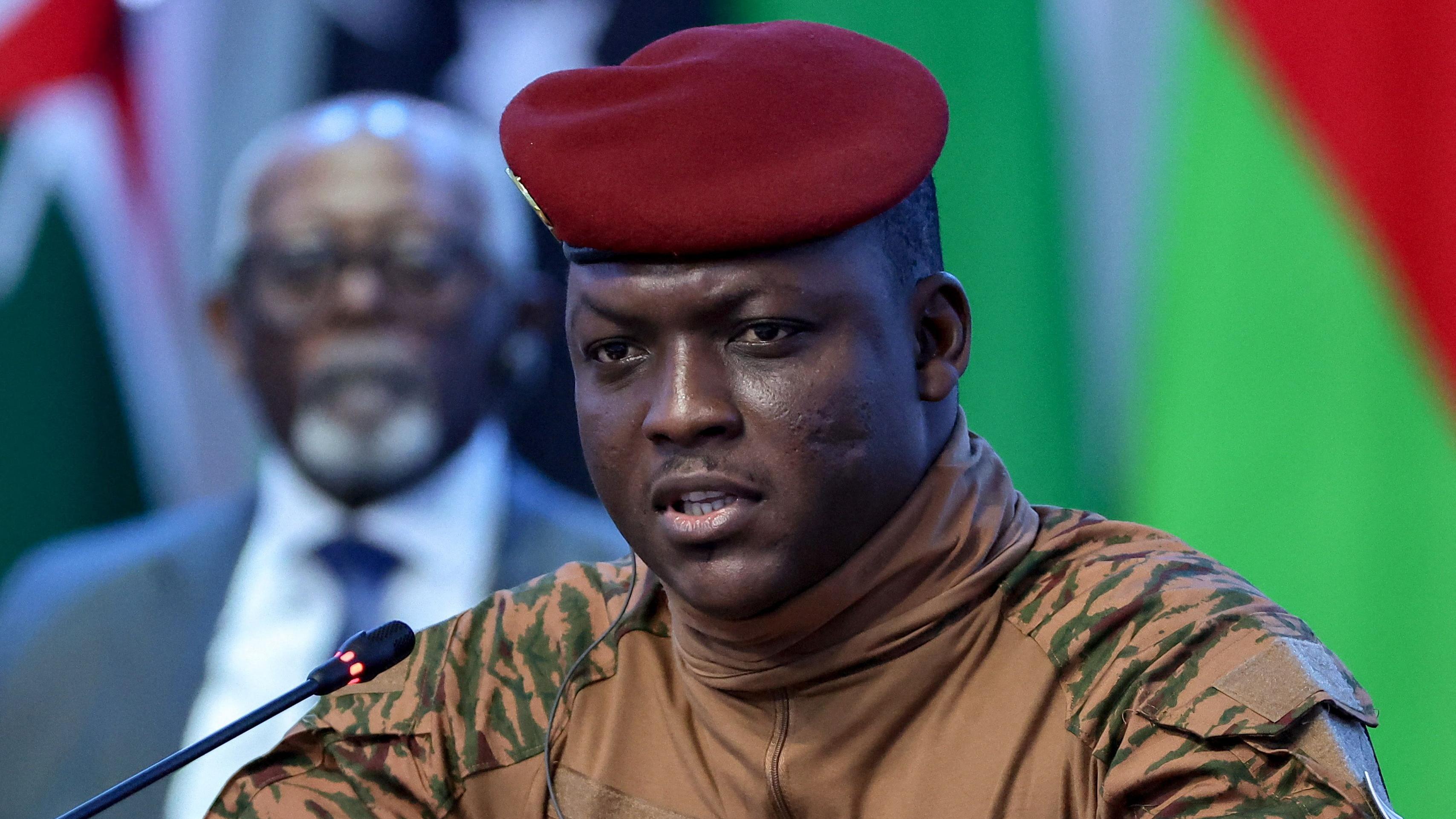
Burkina Faso has entered 2026 projecting confidence, control, and ambition as President Ibrahim Traoré outlined what his government describes as tangible gains in security, agriculture, and national sovereignty.
In his New Year address delivered on December 31, Traoré highlighted the impact of Operation Lalmassga, known as Ice Wall, crediting the military and community based Volunteers for the Defense of the Homeland with reclaiming dozens of towns previously under the control of armed groups. Areas cited included parts of the Nakambé region near Kompienga Dam, Gulmu, and zones around Djibo and Toulfé.
According to the government, these operations have allowed thousands of internally displaced people to return to safer areas. The state says returnees are receiving support to restart farming activities and benefit from newly built local infrastructure. While insecurity remains a reality across parts of the Sahel, the administration is framing territorial recovery as a foundation for broader national rebuilding.
Agriculture emerged as the centerpiece of Traoré’s message. He announced that Burkina Faso achieved food self sufficiency in 2025, attributing the outcome to improved seed distribution, mechanization, targeted subsidies, and coordinated production campaigns. The claim marks a significant political statement in a region long shaped by food aid dependence and climate vulnerability.
Looking ahead, the government plans to expand land development, water retention projects, aquaculture, and fodder crop production in 2026. Officials argue that food security is no longer treated as an emergency response but as a pillar of national sovereignty.
Beyond farming, Traoré reaffirmed efforts to regain state control over mineral resources, expand technical and vocational education, and strengthen healthcare infrastructure. Urban planning reforms were also mentioned, including new road construction brigades and a shift toward higher density city development.
On foreign policy, the president repeated his administration’s stance of selective partnership. Burkina Faso says it will engage with international allies that respect national independence while rejecting external pressure or conditional governance models. This posture reflects a broader regional trend among Sahelian states redefining their relationships with traditional power centers.
Critics continue to raise concerns about political freedoms and long term governance under military rule. Supporters counter that stability and economic self reliance must come before electoral timelines. What is clear is that Traoré is positioning his leadership not as transitional, but transformational.
Burkina Faso’s story remains unfinished. Security challenges persist, and success will ultimately be measured not by speeches, but by lived outcomes for ordinary citizens. Yet in a continent where many nations are still negotiating their post colonial trajectory, Burkina Faso’s experiment reflects something deeper than policy shifts. It reflects a generation insisting on writing its own chapter, on its own terms, at its own pace.
Africa is young. Its nations are still early in their journey, not old enough to be judged by the standards of centuries old states. What matters is direction, not perfection. And across the Sahel, the direction is increasingly defined by self belief, hard choices, and the refusal to outsource the future.
Burkina Faso, Ibrahim Traoré, Burkina Faso security, Sahel security, Operation Lalmassga, Burkina Faso food self sufficiency, African agriculture, Sahel development, military government Africa, Burkina Faso agriculture, food security Africa, Sahel sovereignty, African self reliance, Burkina Faso mining, African resource control, Sahel politics, Burkina Faso VDP, Volunteers for the Defense of the Homeland, African military governments, post colonial Africa, Africa food independence, African development strategy, Sahel conflict, Burkina Faso internally displaced, African security operations, African nationalism, Africa sovereignty, Burkina Faso economy, African farming policy, Sahel infrastructure, African state building, Burkina Faso roads, Africa agriculture reform, African political transition, Sahel leadership, Burkina Faso foreign policy, African self determination, Africa development narrative, Burkina Faso 2026, African military leadership, Africa emerging powers, Sahel food production, African climate resilience, Burkina Faso water projects, African mechanized farming, Africa growth story, African independence agenda, Sahel transformation, Africa rising narrative, West Africa politics, African governance models, Burkina Faso sovereignty policy, Africa youth continent, African future, Africa self belief, African national development, Sahel rebuilding, African security strategy, Burkina Faso reforms, Africa policy shift, African resilience, Africa economic independence, Sahel nations, African territorial control, Africa post aid era, African self sufficiency, Burkina Faso state control, Africa development path, African leadership evolution, Sahel reconstruction