

South Africa’s Informal Miners Stand at the Fault Line of the Energy Transition

|
Getting your Trinity Audio player ready...
|
As Coal Declines, Thousands Ask What a “Just Transition” Really Means
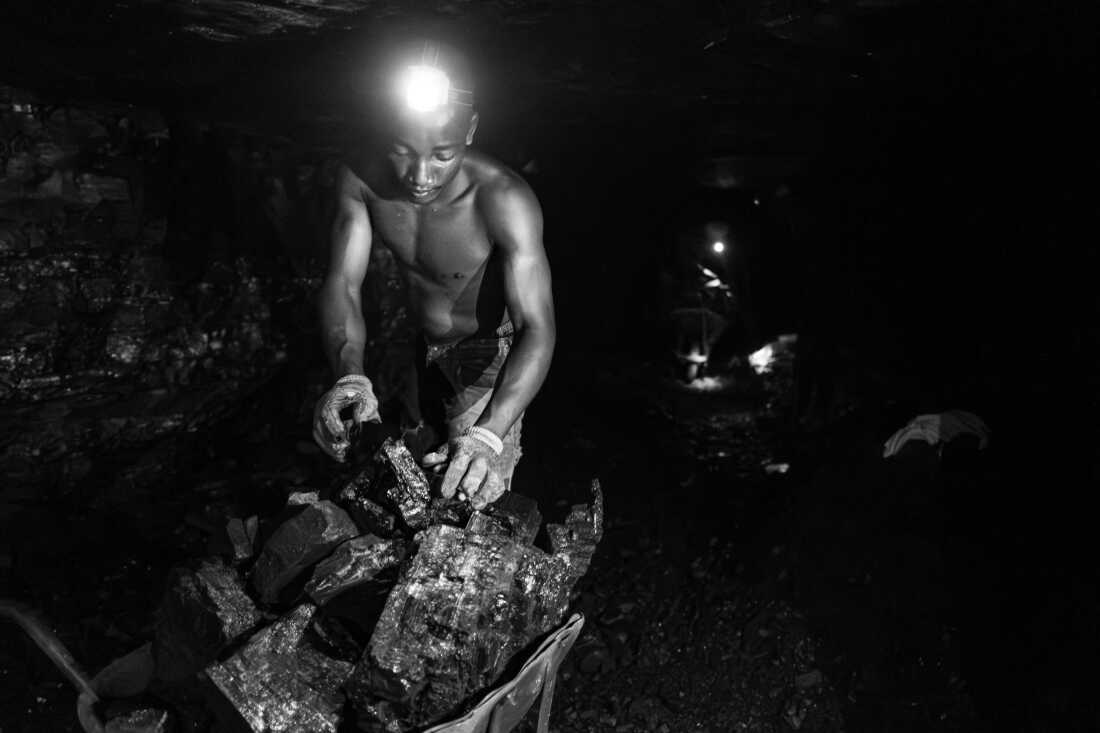
Beneath South Africa’s coal heartland, far from boardrooms and policy summits, thousands of informal miners descend daily into narrow, unregulated shafts carved by hand. Armed with pickaxes and headlamps, they work in darkness not out of defiance, but necessity.
South Africa remains one of the world’s leading coal producers, with coal still generating roughly 80 percent of the country’s electricity. Yet in the eastern province of Mpumalanga, where coal has powered the nation for decades, access to that same electricity remains unaffordable for many communities. This contradiction has given rise to a vast informal mining economy that policymakers struggle to acknowledge—and communities cannot survive without.
For miners like “Cyprial,” who uses a pseudonym to avoid arrest, every descent underground carries the possibility of death. Collapsing rock, toxic air, and zero safety infrastructure are part of the daily equation. Still, the work continues.
Not because it is illegal—but because it is essential.
Illegal or Artisanal? A Battle Over Language and Legitimacy
The South African government labels these miners “illegal.” The miners reject the term.
They describe themselves as artisanal miners—community-based operators extracting coal to supply households that cannot afford formal electricity prices. According to local mining leaders, the coal extracted informally is used for cooking and heating, especially during winter months when energy poverty becomes acute.
This informal system operates in tension with a formal coal sector that employs over 100,000 people across South Africa’s energy value chain. While the formal industry is regulated, capitalized, and visible, artisanal miners exist in legal limbo—excluded from licenses, financing, and policy dialogue.
President Cyril Ramaphosa has previously described illegal mining as a threat to economic and national security. Yet analysts estimate tens of thousands of informal miners operate across the country, a sign not of criminal expansion, but structural exclusion.
The Just Energy Transition: Promise or Displacement?
South Africa is among the world’s top greenhouse gas emitters and, in 2021, became the first country to sign a Just Energy Transition Partnership (JETP), securing $8.5 billion from wealthier nations to move away from coal.
On paper, the deal represents climate leadership. On the ground, it raises fear.
In towns like Ermelo, residents worry that the shift to renewable energy will once again bypass them—replacing coal jobs with technologies and industries they are unprepared or uninvited to access.
For community leaders, a “just transition” must mean more than shutting down coal plants.
It must include:
-
Legal recognition of artisanal and small-scale miners
-
Affordable access to mining permits
-
Skills training tied to renewable and critical mineral supply chains
-
Community ownership models rather than corporate replacement
As one activist put it, the demand is not endless extraction—but inclusion.
Beyond Coal: Minerals, Markets, and Marginalized Communities
Even as coal declines, mining will not disappear. The global shift toward clean energy is accelerating demand for critical minerals used in solar panels, batteries, and electric vehicles—many of which exist across southern Africa.
Artisanal miners argue they should not be excluded from this future.
Without policy reform, they warn, the energy transition risks becoming a story of displacement rather than development—one where climate goals are met, but inequality deepens.
A just transition, they insist, must be measured not only by emissions reduced, but by lives sustained.
If communities that powered South Africa for generations are left behind once again, the transition may be green—but it will not be just.
South Africa mining, informal miners, artisanal mining Africa, coal mining South Africa, Mpumalanga coal, energy poverty Africa, just energy transition, JETP South Africa, climate justice Africa, illegal mining debate, artisanal miners union, coal communities South Africa, clean energy transition, renewable energy Africa, critical minerals Africa, mining permits South Africa, informal economy Africa, coal phaseout, climate policy Africa, energy inequality, sustainable mining, small scale mining Africa, community mining, mining reform South Africa, energy access Africa, climate finance, global energy transition, coal dependence, mining livelihoods, environmental justice, African energy transition, mining policy Africa, green energy Africa, post-coal economy, climate adaptation Africa, marginalised communities, resource governance, extractive industries Africa, mining safety, underground mining risks, energy security South Africa, climate investment, mining inclusion, transition minerals, African development, local energy access, mining workforce, sustainable development Africa, climate transition risks, informal sector Africa, community ownership mining, energy justice, mining regulation, climate funding Africa, social impact mining, green economy Africa, coal alternatives, energy transition Africa, mining rights, development policy Africa, economic inclusion, mining livelihoods Africa, climate resilience, African resource economy, mining communities, transition planning, energy reform South Africa