

When Lemons Fly: Timket, Faith, and the Joy of Being Ethiopian
Written by Tina Belay

|
Getting your Trinity Audio player ready...
|
This morning, a colleague nudged me with a grin and asked,
“So… how many lemons did you get?”
I laughed. And just like that, I found myself opening my journal.
Among the many traditions of Timket, Ethiopia’s Epiphany celebration, there is one playful ritual that never fails to make me smile: the throwing of lemons.
In the thick of the crowd, amid prayer chants and ceremonial processions, young men and women toss lemons at one another as a lighthearted form of flirting. A single toss can mean interest, admiration, or simply a mischievous hello, always followed by laughter, shy smiles, and knowing glances. It’s innocent, joyful, and fleeting, a small human moment tucked gently inside a sacred celebration.
No worries though, I only received one wink.
Yet Timket is far more than lemons and laughter.
Timket: A Living Faith
Known as the Epiphany Feast, Timket is one of the most vibrant and spiritually significant celebrations in the Ethiopian Orthodox Christian calendar. It commemorates the baptism of Jesus Christ by John the Baptist in the River Jordan and is observed annually on January 19, or January 20 during leap years. In 2019, UNESCO recognized Timket as an Intangible Cultural Heritage of Humanity, affirming what Ethiopians have always known: this is not merely a festival, but a living expression of faith, identity, and continuity.
The celebration begins on January 18 with Ketera, a majestic procession that transforms cities and villages alike. Priests carry the Tabots, sacred wooden replicas of the Ark of the Covenant and the Ten Commandments, from churches to nearby bodies of water. Draped in richly embroidered cloth and shaded beneath vibrant ceremonial umbrellas, the Tabots move through the streets accompanied by rhythmic drumbeats, horn blowing, ululations, and ancient gospel chants.
The air vibrates with reverence and anticipation.
Water, Renewal, and Belonging
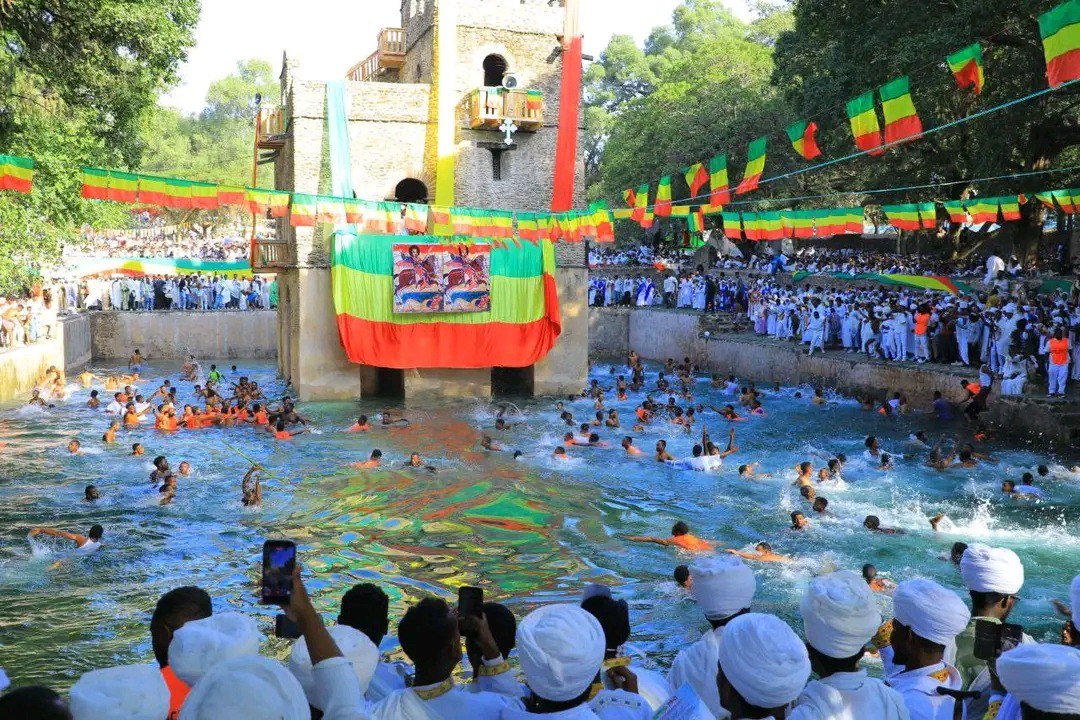
At dawn on Timket morning, many, dressed in flowing white garments, gather around the water. Priests bless it by dipping ornate crosses and extinguishing consecrated candles, symbolizing purification, renewal, and rebirth. Some worshippers immerse themselves fully, while others collect the holy water, known as Timkete-Bahir or Bahire Timket, to take home for protection and blessing.
Timket stands nearly shoulder to shoulder with Easter and Christmas in spiritual significance. But beyond its religious meaning, it is also a powerful celebration of community, Ethiopian identity, and collective joy. Streets come alive with dance, music, laughter, and the triumphant sound of trumpets. Families gather. Old friends reunite. New memories are formed.
Where History Meets Celebration
Across Ethiopia, Timket is celebrated with majesty in Addis Ababa, Batu, and especially Gondar, often called the “Camelot of Africa.” Gondar’s 17th-century Fasilides Fortress and Fasiladas Bath provide a breathtaking historical backdrop to the festival, drawing pilgrims, locals, and international visitors alike. For two days, faith and festivity blend seamlessly, creating an atmosphere that is both deeply spiritual and wonderfully alive.
When the celebrations conclude, the Tabots are returned to their churches in jubilant processions filled with song, dance, and collective gratitude, a gentle yet powerful closing to a profound communal experience.
From ancient traditions to playful gestures like lemon tossing, Timket captures the essence of Ethiopian culture: a place where devotion and joy walk hand in hand. It reminds us that faith is not distant or solemn alone; it laughs, dances, flirts, and lives among the people.
And sometimes, it flies through the air in the shape of a lemon.