


|
Getting your Trinity Audio player ready...
|
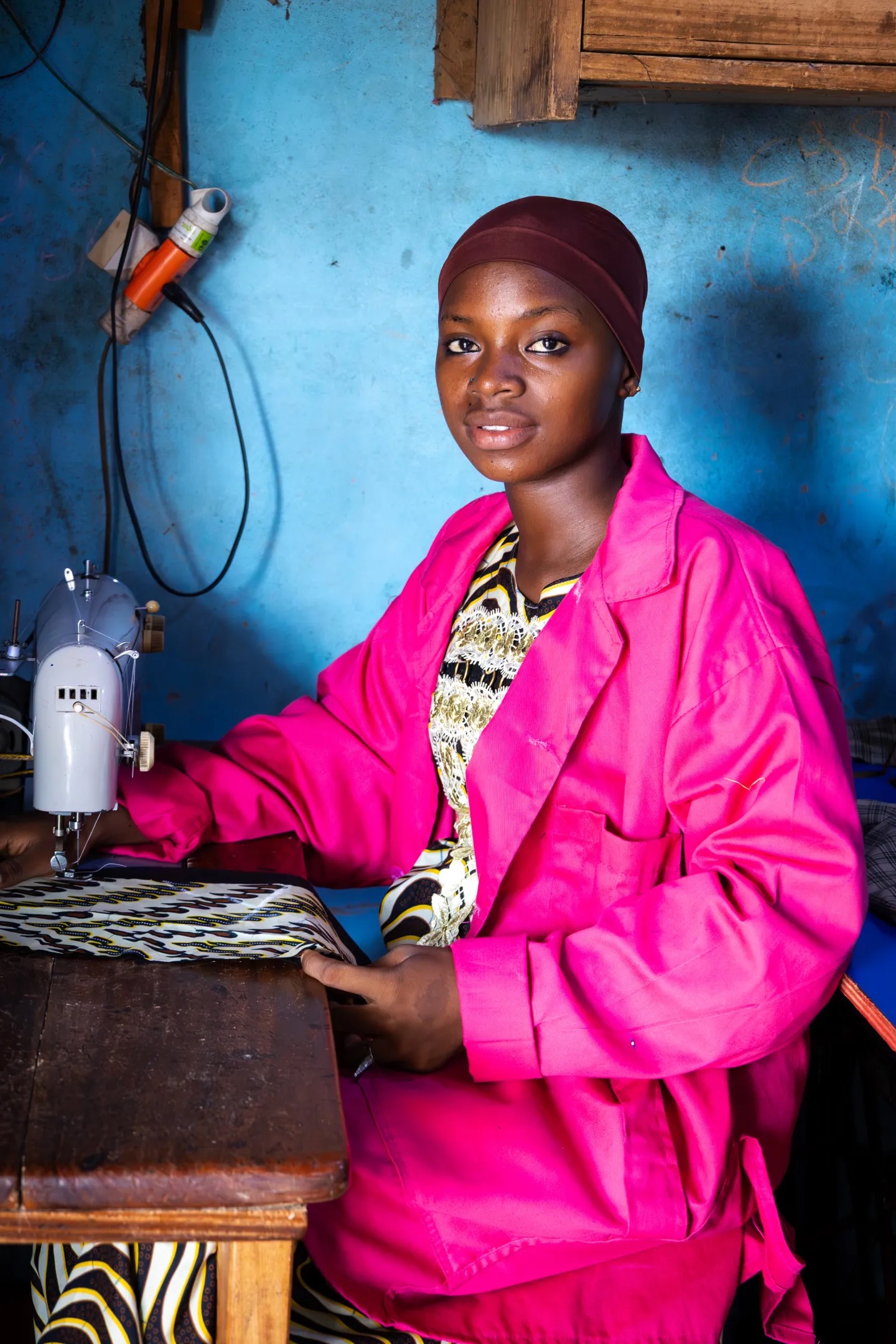
At just eighteen, Coulibaly Aminata is rebuilding her life with thread, fabric and quiet determination. In her own words, she tells the story of how sewing training supported by the International Labour Organization through the ACCEL Africaproject helped her move away from child labour, street life and uncertainty towards dignity, skills and hope in Côte d’Ivoire.
Aminata grew up attending school and helping her father occasionally on the family farm. Life changed abruptly when she lost both parents at the age of fifteen. She moved in with her uncle, a cocoa farmer, and was forced to leave school because there was no money to continue her education. Days were spent working in the fields, transporting heavy cocoa bags under the harsh sun, cooking midday meals, and returning home exhausted in the evenings.
The work was physically demanding and dangerous. Aminata recalls injuring her foot with a machete and struggling with the toll the labour took on her body. Over time, she became certain that this was not the future she wanted. When she was not in the fields, she found herself wandering the streets with friends, aware that idleness often leads young people towards harmful paths.
Sewing offered a different direction.
Aminata had long been interested in becoming a seamstress, but she lacked the resources and guidance to begin. Her opportunity came when representatives from a local cooperative identified her while she was on the streets. They explained that the ACCEL Africa project would cover the cost of vocational training, helping young people learn trades instead of remaining in hazardous work or street life. Initially sceptical, Aminata agreed to try after her uncle was persuaded to support the decision.
Through the training, she learned sewing from the ground up, including how to make dresses, skirts and camisoles. With no prior experience, every skill was new. The workshop quickly became a place of structure and belonging. Her days gained rhythm again: work in the morning, home in the evening, no more streets and no more fields.
She describes a growing sense of pride as her skills improved. Completing a garment brings satisfaction and confidence, especially when customers wear what she has created. Sewing, she says, has changed her life because it allows her to see the value of her own hands and effort.
Aminata’s ambition now goes beyond training. She dreams of opening her own workshop, becoming financially independent and being her own boss. She also offers advice to other young people still spending their days on the streets, urging them to find a trade and work with purpose, warning of the risks and consequences of street life.
Her story reflects a broader reality across Africa, where access to skills training can be the difference between exploitation and opportunity. Programmes that invest in young people, especially girls, do more than teach trades. They restore dignity, structure and belief in the future. For a continent where the majority of the population is young, these pathways matter deeply. Africa’s development is not only built through policy and funding, but through individual lives redirected towards possibility, one skill at a time.
Aminata Coulibaly, Côte d’Ivoire youth, sewing training Africa, ILO ACCEL Africa, child labour prevention Africa, vocational training girls Africa, youth skills development Africa, tailoring training West Africa, women empowerment Côte d’Ivoire, decent work Africa, informal sector skills Africa, cocoa farming child labour, street children Africa, vocational education Africa, ILO programmes Africa, youth employment Côte d’Ivoire, skills for work Africa, female artisans Africa, poverty reduction skills Africa, youth livelihoods West Africa, gender equality employment Africa, sewing workshops Africa, African girls education alternatives, youth resilience Africa, post-conflict livelihoods Africa, skills training impact Africa, decent work youth Africa, informal work transition Africa, tailoring business Africa, women entrepreneurs Côte d’Ivoire, skills and dignity Africa, labour rights youth Africa, vocational pathways Africa, youth empowerment stories Africa, African development stories, girls vocational skills Africa, community cooperatives Africa, child protection labour Africa, economic inclusion Africa, skills not streets Africa, women and work Africa, sustainable livelihoods Africa, youth futures Africa, informal economy transition Africa, tailoring apprenticeships Africa, girls skills training West Africa, poverty and opportunity Africa, youth voice Africa, skills for independence Africa, women-led businesses Africa, African youth narratives, vocational hope Africa, work dignity Africa, empowerment through skills Africa, labour market inclusion Africa, social protection youth Africa, training for decent work Africa, ILO success stories Africa, rural youth employment Africa, youth transition to work Africa, African women livelihoods, small workshop entrepreneurship Africa, skills-based development Africa, future of work Africa, grassroots development Africa, African resilience stories