

Dangote–NNPC Gas Deals Signal a New Phase in Nigeria’s Industrial and Energy Strategy

|
Getting your Trinity Audio player ready...
|
Nigeria is no longer talking about gas reform. It is executing it.
At the launch of Nigeria’s Gas Master Plan 2026, three core subsidiaries of the Dangote Group signed enhanced gas supply agreements with units of NNPC Limited, marking one of the clearest alignments yet between state policy and private‑sector industrial ambition.
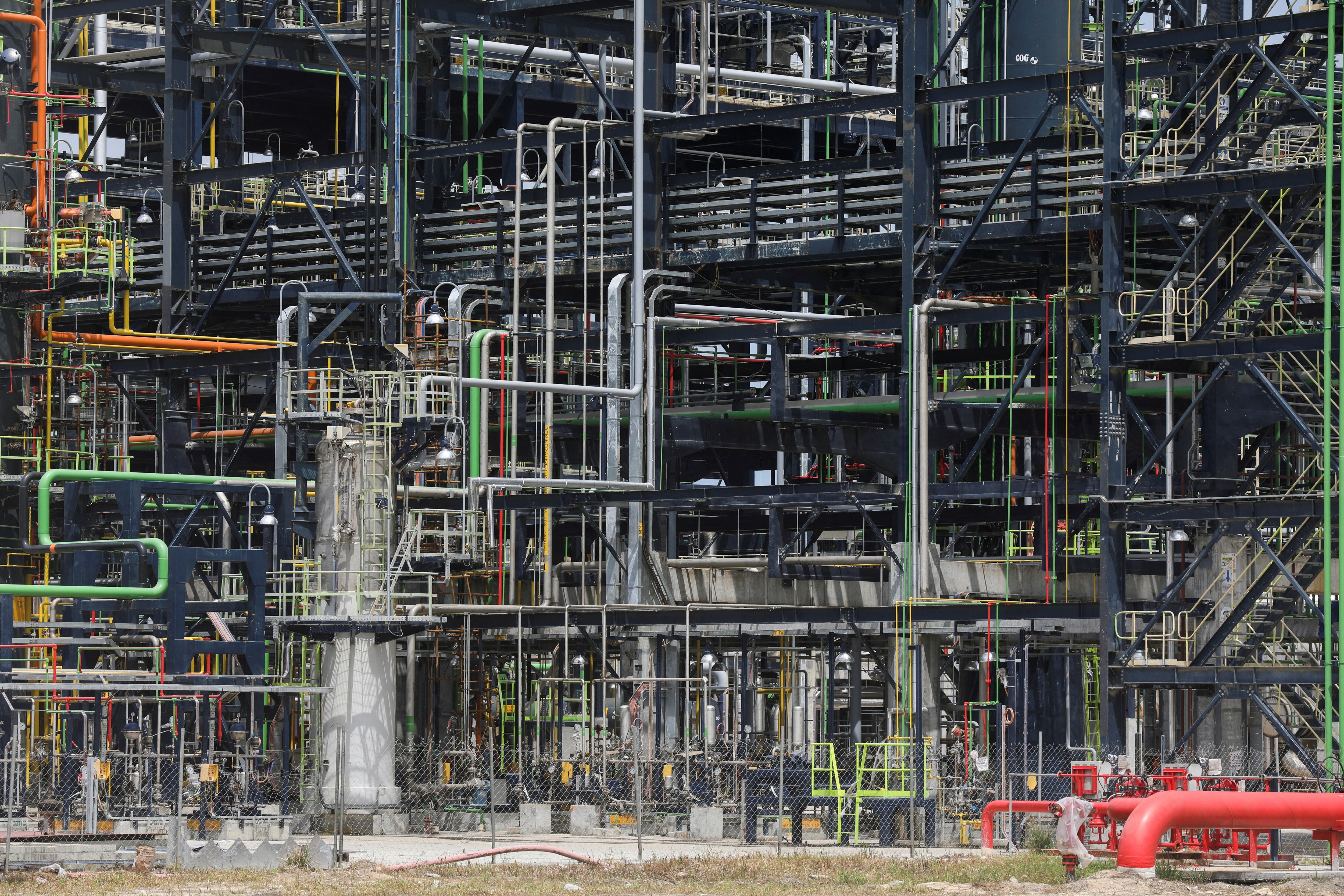
The agreements cover gas supply to the Dangote Petroleum Refinery, Dangote Fertiliser Plant, and Dangote Cement Plc, reinforcing gas as the backbone of Nigeria’s industrial growth, energy transition, and economic diversification strategy.
While volumes were not disclosed, the significance lies in structure, scale, and timing.
From Resource Abundance to Reliable Supply
For decades, Nigeria’s gas story has been defined by paradox: vast reserves, weak delivery.
Officials made clear that the new Gas Master Plan represents a shift away from policy statements toward execution and accountability. Speaking at the launch in Abuja, Minister of State for Petroleum Resources (Gas) Ekperikpe Ekpo emphasized that Nigeria’s challenge is no longer availability of gas, but conversion of reserves into dependable, bankable supply.
That message was reinforced by Bashir Bayo Ojulari, who outlined the plan’s focus on cost optimisation, infrastructure build‑out, and guaranteed supply to anchor industrial users.
The Dangote agreements put that vision into motion.
Gas as Nigeria’s Industrial Engine
The Gas Master Plan 2026 sets ambitious but deliberate targets:
-
Increase gas production from 8 bcf/d to 10 bcf/d by 2027
-
Reach 12 bcf/d by 2030
-
Mobilise over $60 billion in investment across the gas value chain
Gas is being positioned not only as a transition fuel, but as a competitive advantage — powering fertiliser production, cement manufacturing, refining capacity, and downstream industries that reduce imports and stabilise domestic supply chains.
By locking in long‑term gas arrangements, Dangote’s industrial assets become anchor demand, de‑risking infrastructure investment and improving project bankability across the sector.
Public Policy Meets Private Capital
What makes this moment notable is the synchronisation.
The government is building the framework — pricing reform, infrastructure, regulation. The private sector is committing capital at scale. Together, they are attempting to solve Nigeria’s long‑standing gas paradox: abundance without impact.
This alignment matters beyond Nigeria.
As Africa’s largest economy, Nigeria’s success or failure in gas execution will influence:
-
Regional energy markets
-
Industrialisation strategies across West Africa
-
Africa’s credibility in balancing growth with lower‑carbon fuels
A Signal to Markets
For investors and policymakers, the message is unambiguous: Nigeria is moving from vision to implementation.
Gas is no longer a side conversation in Nigeria’s energy transition. It is the operating system — cleaner than diesel, scalable faster than renewables alone, and essential to industrial growth in a young, rapidly urbanising economy.
The Dangote–NNPC agreements are not just contracts. They are proof of intent.
Nigeria gas, Dangote Group, NNPC Limited, Nigeria Gas Master Plan 2026, Dangote refinery gas, Dangote fertiliser plant, Dangote cement gas, Nigeria energy strategy, Nigeria gas production, Nigeria industrial gas supply, Nigeria gas infrastructure, Nigeria gas policy, Africa gas markets, Nigeria energy transition, Nigeria industrialisation, Nigeria clean energy, Nigeria gas investment, Nigeria upstream gas, Nigeria downstream gas, Nigeria power generation gas, Nigeria fertiliser production, Nigeria cement industry, Nigeria refinery operations, Nigeria energy security, West Africa gas, Africa gas transition, Nigeria LNG alternatives, Nigeria domestic gas, Nigeria gas demand, Nigeria gas master plan targets, Nigeria bcf per day gas, Nigeria energy reform, Nigeria private sector energy, Nigeria industrial growth, Africa energy execution, Nigeria gas framework, Nigeria investment climate, Nigeria oil to gas transition, Nigeria gas reliability, Nigeria industrial anchor demand, Africa gas strategy, Nigeria energy markets, Nigeria sustainable development, Nigeria economic diversification, Nigeria infrastructure build‑out, Nigeria gas value chain, Nigeria energy execution