

Seif al‑Islam Gaddafi Is Dead — And Libya Just Lost Another Chance at Closure

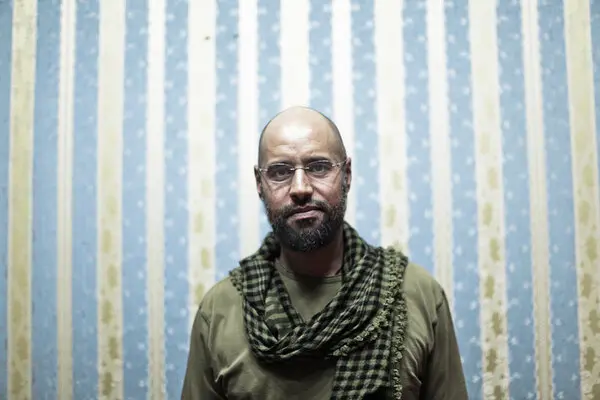
|
Getting your Trinity Audio player ready...
|
The reported killing of Seif al-Islam Gaddafi in the western Libyan town of Zintan is not an isolated act of violence. It is the latest chapter in Libya’s unresolved war with its own past.
For nearly 15 years after the fall of Muammar Gaddafi, Libya has avoided a single, hard task: deciding what justice actually means.
Seif al‑Islam embodied that unresolved question.
Why Seif al‑Islam Still Mattered
To the outside world, he was a wanted man — convicted in absentia by Libyan courts and sought by the International Criminal Court.
Inside Libya, he was something more dangerous:
a symbol that never went away.
To some Libyans, he represented:
-
The unfinished reckoning of 2011
-
The absence of a national justice process
-
A political future that was never properly confronted
To others, he was proof that the old regime was never fully dismantled — only scattered.
That contradiction made him powerful.
And in Libya, unresolved power is rarely tolerated.
What His Death Signals
The killing sends three clear signals:
-
Libya still settles history with weapons, not institutions
A decade and a half on, courts remain weaker than guns. -
Political memory is being erased, not processed
Killing a figure like Seif al‑Islam removes testimony, accountability, and uncomfortable truths. -
There will be no clean closure to the Gaddafi era
Libya is choosing silence over resolution.
This is not stability.
It is postponement.
The Zintan Factor
Zintan is not a random location.
It has long been a power center outside Tripoli’s control — proof of Libya’s fragmented sovereignty.
The fact that such a high‑profile figure could live there for years, and then be killed there, reinforces a hard truth:
Libya does not have one state.
It has multiple authorities, each deciding life and death on its own terms.
Africa’s Broader Lesson
Across Africa, post‑conflict states face the same crossroads:
-
Justice or revenge
-
Truth or erasure
-
Institutions or militias
Libya’s path shows the cost of avoiding that choice.
When reconciliation is delayed too long, violence becomes the historian.
And violence never tells the full story.
What Happens Next
Libyan prosecutors say they are investigating.
But investigations are not the same as accountability.
The real questions remain unanswered:
-
Who ordered it?
-
Who benefits?
-
What truth is now buried with him?
Without credible answers, this killing will not bring peace — only deepen mistrust.
Libya did not just lose a man.
It lost another opportunity to confront itself.
WHY THIS STORY MATTERS (AFRICA PERSPECTIVE)
-
Political violence is replacing justice
-
Armed groups still outrank institutions
-
Post‑conflict Africa cannot skip reconciliation
-
Silence is being mistaken for stability
This is what unfinished revolutions look like.