

Rights Delayed Is Justice Denied: Why International Women’s Day 2026 Demands Legal Reform
By Maxine Ansah
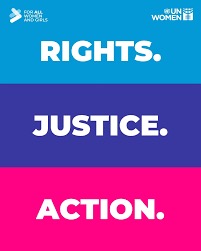
On 8th March 2026, the world marks International Women’s Day under a theme that leaves no room for complacency: “Rights. Justice. Action. For ALL Women and Girls.” The message is clear. Equal rights without equal justice are hollow.
As the second quarter of the 21st century begins, not a single country has fully closed the legal gap between men and women. Globally, women hold just 64 per cent of the legal rights afforded to men. Across core areas of life including work, finance, safety, family, property, mobility, entrepreneurship and retirement, legal frameworks continue to disadvantage women.
The pace of reform is alarming. At current rates, it will take 286 years to close global legal protection gaps. That projection is not simply a statistic. It is an indictment of political will.
International Women’s Day 2026 calls for dismantling structural barriers embedded in discriminatory laws, weak enforcement mechanisms and harmful social norms. Equal justice is not theoretical. It means laws that protect girls’ access to education and end child marriage. It means women’s freedom to work, lead and participate fully in political and justice systems. It means robust prevention and protection frameworks to end gender based violence. It requires family, labour and healthcare laws free from discrimination, justice systems without bias, survivor centred approaches, zero tolerance for abuse and impunity, and affordable legal aid.
Without justice systems that work for women, rights remain promises on paper.
The United Nations observance of International Women’s Day will take place on 9th March, aligning with the 70th session of the Commission on the Status of Women. From 9th to 19th March, Member States, UN entities and civil society will negotiate agreed conclusions under the theme: “Ensuring and strengthening access to justice for all women and girls, including by promoting inclusive and equitable legal systems, eliminating discriminatory laws, policies, and practices, and addressing structural barriers.”
The observance is led by UN Women, alongside the wider United Nations system and civil society partners. The campaign urges global mobilisation under the hashtag #ForAllWomenAndGirls and reinforces a principle enshrined in Article 7 of the Universal Declaration of Human Rights: all are equal before the law and entitled without discrimination to equal protection.
Yet legal equality on paper is only the starting point. Enforcement is the true test. Around the world, women and girls still face pushback, entrenched discrimination and weakened protections. From harmful customary practices to institutional bias within courts and police systems, justice remains uneven and often inaccessible.
The theme of IWD 2026 signals a refusal to retreat. No matter how entrenched sexism may be, progress demands collective resolve. Reforming laws is necessary. Reforming institutions is urgent. Transforming social norms is non negotiable.
In Africa, the urgency is sharpened by demographics and history. The continent is home to the world’s youngest population. Its legal systems are still evolving, shaped by constitutional reform, regional human rights instruments and post colonial transitions. Many states have embedded equality clauses in their constitutions and adopted progressive gender frameworks. Yet for millions of women, especially those in rural and marginalised communities, the lived reality is far removed from the letter of the law.
Access to justice remains uneven. Courts are often distant. Legal aid is underfunded. Customary practices sometimes operate in tension with statutory protections. These are not abstract governance issues. They determine whether a girl stays in school, whether a woman can inherit land, whether survivors of violence obtain redress.
But Africa’s story is not one of permanent deficit. It is one of movement. Young institutions can reform faster than older ones weighed down by entrenched systems. Civil society across the continent is organised and vocal. Women’s movements are not waiting for permission. If political leadership matches that momentum, Africa can accelerate progress and narrow legal gaps within a generation rather than centuries.
International Women’s Day 2026 is therefore more than a global observance. For Africa, it is a strategic checkpoint. The continent’s youth, its reform energy and its unfinished state building project present a rare opportunity. Justice for women and girls is not a peripheral issue. It is central to development, stability and democratic legitimacy. The question is no longer whether reform is needed. It is whether leaders will act with the urgency the moment demands.