

Women Rebuild Futures Through Mechanics Training in Uganda’s Refugee Settlements
By Maxine Ansah

|
Getting your Trinity Audio player ready...
|
In Uganda’s Kyaka II Refugee Settlement, women who once saw their education cut short are now rebuilding engines and reshaping expectations.
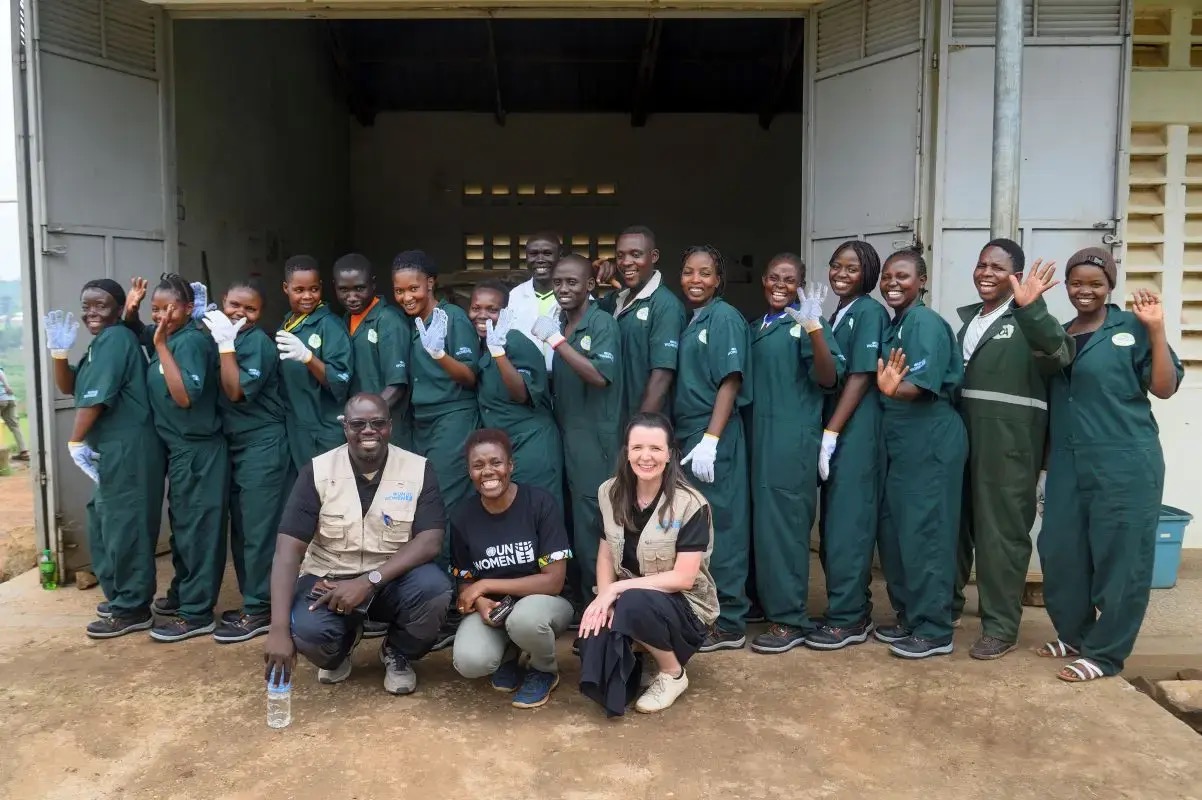
Through a vocational training initiative led by UN Women in partnership with Peace Winds Japan and funded by the Government of Japan, refugee women are gaining practical skills in motor vehicle mechanics, a field traditionally dominated by men. The programme forms part of a second chance education intervention designed to promote economic independence, social cohesion and long term stability within refugee settlements and host communities.
For Elina Iraguha, the decision to train as a mechanic was deliberate. Born in Rwanda and raised in Uganda’s Kyaka II settlement, she is determined to prove that women belong in every profession. She tells her five year old daughter that she too is in school, learning alongside her. For Iraguha, mechanics is not simply about fixing cars. It is about earning a living and dismantling assumptions.
Her fellow trainee, Ange Shokano, arrived at Kyaka II in 2019 after her family fled armed attacks in the Democratic Republic of Congo. The second of seven children, she found safety in Uganda but not opportunity. Financial hardship forced her to leave formal education two years ago.
Encouraged by her mother, Shokano enrolled in the mechanics programme as an alternative pathway. The training offers participants marketable skills and a recognised certificate after six months. Already, within a month, she and Iraguha have mastered tyre repairs and brake systems.
For both women, the challenge has not only been technical but social. Iraguha recalls that her father initially dismissed the idea, insisting that mechanics was work for men. She persisted. As her skills became visible, resistance softened into pride. Yet she remains aware that broader community attitudes may take longer to change.
Shokano admits she once questioned whether she had the physical strength required. That doubt quickly faded. She realised the work relies more on tools and technique than on muscle. For her, the training has reshaped not just her skill set but her mindset.
Programmes of this nature extend beyond individual empowerment. According to UN Women, education and economic empowerment initiatives in refugee contexts contribute to peace and security by reducing economic vulnerability and mitigating local tensions. When women gain stable livelihoods, households stabilise. When households stabilise, communities follow.
Iraguha envisions opening a workshop within the next decade, one capable of training up to 50 learners, most of them women. Shokano hopes to form a women led garage with fellow trainees, generating income while continuing to refine their craft. Both speak not only of personal success but of responsibility to siblings, families and other girls who need proof that boundaries can be redrawn.
As the world marks the International Day of Education, their stories underscore a wider truth. Education is not confined to classrooms or textbooks. In fragile settings, it can be the difference between dependency and dignity.
Across Africa, where displacement and youth unemployment remain pressing realities, such initiatives reflect a continent that is young, adaptive and determined. African societies are still building the systems that older nations take for granted. Yet in places like Kyaka II, young women are not waiting for perfect conditions. They are lifting engines, earning certificates and quietly reshaping the future, one repair at a time.
UN Women Uganda, refugee women Uganda, Kyaka II Refugee Settlement, women mechanics Africa, vocational training Uganda, second chance education Africa, women economic empowerment Africa, refugee livelihoods Uganda, gender equality Uganda, women in male dominated jobs Africa, Peace Winds Japan Uganda, Government of Japan funding Uganda, refugee skills development Africa, women and peacebuilding Africa, education in refugee settlements, women garage owners Africa, women vocational skills Africa, Uganda refugee programmes, African women empowerment stories, women and sustainable livelihoods Africa, International Day of Education Africa, gender norms Uganda, women in automotive industry Africa, host community integration Uganda, refugee economic inclusion Africa, skills training for displaced women, women independence Africa, education for agency Africa, women employment Uganda, breaking gender stereotypes Africa, women entrepreneurs Uganda, refugee women success stories, automotive training Africa women, humanitarian education programmes Uganda, women self sufficiency Africa, community stability refugee settlements, gender gap in trades Africa, women technical education Uganda, Africa refugee empowerment, youth unemployment Uganda women, women and social cohesion Africa, training centres for women Uganda, women workshop owners Africa, displaced women skills Africa, women empowerment Japan funding, refugee settlement Kyaka II news, Uganda humanitarian programmes women, women peace security Africa, African women mechanics, women leadership refugee communities, gender equality initiatives Uganda, women workforce participation Africa, refugee girls education Uganda, automotive repair training women Africa, women livelihoods programme Uganda, African refugee women empowerment, women and economic resilience Africa, vocational certificates Uganda women, women empowerment journalism Africa, African development and gender equality, women income generation Uganda, sustainable livelihoods refugee women, women and community upliftment Africa, African women career training, gender inclusion in trades Africa, refugee settlement development Uganda, women and local conflict reduction Africa, Africa humanitarian education initiatives, women skills and entrepreneurship Uganda, Uganda Japan partnership women, women in non traditional careers Africa, African women breaking barriers, refugee economic recovery Uganda, women empowerment projects Africa, women and youth inclusion Uganda, women empowerment policy Africa, Uganda settlement training programmes, African women and automotive sector, refugee community empowerment Africa, women and stability Africa, Africa education empowerment stories, women and employment pathways Uganda, gender transformative education Africa, refugee women professional training, Africa sustainable development women, Uganda women skills programme, women entrepreneurship refugee settlements, African women economic justice, women and industrial skills Africa, Uganda refugee integration women, empowerment through education Africa, women independence projects Uganda, African women vocational success, humanitarian skills programmes Africa, women empowerment and peace Uganda