

Cameroon’s National Assembly Elects New Leader After 34 Years, Signaling Controlled Political Shift

|
Getting your Trinity Audio player ready...
|
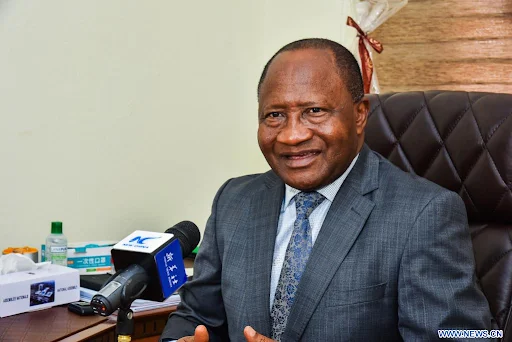
Cameroon’s National Assembly has elected Théodore Datouo as its new president, ending the 34-year tenure of Cavaye Yeguié Djibril, one of the longest-serving parliamentary leaders on the continent.
The leadership change marks a significant — though carefully managed — transition within Cameroon’s political system, where continuity and reform often move in parallel.
A Historic Transition Within Continuity
Datouo, a deputy from the Western Region and former vice president of the assembly, was selected by the ruling Cameroon People’s Democratic Movement to take over the position.
His predecessor, Djibril, had held the role since 1992, spanning the country’s return to multiparty politics and remaining a central figure in legislative power for over three decades.
While the transition is historic in duration, it does not represent a change in political control. Instead, it reflects a recalibration within the existing system.
Symbolism and Structural Reality
Datouo’s rise is symbolically significant.
He previously oversaw the construction of the National Assembly’s new headquarters — often referred to as the “Paul Biya Glass Palace” — positioning him as both an institutional insider and a figure associated with modernization efforts.
Yet analysts and observers note that the shift remains internal to the ruling structure.
This is not a transfer of power across political lines, but a reorganization within them.
Reactions and Expectations
Civil society voices have cautiously welcomed the development.
Figures such as Nkongho Felix Agbor described the moment as a potential turning point, while emphasizing that the real test lies ahead: whether the National Assembly can evolve into a more independent and effective legislative body.
The transition has also triggered speculation about possible changes in other parts of government, particularly the Senate, where leadership has similarly remained unchanged for years.
Cameroon and the Question of Institutional Renewal
The leadership change comes at a time when Cameroon — like many African nations — is navigating the balance between political continuity and growing public expectations.
Across the continent, institutions are under increasing pressure to:
-
Deliver stronger governance outcomes
-
Reflect demographic realities
-
Adapt to evolving economic and social demands
Cameroon’s case highlights how these pressures are often managed gradually, rather than through abrupt transformation.
Africa Is Young — and Institutions Are Being Tested
What makes this moment more significant is the demographic context.
Africa is the youngest continent in the world, and Cameroon reflects that reality. A rising generation is increasingly engaged, connected, and attentive to governance, representation, and opportunity.
This creates a dynamic tension:
-
Long-standing political structures
-
Rapidly evolving societal expectations
Leadership transitions — even within existing systems — are becoming more consequential as a result.
A Measured Shift, Not a Break
The appointment of Datouo does not signal immediate systemic change.
But it does indicate movement.
In political systems defined by long tenures, even controlled transitions can carry weight — setting precedents, testing institutional flexibility, and shaping future expectations.
The Bigger Picture
Cameroon’s parliamentary transition is part of a wider continental pattern.
Across Africa:
-
Leadership cycles are being questioned
-
Institutions are being re-evaluated
-
Generational change is gaining momentum
Not always loudly. Not always quickly.
But consistently.
Africa is young.
And even within systems built on continuity, the direction of change is becoming increasingly clear.
Cameroon National Assembly leader, Théodore Datouo Cameroon, Cavaye Yeguié Djibril tenure, Cameroon parliament leadership change, Cameroon politics 2026, African leadership transitions, Cameroon political system analysis, RDPC Cameroon ruling party, Cameroon governance structure, Africa parliamentary leadership change, Cameroon legislative politics, African political continuity vs change, Cameroon institutional reform debate, Africa governance trends 2026, Cameroon political leadership history, African long serving leaders parliament, Cameroon parliament history 1992, Africa political institutions evolution, Cameroon political transition analysis, Africa youth population governance, Cameroon government structure overview, Africa leadership renewal trends, Cameroon parliamentary system, Africa institutional change politics, Cameroon democracy development, Africa governance accountability issues, Cameroon political elite structure, Africa generational political shift, Cameroon political continuity analysis, Africa leadership longevity politics, Cameroon national politics news, Africa political reform slow change, Cameroon parliament modernization, Africa political systems comparison, Cameroon leadership dynamics, Africa youth and governance pressure, Cameroon institutional credibility, Africa governance transformation trends, Cameroon public expectations politics, Africa political awareness growth, Cameroon legislative authority role, Africa political participation youth, Cameroon political environment 2026, Africa governance future outlook, Cameroon power structure analysis, Africa leadership succession patterns, Cameroon political reforms debate, Africa political modernization challenges, Cameroon national governance issues, Africa institutional development politics, Cameroon ruling party control, Africa leadership change signals, Cameroon parliament independence debate, Africa democracy trends 2026, Cameroon governance evolution, Africa political future youth impact, Cameroon leadership shift significance, Africa institutional flexibility politics, Cameroon policy making structure, Africa governance systems transformation, Cameroon elite political continuity, Africa leadership cycle analysis, Cameroon political legitimacy issues, Africa governance reform movements, Cameroon national leadership dynamics, Africa political structure analysis, Cameroon institutional transition impact, Africa youth driven governance change, Cameroon political system stability, Africa leadership accountability trends, Cameroon political power continuity, Africa governance reform debates, Cameroon parliament leadership change impact, Africa political institutions growth, Cameroon governance outlook 2026, Africa leadership transformation narrative, Cameroon political analysis expert, Africa governance policy change, Cameroon institutional leadership shift, Africa democracy evolution trends, Cameroon political elite continuity, Africa governance generational shift, Cameroon leadership modernization, Africa political system future.