

Ford Foundation Visit to Nigeria Highlights Local Leadership Driving West Africa’s Development Agenda
By Maxine Ansah
|
Getting your Trinity Audio player ready...
|
Across Africa, development is increasingly being defined not by external prescriptions but by the strength of leadership within communities themselves. A recent visit to Nigeria by Ford Foundation President Heather Gerken reinforces this shift, highlighting how local actors across West Africa are shaping solutions to complex challenges in governance, climate, and social justice.
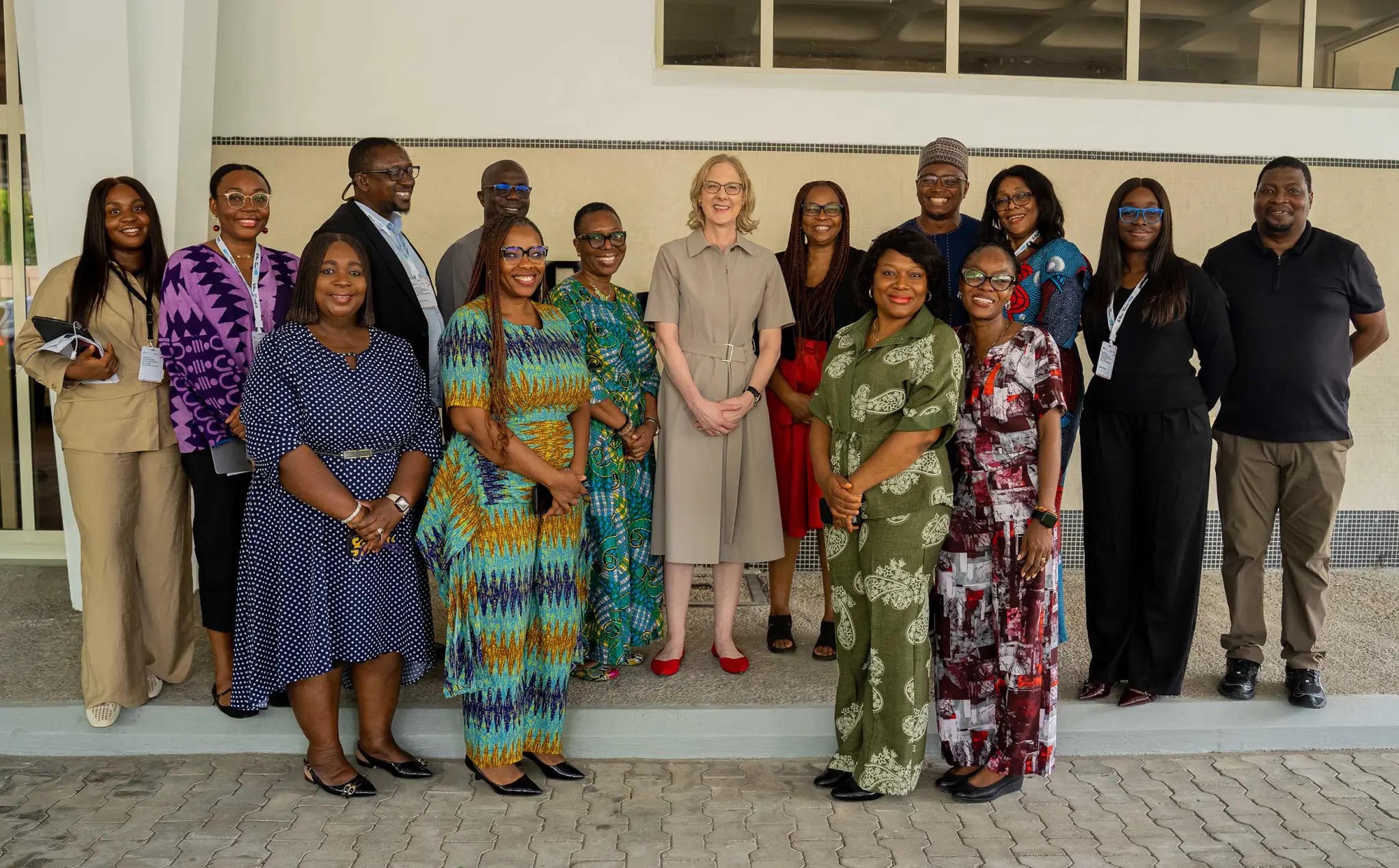
For 65 years, the Ford Foundation has partnered with countries in West Africa, supporting movements focused on equity, democracy and justice. During her visit to Nigeria, Gerken engaged with staff, grantees and institutional partners whose work spans climate litigation, democratic reform and the protection of women and girls. The engagements reflected a growing consensus: sustainable progress emerges when communities lead and institutions support.
Nigeria’s cultural landscape formed a key dimension of the visit. Through spoken word, music and dance, local artists conveyed narratives of resilience, identity and collective responsibility. These expressions were not merely cultural displays but reflections of a deeper societal fabric in which leadership often operates quietly, grounded in lived experience and community trust.
A major highlight was a convening of traditional rulers from over 20 African countries, organised in partnership with UN Women and Nigeria’s Federal Ministry of Women’s Affairs and Social Development. As custodians of culture, these leaders are playing a pivotal role in addressing entrenched social challenges, particularly gender-based violence, which continues to affect one in three women in their communities.
In practical terms, this leadership is driving measurable change. Traditional authorities are revising community norms to protect widows’ rights to remain in their homes and are actively working to eliminate harmful practices such as female genital mutilation. These efforts signal a broader evolution of cultural systems, demonstrating that tradition can serve as a vehicle for advancing dignity and justice rather than reinforcing inequality.
Climate governance also featured prominently in the discussions. At a gathering hosted by Spaces for Change, regional actors examined how decades of fossil fuel extraction have shaped environmental and economic realities, particularly in areas such as the Niger Delta. Leaders including Nnimmo Bassey of the Health of Mother Earth Foundation and Oluseun Onigbinde of BudgIT emphasised the need for environmental repair alongside equitable distribution of resource revenues to support local infrastructure such as schools and healthcare facilities.
The transition to clean energy was framed not only as an environmental imperative but as a development opportunity. Contributions from leaders such as Lanre Shasore of Sustainable Energy for All and Daryl Bosu of A Rocha Ghana highlighted that energy systems must be designed to serve communities directly. Reliable electricity remains central to economic activity, enabling small businesses to grow and agricultural producers to increase value, while also requiring careful protection of ecosystems.
Broader discussions with regional and international stakeholders further reinforced the link between governance and development outcomes. Engagements with figures including former Nigerian Vice President Professor Yemi Osinbajo, representatives from ECOWAS, UN Women and leading philanthropic institutions underscored the importance of strengthening democratic institutions, safeguarding civic space and rebuilding social trust as foundational elements of long-term progress.
At a high-level dinner bringing together traditional leaders, policymakers, business executives and civil society actors, a shared perspective emerged. While the challenges facing the region remain complex, the depth of leadership across sectors provides a strong basis for addressing them. Trust, legitimacy and community ownership were identified as essential components of any sustainable development model.
Gerken’s visit reflects an important evolution in how development is understood and practised. Increasingly, communities are not viewed as passive recipients but as active drivers of change, with institutions playing a supportive and enabling role. Across Nigeria and the wider West African region, this approach is reshaping how progress is defined and delivered.
For Africa, this moment is both reflective and forward-looking. The continent’s nations, many still navigating relatively young statehoods, continue to confront structural challenges shaped by history. Yet within these realities lies a growing confidence in locally driven solutions. As partnerships deepen and leadership continues to emerge from within communities, Africa’s development trajectory is being rewritten, not as a story of dependency, but as one of agency, resilience and deliberate transformation.
Ford Foundation Nigeria, Heather Gerken Nigeria visit, West Africa development, local leadership Africa, Nigeria climate justice, gender equality Africa, UN Women Africa partnership, traditional leaders Africa, African governance systems, community development Nigeria, Niger Delta environmental justice, fossil fuel impact Africa, clean energy Africa, energy governance Africa, Spaces for Change Nigeria, BudgIT Nigeria, Health of Mother Earth Foundation, A Rocha Ghana, Sustainable Energy for All Africa, ECOWAS development policy, civic space Africa, democracy West Africa, African philanthropy, development partnerships Africa, women rights Nigeria, gender based violence Africa, female genital mutilation Africa, widows rights Africa, African cultural leadership, social justice Africa, Nigeria policy reform, African institutions governance, community driven development, grassroots leadership Africa, African civil society, African economic development, sustainable development Africa, African youth democracy, African leadership narrative, Nigeria social impact, African regional cooperation, UN Women Nigeria, African environmental governance, African policy dialogue, Africa energy transition, African development agenda, Africa social transformation, African innovation governance, West Africa partnerships, Africa philanthropy sector, African community empowerment, Africa institutional reform, Nigeria development story, Africa resilience narrative, African justice systems, Africa sustainable growth, African leadership models, Africa civic engagement, African policy leadership, Africa future development, Nigeria infrastructure development, Africa social equity, African transformation agenda, Africa governance challenges, Africa opportunity narrative, Africa grassroots movements, Africa public policy, Africa local solutions, Africa economic inclusion, Africa democratic institutions, Africa social impact leadership, Africa development strategy, Africa empowerment initiatives, Africa partnership models, Africa women leadership, Africa human rights governance, Africa environmental sustainability, Africa inclusive development, Africa institutional trust, Africa leadership capacity, Africa regional stability, Africa economic resilience, Africa policy innovation, Africa sustainable future