


|
Getting your Trinity Audio player ready...
|
Al-Shabaab (“The Youth”) arose out of a broken Somali society following the oust of Siad Barre in 1991. Al-Shabaab is a radical Salafi Islamist organization that is an attempted recreation of Al-Itihaad Al-Islaami, which mainly collapsed following Ethiopian intervention in 1996. However, when the Islamic Court Union (ICU) – an Islamist organization – took power over Somalia in 2006, Al-Shabaab’s seeds were planted. Al-Shabaab’s rise to power in Somalia didn’t happen in a vacuum, rather by internal and external events and factors. Hence, the need to undercover the factors and events that led to the rise of this violent extremist organization (VEO).
Background
For one to understand the rise of Al-Shabaab in Somalia, one needs to have a good understanding of the country, hence the following. Foremost, Somalia is located in the horn of Africa, bordering Ethiopia, Djibouti, and Kenya. Somalia is also home to arid planes and has a very mountainous north. Moreover, Somalia is also one of the most homogenous countries in the world as the different ethnic groups share a common origin and identity. Most ancient Somalis were nomadic people who relied on the on herding of farm animals. The other portion of ancient Somalis relied on agriculture in the fertile areas of Somalia such as the areas between the Jubba and Shebelle river.
In 1887, Britain took control of Northern Somalia and Italy under Mussolini did so likewise to Southern Somalia. This colonization by the two European powers contributed to the division of the Somali people. The Somalis were consequently divided into different regions, and many of them ended up in neighboring countries. Nevertheless, the occupies’ rule came to an end in 1960, which resulted in the creation of the Somali Democratic Republic.
The creation of the Somali Democratic Republic was only one of two main wishes the Somalis had. The Somalis’ final wish was to reunite the Somali people who were scattered because of European colonization. Therefore, the desire of irredentism erupted amongst millions of Somalis and their leaders. This desire would later lead to numerous wars with Somalia’s neighboring countries, which created instability in the State.
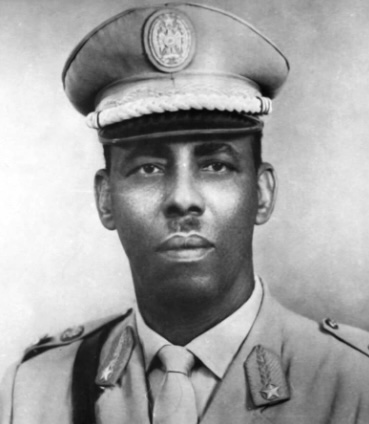
Major-General Siad Barre, who were to later rule Somalia with an iron fist from 1969-1991, came into power following a military coup in 1969. Nonetheless, when a civil war ensued in Somalia in 1991 because of economic and political woes, President Barre was subjected to the same fate as his predecessor. His departure left a power vacuum in Somalia that would later be taken advantage of by various violent extremist organizations (VEOs) like Al-Shabaab and foreign states. Thus, one must ponder: What factors and events contributed to the rise of Al-Shabaab in Somalia?
Irredentism
Irredentism – the desire to reunite a dispersed ethnic group – was one of the main factors that led to instability in Somalia, and thus one of many pretenses of the establishment of Al-Shabaab years later following Barre’s oust. After Somalia’s independence and its establishment in 1960, the Somali Democratic Republic created a flag with a five-pointed star. This star and its points represented the five territories that Somalia wanted to capture to reunite the Somali people. The desire to reunite the Somali people who were dispersed following European colonization was later acted upon via numerous wars.
The Irredentist Wars
Following Somalia’s independence from its two colonizers, the state had several wars of irredentism. Between the years 1963 to 1967, Somalia enacted a guerilla war in the Northern Frontier District of Kenya, where many ethnic Somalis were located. This war ushered in deeper distrust between the two states. Somalia then acted in a Somali uprising in the Ogadenregion of Ethiopia, which led to a war of attrition until the breakout of the full-scale Ogaden War in 1977. The Somali guerilla war between 1963 to 1967 and the war of attrition with Ethiopia resulted in political and economic woes under President Ali Sharmake’s tenure. The woes led to the military coup of President Sharmake in 1969 and his assassination. Autocratic Siad Barre subsequently replaced President Sharmake in 1969.
Islamic Marginalization Under Siad Barre
Siad Barre’s rule heighted the sense of Islamic marginalization and created instability in the state as his rule was based on his own interpretation of Islam. Thus, he demanded full control over the religious masses in Somalia, and this has been expressed numerous times. In 1975, Barre established Somalia’s controversial family law, which provided equal inheritance rights regardless of one’s sex. This family law was interrupted by many in Somalia to be against Islamic values and law. Consequently, many sheiks spoke out against this move. However, the outspoken sheiks were later subjugated to public execution and imprisonment for speaking out against Barre’s interpretation of Islam. Additionally, in July 1989, hundreds of Muslim demonstrators were protesting in Sheikh Ali Sufi masjid in Mogadishu against Barre’s imprisonment of outspoken Sheiks. The hundreds of demonstrators were slayed in the masjid under Barre’s command, too. These acts by the Barre’s regime precipitated the rise of Salafi extremist groups in Somalia.
Moreover, more extreme Salafi followers fled to Saudi Arabia to escape persecution under Barre’s crackdowns. However, when the Barre regime fell, a power vacuum ensued in the State. These Salfi men returned Somalia and created an armed militant group named Al-Itihaad Al-Islaami, which would precede the creation of Al-Shabaab as various of its leaders would later create the group.
Somalia’s Juggling of Foreign States
Barre’s juggling between the US and the Soviet Union led to economic instability in Somalia and complications of relations, which helped facilitate the fall of Barre’s regime and instability in Somalia and the subsequent rise of Al-Shabaab. After independence, Somalia received heavy funding by Western backers to prevent Soviet influence in the country. However, when Siad Barre came into power in 1969, he adopted socialism and expelled the aid of Somalia’s western funders. Barre would later receive heavy foreign support from the USSR. Again, Somalia would see a reversal of relations when Barre’s regime expelled Soviet ambassadors following the Soviets recognition of Mengistu Haile Mariam regime in Ethiopia in 1974 and when Somalia invaded Ethiopia again in 1978 for irredentist desires. Nevertheless, following the collapse of the Soviet Union, the US stopped supplying Somalia foreign aid. This cease of aid threatened the patronage network Barre used throughout his rule and the government programs his regime funded; thus, running his legitimacy seen by the masses and helped facilitate the end of his regime in 1991.
Islam’s Role in a Fractured Society
Somalia descended into a lawless and broken society following the collapse of Barre’s regime in 1991. During this time, Somalia went back to their old ways of clan dominance and rule. Moreover, Islamic authorities increased in popularity in this power vacuum state as they offered local and regional stability via Islamic law. This increased the legitimacy of Islamists and their influence throughout the country. The Union of Islamic Courts (UIC) – which was made up of various local and regional Islamists and clan leaders – was created to counter the United States established Alliance for the Restoration of Peace and Counter-Terrorism’s rule in Mogadishu. Ultimately, UIC gain control of Mogadishu in 2006 and reorganized itself into a government structure named the Council of the Islamic Courts (CIC). This new court consisted of moderates and various hardliners. And one such hardliner was Sheikh Hassan Dahir ‘Aweys, who was one of the individuals who created Al-Shabaab, which later emerged as the most militant youth group of the UIC.
Destruction of Clan Patrimonial System
Clan identity is center in Somali society and life. Moreover, when Somalia fell into chaos following Siad Barre’s oust, the clan patrimonial system disintegrated, and the previous grievances were exacerbated. Therefore, clan clashes were common and continue to be to this day, creating instability and a sense of marginalization in Somali. Al-Shabaab exploits this clan instability and marginalization. For instance, it’s reported that Al-Shabaab uses clan-based recruitment strategies to attract recruits. In fact, this strategy is commonly used by Al-Shabaab to attract minority and marginalized clan members in foreign lands such as Kenya.
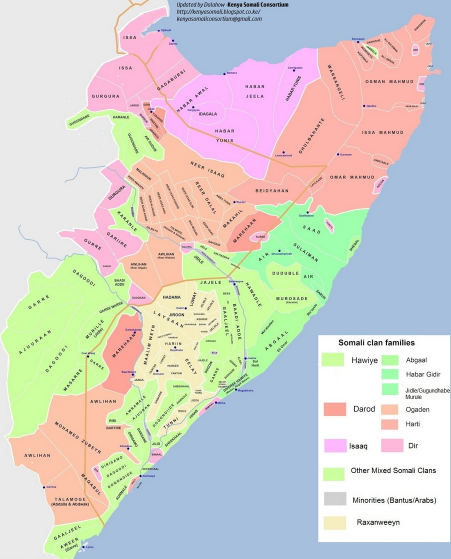
This strategy is effective as Somalia is divided into six major clans, which are then divided into various sub-clans. The six major clans are the Hawiya, the Isaaq, the Darod, the Rahanweyn, the Dir, and the Digil clans. The four largest clans in Somalia in terms of percentage of people are the Hawiya (about 25%), the Isaaq (about 22%), the Darod (about 20%), and the Rahanweyn (about 17%), respectively. These clans are also somewhat dictated to geological lines. For instance, much of the Isaaq clan resides in the north of Somalia in today’s Somaliland. Most of the Hawiye reside in areas surrounding the capital, Mogadishu, and areas North. The Rahanweyn clan mainly resides Northwest of Mogadishu, while the Darod clan is split between Southern Somalia and Northern Somalia above the Hawiya clan.
Ethiopian Intervention
The Council of the Islamic Courts’ rule in 2006, however, only lasted six months. The Ethiopian army backed by the US, overthrew the CIC in December 2006 and replaced the CIC’s rule with the Transitional Federal Government (TFG). Moreover, the Ethiopian intervention resulted in the separation of Al-Shabaab – the main military force of the UIC – from the UIC. During the Ethiopian intervention, Ethiopia also indiscriminately shelled densely populated areas, resulting in many civilian casualties and the reduction of the Transitional Federal Government’s legitimacy. Additionally, Al-Shabaab emerged as the only capable resistance force able to oust the foreign installed government, resulting in an increase of legitimacy and popularity in Somalia.
Conclusion
Many events and factors led to the rise of the Al-Shabaab in Somalia. The Somalis’ irredentist desire led to numerous wars that created instability in the state. This instability ushered in new organizations such as the Islamic Court Union and Al-Itihaad Al-Islaami – the predecessor organization of Al-Shabaab – amongst others, and new individuals like Siad Barre in 1969. Under the rule of Siad Barre, Muslims were marginalized, and clan violence were kept to a relatively low level. Nevertheless, when Siad Barre was overthrown in 1991, Somalia became a broken state with no rule of law; and legitimate authority, and clan patronage, which kept the clans peaceful in a sense collapsed.
This lack of order and chaos led to the rise of various regional leaders. These regional leaders used Sharia as a means of ensuring stability in the State. Later, many of these Islamic leaders would join to create the Islamic Court Union, which took control of Somalia in 2006 following the forced ousting of the foreign established Alliance for the Restoration of Peace and Counterterrorism. However, the ICU experienced the same fate as their predecessor and was ousted a few months later themselves. This event fractionalized the ICU, and various hardliners emerged in prominence like Sheikh Hassan Dahir ‘Aweys who was the one main leader who created Al-Shabaab. Moreover, dire economic conditions in the country, a sense of religious and political marginalization from corruption, and child recruitment led to the emergence and the strengthening of the organization in the Horn of Africa.