
|
Getting your Trinity Audio player ready...
|
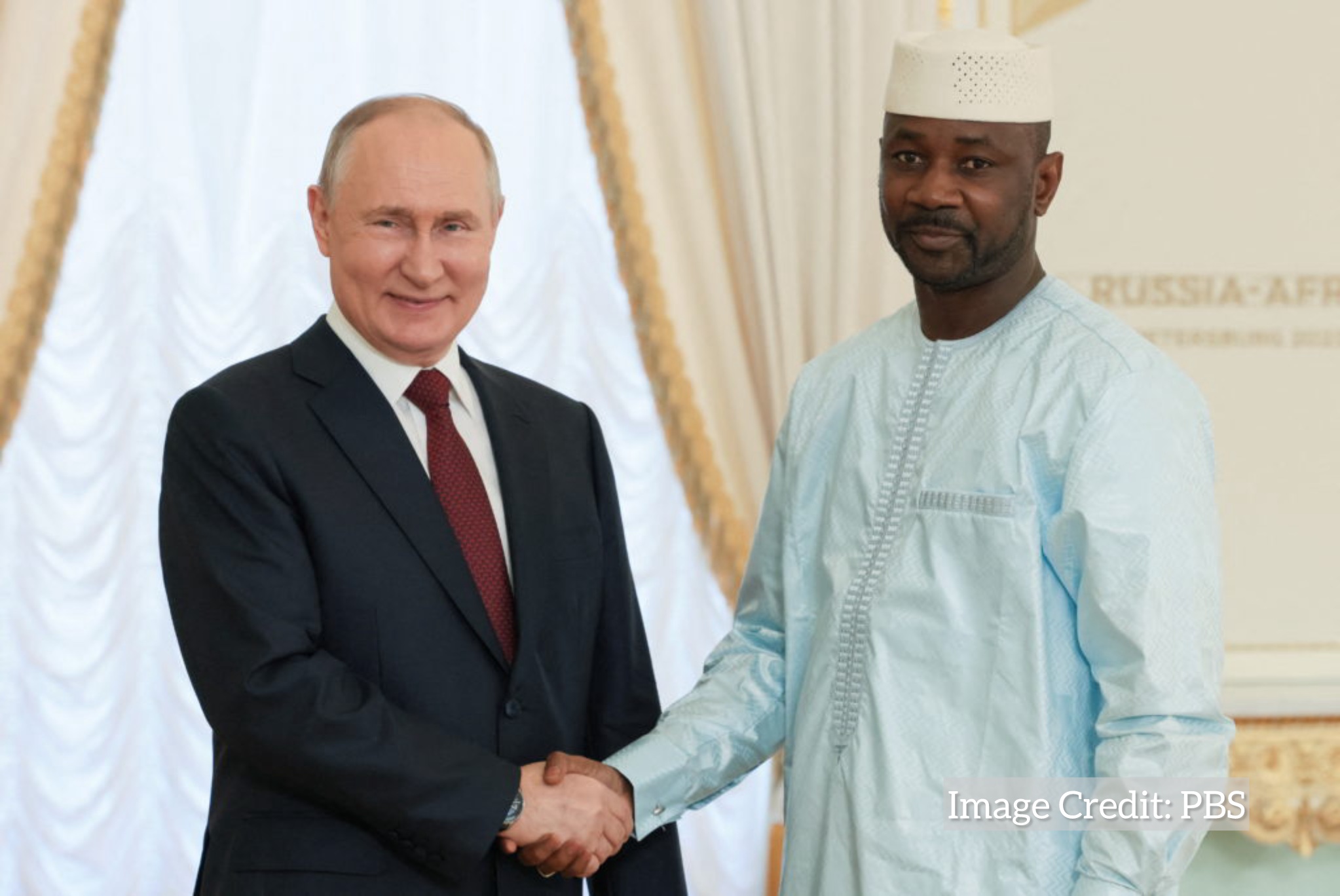
Mali’s military-led government has deepened its strategic ties with Russia by signing a series of trade, nuclear, and mining deals aimed at boosting the West African nation’s infrastructure and resources. These agreements come as the junta, led by Colonel Assimi Goïta, seeks to extend its grip on power by postponing elections and redefining Mali’s geopolitical alliances.
A New Phase of Russian-Malian Cooperation
In early July 2024, Mali and Russia formalized multiple bilateral agreements during a high-level meeting in Bamako between Malian ministers and Rosatom, Russia’s state nuclear energy corporation. The agreements include plans to:
• Develop Mali’s first nuclear infrastructure for peaceful energy generation,
• Build a low-power nuclear plant tailored to Mali’s needs,
• Train local experts in nuclear safety and energy,
• Launch public awareness campaigns to promote peaceful nuclear use.
Rosatom will also support solar energy development and geological research in Mali, broadening the energy and scientific cooperation between both countries.
In parallel, Russian firms including Uranium One, a Rosatom subsidiary, signed deals to explore and develop uranium and potentially lithium resources across Mali. These minerals are key to both energy security and the global green energy transition, making Mali an increasingly valuable partner to Russia in Africa.
Resource Deals and Refinery Ambitions
Mali also expanded its mining sector partnerships with Russia, adding to earlier agreements signed in March 2024. These include joint ventures in uranium, gold, oil, and gas exploration, particularly in northern and central Mali.
One major initiative is the construction of a gold refinery in Bamako, capable of processing 200 tons annually. This project is part of the junta’s broader strategy to nationalize and localize the extraction and export of Mali’s vast natural resources, while reducing the country’s dependency on Western firms.
However, these moves have raised tensions with Western mining companies. Reports have emerged of increased taxation, expropriation threats, and arrests of foreign mining personnel, especially from Canadian and Australian firms. Russian-affiliated companies appear to be receiving preferential treatment under the new legal framework introduced by the junta.
Political Calculations Behind Economic Moves
Analysts view these economic deals as deeply political. Since seizing power in a 2021 coup, Colonel Goïta has systematically severed ties with Western nations, expelled French troops, and withdrawn Mali from key international alliances, including the UN peacekeeping mission and the regional ECOWAS bloc. In their place, the junta has pivoted toward Moscow and fellow military-led regimes in Burkina Faso and Niger, forming a new Sahel alliance.
By aligning with Russia and controlling resource revenues, the Goïta government is securing both financial lifelines and diplomatic legitimacy. The nuclear and trade agreements serve a dual purpose: they provide economic opportunity while reinforcing Goïta’s claim of sovereignty and self-determination for Mali.
At the same time, the junta has delayed a promised transition to civilian rule, with no clear date for democratic elections. The government argues that stability, infrastructure development, and national security must take priority. Critics, however, say these arguments are designed to prolong military rule under the guise of modernization.
Security and Surveillance Ties
Beyond energy and resources, Mali is also cooperating with Russia on security. Since 2022, Russian mercenaries affiliated with the Wagner Group have been active in Mali, operating under a security agreement that includes intelligence sharing, training, and combat operations against insurgents.
Recent reports suggest that Mali is now exploring satellite surveillance and drone programs with Russia, aimed at bolstering its internal security apparatus. These technologies would give the junta greater control over its borders, conflict zones, and domestic opposition.
A Nation at a Crossroads
Mali’s shift toward Russia marks a dramatic reorientation of its foreign policy. With China and Iran also showing interest in Mali’s minerals and energy markets, Goïta’s government is positioning the country as a sovereign actor charting its own path albeit under authoritarian rule.
The short-term benefits are tangible: new infrastructure projects, enhanced military capabilities, and international visibility. But the long-term risks include increasing isolation from Western financial institutions, overreliance on authoritarian partners, and a suppression of political freedoms at home.
As Mali deepens its relationship with Russia, the Goïta regime appears determined to consolidate power for the foreseeable future fuelled by trade, protected by foreign mercenaries, and justified through promises of national progress.
Whether this strategy leads to sustainable development or entrenched dictatorship remains to be seen. But for now, Mali stands firmly within Russia’s growing sphere of influence in Africa, with Colonel Goïta at the helm of a reconfigured and highly contested national future.