


|
Getting your Trinity Audio player ready...
|
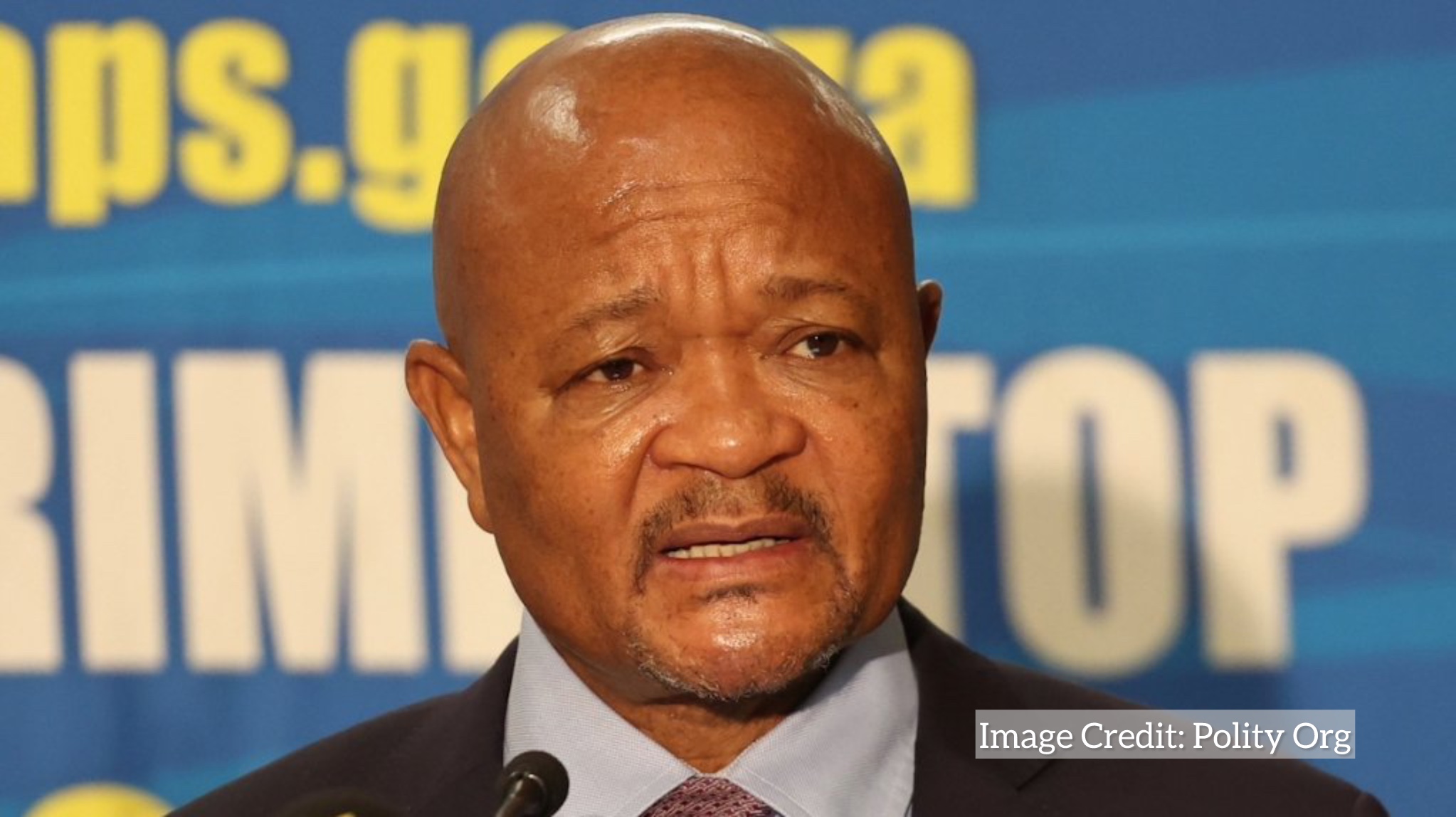
South African President Cyril Ramaphosa has placed Police Minister Senzo Mchunu on an immediate leave of absence following explosive allegations of links to organised crime. The president made the announcement during a nationally televised address, where he also confirmed the formation of a judicial commission to investigate the claims, citing concerns about national security and the integrity of the country’s law enforcement system.
In the interim, Professor Firoz Cachalia has been appointed to act as Minister of Police while investigations proceed. President Ramaphosa emphasized the gravity of the accusations, noting that the implications reach beyond personal misconduct and suggest systemic interference in criminal investigations particularly those involving political assassinations and internal corruption within law enforcement.
Minister Mchunu, a veteran political figure in the ruling African National Congress (ANC), has denied any wrongdoing. In a formal statement, he welcomed the president’s decision and pledged to cooperate fully with the inquiry.
“I am ready to respond to the accusations. Honour and integrity are values I hold dearly, and I am committed to upholding them,” he said.
The allegations came to light following a public statement by KwaZulu-Natal provincial police commissioner, Lieutenant General Nhlanhla Mkhwanazi. He claimed that Mchunu had received financial backing from a controversial businessman to support his political ambitions. Mkhwanazi also outlined a troubling series of events, including the alleged manipulation and disbanding of a special police unit tasked with investigating politically motivated killings particularly in KwaZulu-Natal, a region long plagued by politically linked violence.
The task team in question, formed in 2018, had reportedly uncovered evidence implicating high-ranking officials, including politicians, police personnel, and business figures, with ties to an organised drug cartel. Mkhwanazi alleged that the team was dissolved under questionable circumstances by Minister Mchunu, who had publicly claimed the unit was not delivering results, despite unresolved cases.
Further allegations include the unauthorized removal of 121 case dockets from the unit under the minister’s instruction. These case files, some of which reportedly contained active arrest directives, have allegedly remained inactive at police headquarters since March. According to Mkhwanazi, the removal of these files occurred without the approval of National Police Commissioner General Fannie Masemola.
The businessman at the center of the financial link allegations, Vusimuzi Matlala, was previously involved in a lucrative contract with the police service. The contract was reportedly terminated following Matlala’s arrest on attempted murder charges earlier this year. Mkhwanazi presented what he described as text messages and payment records to substantiate the financial ties between Matlala and the minister.
Political analysts have noted that the allegations may significantly impact the internal dynamics of the ANC, where Mchunu was considered a potential candidate for leadership at the party’s next elective conference in 2027. His sudden removal and the serious nature of the claims may alter power balances within the ruling party, particularly in the KwaZulu-Natal region, a politically influential province.
The judicial commission, which will be chaired by the Deputy Chief Justice, has been mandated to conduct a full inquiry not only into the allegations against Mchunu but also into the wider conduct of both current and former police officials and members of the national executive. The goal, according to the president, is to restore public confidence in law enforcement institutions and ensure accountability at the highest levels.
The unfolding case has drawn widespread attention and intensified public calls for greater transparency and reform in South Africa’s policing and justice systems. For now, the nation awaits the findings of the judicial inquiry, which could have far-reaching implications for law enforcement credibility, political stability, and the fight against organised crime.