


|
Getting your Trinity Audio player ready...
|
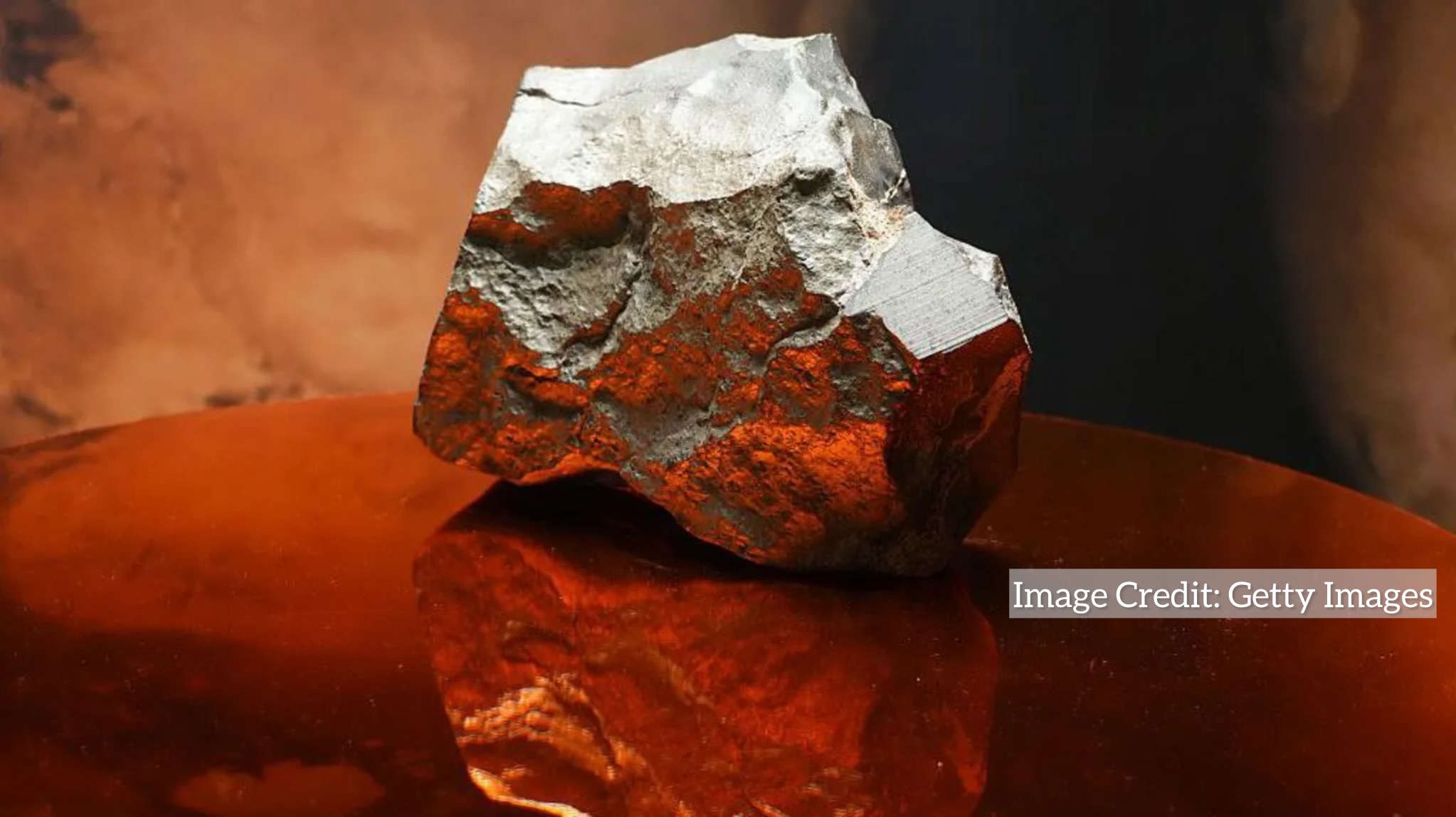
A record-breaking Martian meteorite has fetched $4.3 million at a Sotheby’s auction in New York, marking a historic moment for space science and collectors alike. Weighing 24.5 kilograms and measuring nearly 38 centimeters, the rare specimen believed to be the largest piece of Mars ever found on Earth pushed the final sale total to around $5.3 million after taxes and fees. Its exceptional size and origin make it a standout among the few hundred Martian meteorites ever discovered.
The meteorite, officially named NWA 16788, weighs 24.5 kilograms (54 pounds) and stretches nearly 38 centimeters (15 inches) in length. According to Sotheby’s, it is approximately 70% larger than any other known Martian rock discovered on Earth, making it a scientific and geological rarity of extraordinary proportions.
A Martian Visitor from the Depths of Space
The rock was discovered in November 2023 in a remote part of Niger, a country in West Africa known for its vast desert landscapes that often yield meteorite finds. Classified as a Martian meteorite, NWA 16788 originated from the surface of Mars, blasted into space by an asteroid impact before making its long journey through space and eventually landing on Earth.
Meteorites like this one are fragments of celestial bodies such as asteroids, comets, or planets that survive the fiery descent through Earth’s atmosphere. Martian meteorites are especially rare fewer than 400 have ever been identified and even fewer are found in such pristine and sizable condition.
Astronomically Rare and Scientifically Priceless
Sotheby’s vice chairman for science and natural history, Cassandra Hatton, emphasized the rarity of the find.
“The odds of a rock like this traveling from Mars, surviving entry through our atmosphere, and landing in a location where it can actually be recovered are astronomically small,” she said in a statement.
She also highlighted how lucky it was that the meteorite landed on land and not in an ocean which covers around 70% of Earth’s surface where it would likely never have been discovered.
Where It Goes Next Remains a Mystery
The identity of the buyer remains undisclosed, and it is currently unknown whether the meteorite will remain in a private collection or be loaned to a museum or research institution. Regardless, its sale marks a milestone in both the collector and scientific communities.
The auction, which included over 100 items, featured several other significant natural history lots. Notably, a Ceratosaurus skeleton from the Late Jurassic period sold for $26 million, while the skull of a Pachycephalosaurus fetched $1.4 million.
A Rare Window Into the Red Planet
With its sale, NWA 16788 joins a small and prestigious group of Martian meteorites that provide critical insights into the geology, atmosphere, and history of Mars a planet central to ongoing exploration and future human missions. As space agencies continue to search for signs of life on Mars, rocks like this remind us that pieces of the Red Planet are already here, offering opportunities for study that are literally out of this world.