

From “Temple Run” to Torque Wrenches: How Returnees in Sierra Leone Are Rebuilding Their Futures
Written By Maxine Ansah

|
Getting your Trinity Audio player ready...
|
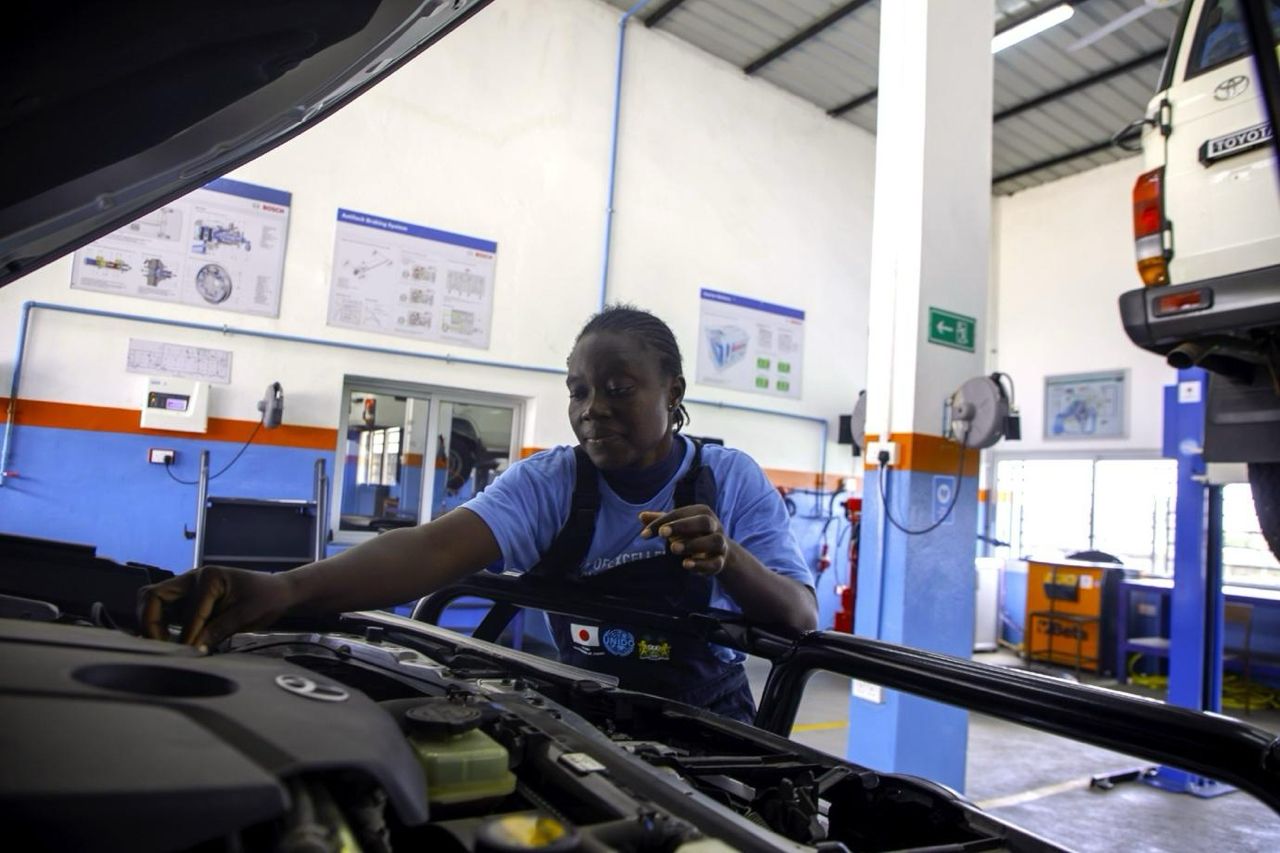
Freetown, Sierra Leone – In the busy courtyard of the Government Technical Institute in Freetown, the sharp ring of metal tools and the low rumble of engines mark a new chapter for a group of young returnees determined to change their lives. Among them is Kadiatu, her hands steady on a wrench as she examines an engine with the calm focus of someone discovering both skill and purpose.
For the past three weeks, Kadiatu and twenty-five other returnees have been part of the Automobile Skills Development Training Programme, a vocational initiative launched in 2025 by the International Organization for Migration (IOM) in partnership with the Government of Sierra Leone and private sector partners. This effort is supported by the European Union through the Migrant Protection, Return and Reintegration Programme for Sub-Saharan Africa (MPRR-SSA).
The programme was created to help returnees gain practical, in-demand skills so they can re-enter the job market and build sustainable futures at home. For Kadiatu, it offered something even deeper: a path forward after surviving a journey that nearly cost her everything.
In 2023, at just twenty-four years old, Kadiatu joined what many in Sierra Leone
call “temple run” – the perilous route across forests and the Sahara Desert that thousands attempt each year in search of better opportunities in Europe. “The desert felt endless,” she recalls. “There were moments when I didn’t know if I would make it.”
The dangers of irregular migration are well documented. Many migrants become stranded without food or water, fall victim to smugglers, or face detention and violence at borders. Yet limited economic opportunities at home continue to push young people to risk the journey, driven by hope as much as desperation.
According to IOM, between 2022 and 2025 nearly 2,800 Sierra Leoneans who found themselves stranded along these dangerous routes were assisted to return home and start over. When Kadiatu returned in 2024, she seized the opportunity to join the newly launched automobile training course.
Under the guidance of certified mechanics, the trainees learn to repair engines, replace tyres and batteries, and perform diagnostic checks. Alongside these technical lessons, they receive training in basic business management to help them run or establish small garages of their own.
A central part of the programme’s strength lies in its close collaboration with the Government of Sierra Leone. This partnership helps ensure the programme’s sustainability and embeds it within national efforts to create jobs and reduce the drivers of unsafe migration. As IOM explains, such approaches help ensure that migration becomes a choice rather than a necessity.
For Kadiatu, the difference is already clear. “I never saw myself as a mechanic,” she says with a smile. “Now I can diagnose engine problems and fix minor issues. It feels empowering. This is just the beginning. I plan to open a small garage in my community.”
In a country where high youth unemployment continues to push many toward dangerous routes, vocational training offers a practical and hopeful alternative. And for returnees like Kadiatu, the sound of tools and engines in Freetown’s training yard is more than just noise. It is the sound of rebuilding; skill by skill, hope by hope.