

Two Hours to Life: Motorbike Ambulances Bring Hope to Mothers in Rural Benin
Written By Maxine Ansah

|
Getting your Trinity Audio player ready...
|
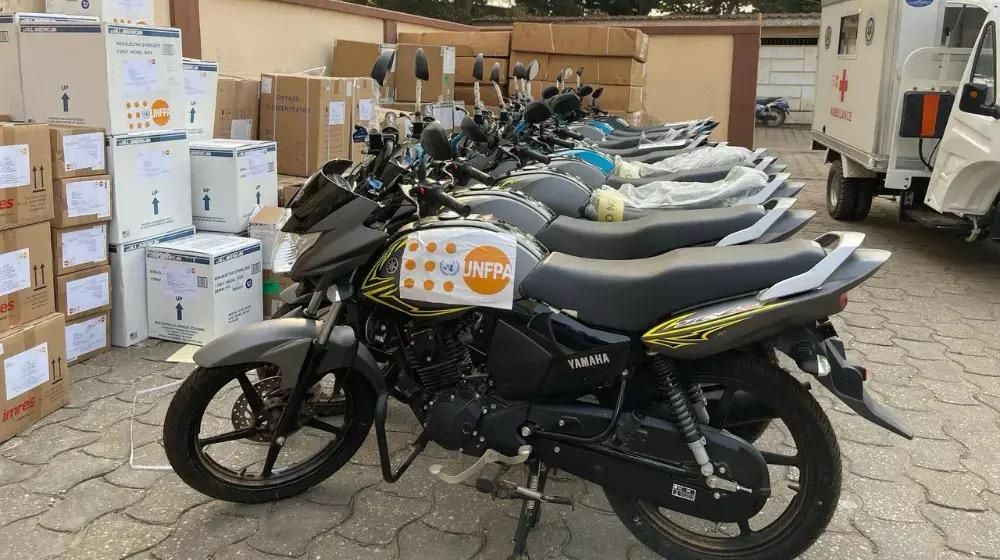
In rural Benin, where long distances and treacherous roads often stand between expectant mothers and life-saving medical care, a fleet of motorbike ambulances is reshaping maternal and newborn health outcomes.
For many families, access to safe delivery services can mean the difference between life and death. This is especially critical in Benin, where maternal mortality rates remain among the highest in the world. According to the most recent data, 518 women die from pregnancy-related causes for every 100,000 live births. In comparison, the global average stands at 197 deaths per 100,000 live births.
It is against this backdrop that the arrival of motorbike ambulances has brought relief and renewed hope to communities such as Hêvié, in the Abomey-Calavi commune.
“When my brother’s wife went into labour, the health centre sent a motorcycle ambulance,” recalled Edouard Affonissèkpé, a local photographer. “Given the state of our road and the distance between our village and the health centre, I did not believe such a motorcycle could come all the way to the house. But I was astonished when, a few minutes later, I heard the sound of the engine at the gate. As soon as it arrived, it took us to the Abomey-Calavi district hospital. Without it, I am not sure my nephew or his mother would be alive today.”
The initiative is part of the “Two Hours to Life” programme, which is implemented by UNFPA, the United Nations sexual and reproductive health agency, in partnership with Benin’s Ministry of Health and funded by Takeda Pharmaceuticals. The programme seeks to reduce maternal deaths by ensuring that women in rural communities can reach essential health services within two hours.
Beyond the ambulances, the programme has also provided health centres with medical and technical equipment, contraceptives and maternal health supplies, along with digital tools and communication materials. Importantly, patients do not pay for the ambulance service. For many in rural communities, this has come as a pleasant surprise.
“We paid nothing,” said Léonie Hounguè, a resident of Hêvié Sogan who used the service. “I kept wondering how much it would cost, but the driver told us we did not owe anything.”
Each motorbike ambulance in Hêvié assists six to eight patients every month, according to community health worker Clovis Dossou. He described the ambulances as a lifeline, although he acknowledged that keeping the service running will require sustainable investment in the future.
“This equipment is a treasure,” he said. “For the moment, the service is free and nothing is required of patients. The drivers were initially meant to receive a fee, but they have so far declined payment. This sacrifice is a gift to the community.”
The story of the motorbike ambulances is one of innovation meeting necessity. By bridging the gap between remote villages and health facilities, these vehicles are giving women and newborns a better chance at survival. For families like the Affonissèkpés, it has already made all the difference.