
Nurturing Minds, Feeding Futures: How Africa is Transforming School Meals
Written By Maxine Ansah

|
Getting your Trinity Audio player ready...
|
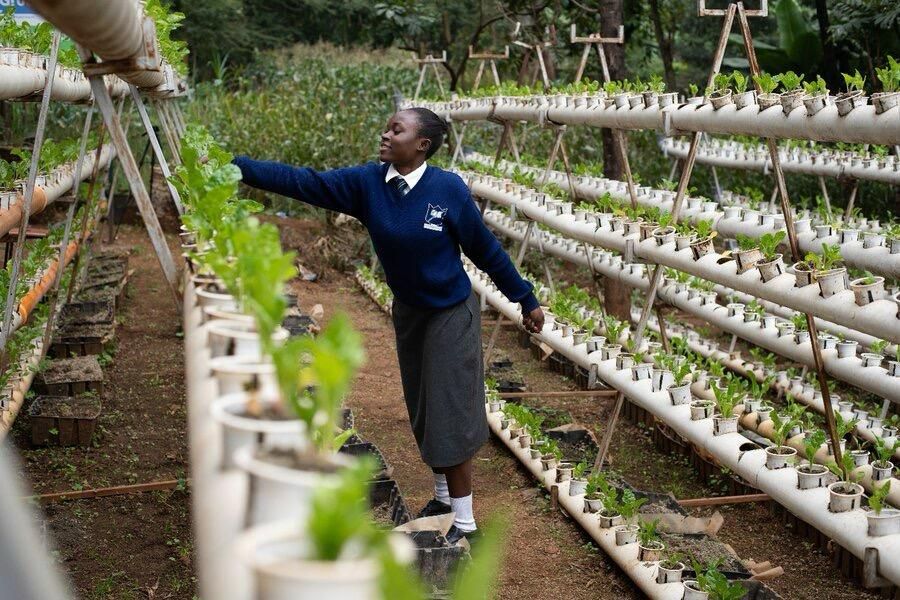
At Olympic Secondary School in Kibera, Nairobi’s largest informal settlement, 17-year-old Mercy Mmboga proudly checks rows of spinach sprouting from recycled plastic pipes. The plants grow without soil, thanks to hydroponics, a farming technique she learned in her agriculture class. Twice a week, she and her classmates harvest the vegetables to add to the hearty lunches served to over 1,200 students.
For Mercy, the initiative is more than a science lesson. It represents hope for better nutrition, sustainable farming and a healthier environment. “These greens help us get the nutrients to concentrate in class and learn,” she explains. “I can recycle the plastic. It is good for the environment.”
Not long ago, the World Food Programme (WFP) provided school meals directly in Kenya. Since 2018, however, the national government has taken full responsibility for the programme, with WFP offering technical assistance such as setting up hydroponic systems. Under this leadership, school meals coverage has expanded from 1.8 million children in 2023 to 2.6 million last year. The country is now working towards universal coverage, targeting 10 million children by 2030.
Kenya’s progress reflects a continental shift. Across sub-Saharan Africa, 20 million more children are now receiving school meals compared to 2022. In total, 71.5 million students are benefitting from government-led initiatives. These meals are increasingly recognised not just as a way to fight hunger, but as an investment in education, health and economic growth.
“Leadership in Africa has really stepped up,” says Carmen Burbano, WFP’s Director of School Meals. She points to countries such as Rwanda and Benin as examples of governments taking bold ownership of the programmes. In places like Burkina Faso, Lesotho and Rwanda, school meals are now mainly funded through national budgets. Other countries including Ethiopia and Burundi have significantly increased their investments, while continuing to receive some external support.
This transition towards government ownership marks a major success. “Government takeover is a success story,” explains Edna Kalaluka, Head of School Feeding at WFP’s Eastern and Southern Africa office. “It means we are meeting our goals. Government ownership promotes sustainability.”
Building stronger food systems
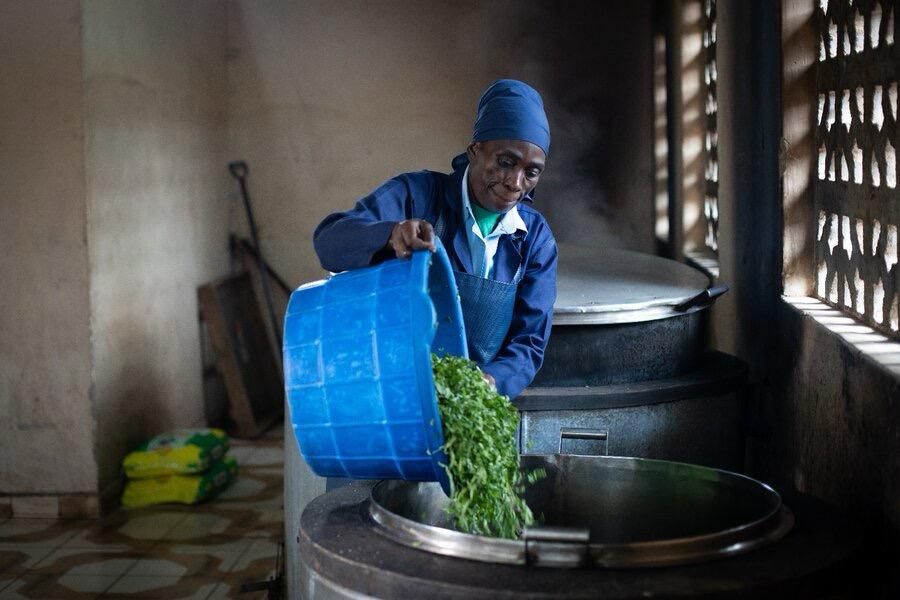
School meal programmes are also serving as a catalyst for strengthening local economies and food systems. In Kenya, food is increasingly being grown in schools or sourced directly from local farmers. Research shows that for every 1 US dollar invested in school feeding, between 7 and 35 dollars can be generated in economic returns. In Eastern Africa alone, 32,000 metric tons of food were procured from more than 18,000 farmers, injecting nearly 16 million US dollars into local economies.
In Rwanda, all 4.5 million schoolchildren receive meals sourced from local growers. Farmers like Clementine Mukandayisenga from Kayonza district supply fruits and vegetables to schools. This steady demand has not only improved children’s nutrition but also enabled her family to purchase land. In Burundi, locally sourced school meals have boosted farmers’ incomes by 50 percent and created jobs in farming cooperatives.
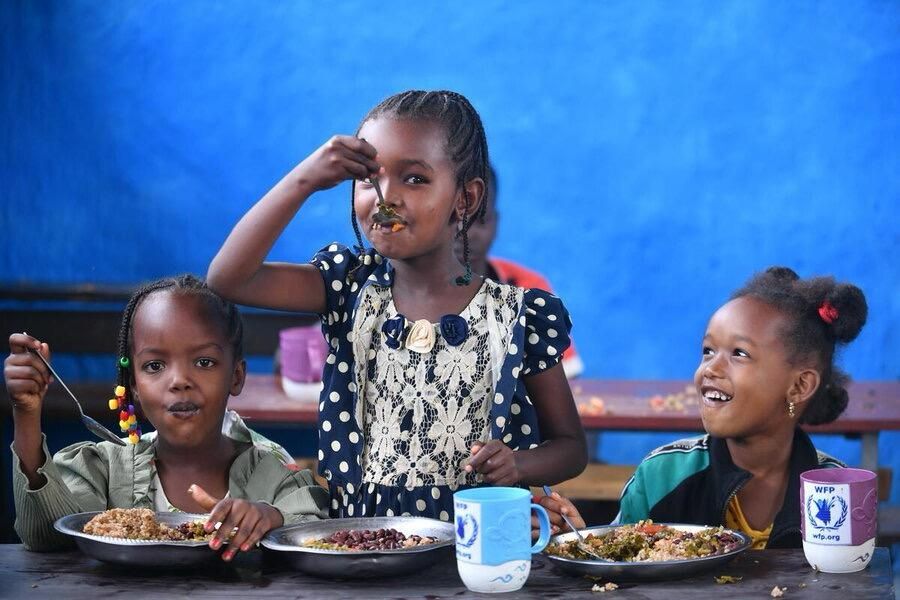
The impact is also evident in Benin, where government-led programmes support both children and smallholder farmers. Nine-year-old Schékina Ahanhoto says the food helps her focus on learning. “I know that when I eat my canteen meal, I will be in good health and I will be able to keep up in class,” she explains. Similarly, in southern Malawi, headmaster Felix Malinda notes that school enrolment has increased since meals began being provided by local farmers. “We have noticed that the enrolment of the school is growing,” he says.
Adapting to crises
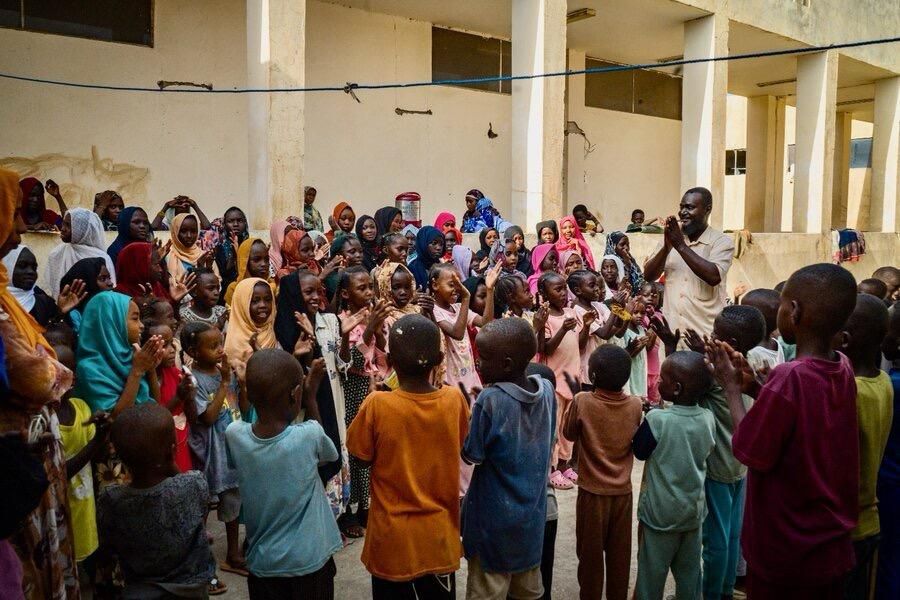
Despite this progress, challenges remain. In conflict-affected countries such as Sudan, school feeding has been severely disrupted. Ongoing civil war has forced 16 million children out of school and broken food supply chains. Yet, even amid the crisis, more than half a million students still benefitted from locally procured school meals last year, with WFP purchasing cereals worth 6 million US dollars from Sudanese farmers.
In Al Hafayer, a small town in eastern Sudan, schools have closed but children continue to learn in makeshift classrooms. Volunteers like Hassan and Hanaa, themselves displaced by conflict, are determined to ensure that education continues. For them, school meals are not just about food, but about sustaining hope for a brighter future.
A recipe for the future
The story of school meals in Africa is one of resilience, innovation and leadership. Governments are not only feeding millions of children but also embedding practices that strengthen communities and local economies. Whether through hydroponics in Nairobi or farmer cooperatives in Rwanda and Burundi, these programmes are creating pathways to better health, education and livelihoods.
As more African governments take charge of feeding their students, the continent is setting a powerful example of how political will, local innovation and community participation can nurture both minds and futures.