
DR Congo Ebola Crisis Passes 3,000 Deaths as Transmission Remains Uncontrolled

|
Getting your Trinity Audio player ready...
|
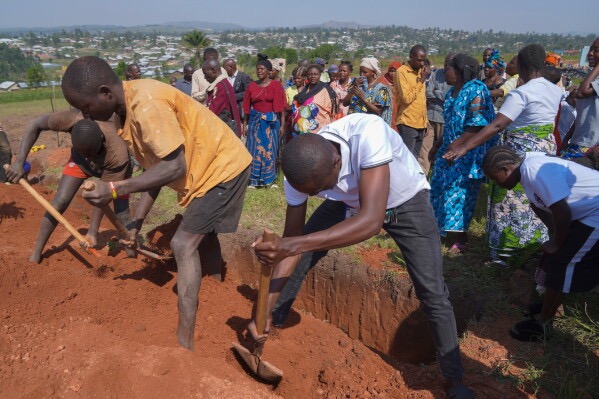
The Democratic Republic of Congo’s Ebola outbreak has passed 3,000 deaths as cases continue increasing faster than public-health teams can reliably identify and interrupt transmission. The country has now recorded 6,186 confirmed cases and 3,007 deaths, according to the latest government figures.
That represents a material deterioration within days. The previous government count reported 6,041 confirmed cases and 2,911 deaths. The outbreak is already the deadliest Ebola epidemic in Congo’s history and is spreading across six provinces. Two additional health zones in North Kivu were affected last week.
Authorities are particularly concerned that a large proportion of infections are being detected outside known chains of transmission. Only between 15 and 20 per cent of confirmed new cases are emerging from contacts already known to health teams, according to public-health analysis cited in the latest reporting.
That means surveillance systems do not know where many infections are coming from until patients have already become ill. The disease is being driven by the Bundibugyo Ebola virus. There is currently no approved vaccine or specific treatment for that strain, although vaccines designed for other Ebola strains are being assessed for possible protection. The government has begun distributing the Ervebo vaccine to frontline health workers in Kisangani.
Health teams face particularly difficult operating conditions. Conflict, displacement and weak infrastructure make it harder to identify cases and trace contacts. Some health workers have also gone on strike over unpaid wages, while attacks on medical personnel and the movement of miners and displaced populations complicate containment efforts.
Africa CDC has warned that the actual scale of the outbreak could be considerably larger than official figures because surveillance and contact tracing remain inadequate. The agency has suggested infections could potentially be several times higher than the number currently recorded.
WHO has also warned that unidentified chains of transmission continue to threaten Congo and neighbouring states. The outbreak is currently growing fast enough that health authorities fear it could eventually approach the scale of the 2014 to 2016 West African epidemic, which killed more than 11,000 people. That comparison illustrates the urgency but does not make such an outcome inevitable.
Ebola transmission can be interrupted where cases are rapidly detected, patients are isolated, contacts are monitored and communities trust health authorities. Congo’s challenge is maintaining those systems across insecure and highly mobile populations.
For The Voice of Africa, the crisis is an argument for treating public-health capacity as essential national infrastructure. Congo is confronting an epidemic in regions where conflict has weakened institutions that were already under-resourced. Africa cannot wait for each outbreak to build laboratories, pay health workers and establish surveillance systems from scratch. The continent has accumulated enormous expertise from repeated epidemics. The priority now is converting that experience into permanent African capacity strong enough to find outbreaks early and stop them before thousands of families have to mourn.