

Mpox on the Move: IOM Steps Up Border Defences in West and Central Africa
Written By Maxine Ansah

|
Getting your Trinity Audio player ready...
|
Efforts are escalating across West and Central Africa to contain Mpox, with the International Organization for Migration (IOM) deploying renewed resources and coordination to protect mobile, border-region, and hard-to-reach populations.
IOM has broadened its support for national and regional responses by reinforcing border health systems; mobilising technical experts and surge teams; enhancing disease surveillance at crossing points; and undertaking population mapping to ensure interventions target mobile communities and vulnerable transit corridors.
Sylvia Ekra, IOM’s Regional Director for West and Central Africa, emphasised that health is a universal right, including for people on the move. She stressed that responders along border areas require tools and training to detect, prevent and respond swiftly. It is imperative that mobile populations are not left behind in accessing services in order to safeguard public health.
Border regions in West and Central Africa are especially vulnerable to infectious-disease spread. High cross-border movement, porous borders, limited healthcare infrastructure, weak surveillance systems and resource constraints all increase the risk and complicate detection and containment. These challenges call for targeted interventions and stronger cross-border collaboration.
Specific actions are under way in several countries:
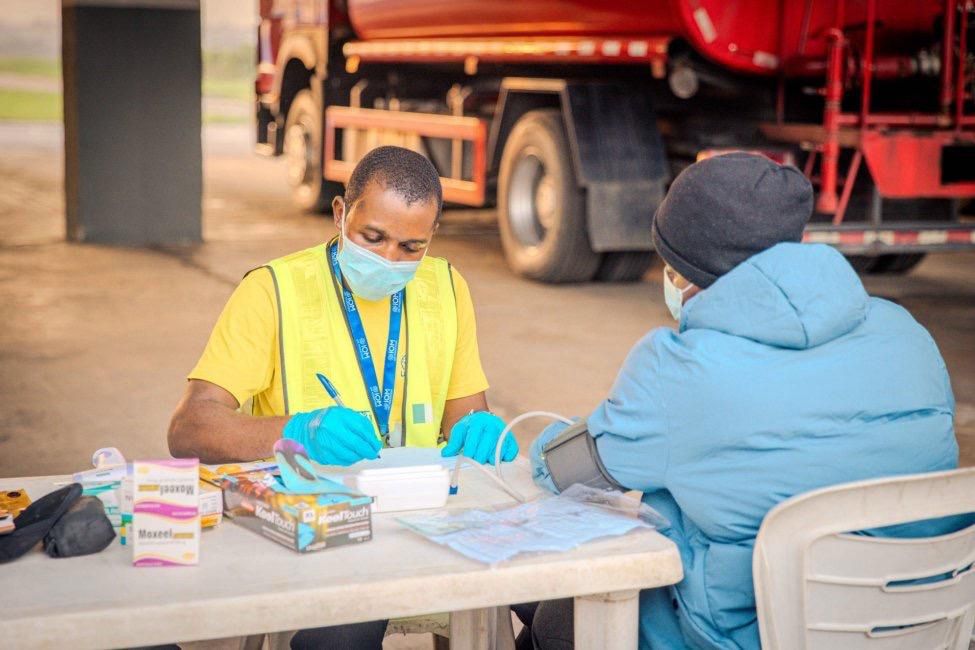
- In Guinea more than 166,000 travellers have received health screenings and vaccinations carried out by 60 community agents at 12 points of entry.
- In Sierra Leone mobility mapping in Port Loko, Kambia and the Western Urban Area is informing how prevention and outreach can be more precisely focused.
- In Togo disease surveillance and referral systems are being reinforced by 50 trained community volunteers across 15 entry points.
- In Ghana IOM, WHO and partners held a two-day strategic engagement on the Health, Border and Mobility Management Framework to align preparedness, safeguard public health and ensure safe mobility.
Despite Mpox no longer being classified as a public health emergency of international concern, the threat continues. Border zones remain fragile because of high human mobility, limited access to health services and weak surveillance infrastructures.
Funding remains a critical challenge. Of IOM’s USD 46 million appeal for preparedness and response in Africa only about 10 percent has been secured. Additional support from donors and partners is urgently needed to close gaps, sustain life-saving interventions, protect vulnerable groups and shore up health systems across the region.