


|
Getting your Trinity Audio player ready...
|
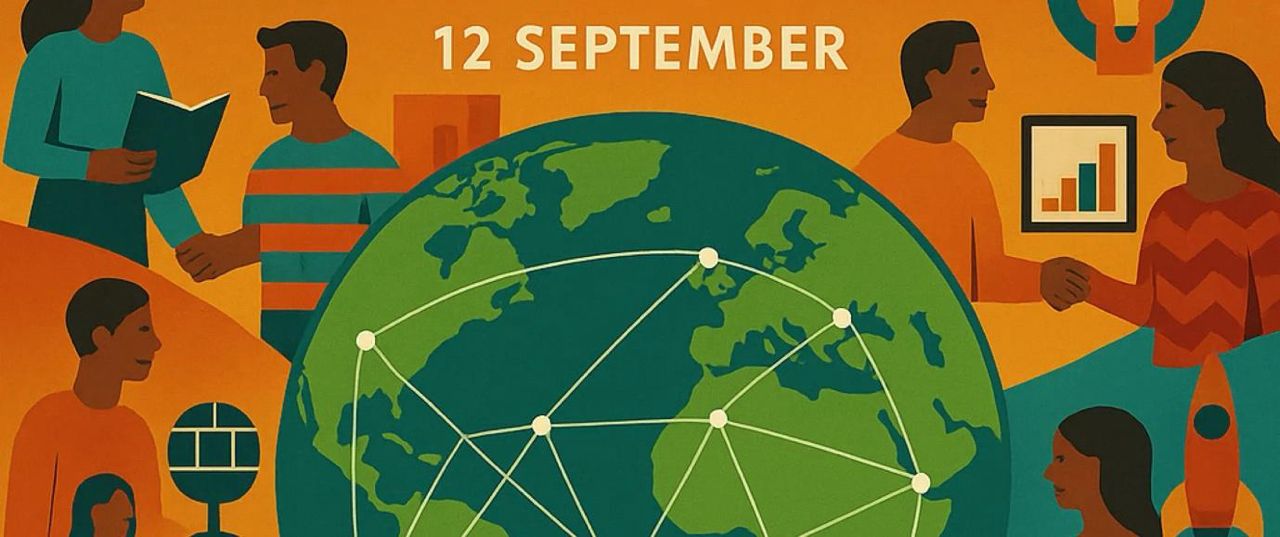
On 12 September 2025, the world marked the United Nations Day for South–South Cooperation. The annual occasion commemorates the adoption of the 1978 Buenos Aires Plan of Action for Promoting and Implementing Technical Cooperation among Developing Countries. More than a symbolic anniversary, the day showcases the power of solidarity, innovation and mutual learning in advancing sustainable development and social justice across the Global South.
This year, the International Labour Organization (ILO) highlighted how South–South and triangular cooperation are transforming lives, driving progress towards the 2030 Agenda and creating new opportunities for decent work. From pioneering artificial intelligence solutions to strengthening social protection, 2025 has been a year of breakthrough achievements for collaborative development.
Milestones of 2025
In May, the 22nd session of the High-level Committee on South–South Cooperation convened in New York with over 70 delegations under the theme “South–South Cooperation as a Driver for Transformation”. Leaders emphasised the potential of science, technology and innovation to accelerate inclusive development. The ILO hosted a special high-level event that showcased the contributions of Indonesia, Brazil, the United Nations Office for South-South Cooperation (UNOSSC) and New York University on artificial intelligence and South–South collaboration.
Brazil reaffirmed its leadership in Geneva during the Annual South-South Review in June. The country and the ILO extended their partnership under the “Social Justice for the Global South” cycle running from 2023 to 2027. Since 2005, Brazil has invested more than US$44 million in projects across nearly 40 countries, advancing social protection, equality and the elimination of child labour.
April saw the BRICS Labour Ministers’ Meeting in Brasilia, where the BRICS Knowledge Platform on Artificial Intelligence and the World of Work was launched alongside the ILO’s new AI Observatory. These initiatives set the stage for inclusive digital transitions, rural employment and just transitions for decent work. ILO Director-General Gilbert Houngbo congratulated Brazil for placing the Global South at the centre of the agenda.
Solidarity also defined efforts in conflict-affected areas. Indonesia and Kuwait renewed their commitment to support the rehabilitation and reconstruction of the Occupied Palestinian Territory through pledges made in 2024. This cooperation is centred on social justice and the expansion of social protection systems.
In Maputo, Mozambique, an international seminar reaffirmed the role of the social and solidarity economy (SSE) in reducing inequalities and promoting decent work. The SSE Academy, active since 2010, was endorsed once again as a platform for South–South learning.
Regional partnerships flourished as well. From the World Forum on Local Economic Development in Seville to the EIIP Interregional Forum in Bangladesh, countries exchanged knowledge and best practices across Latin America, Africa, Asia and the Arab States.
The ASEAN region also saw tangible benefits. The ProSSCE–ASEAN project, supported by China, reached more than 114,000 direct beneficiaries, standing out as a flagship example of employment creation through South–South and triangular cooperation.
In Doha, the launch of the South4Care platform marked another milestone. Mandated by the International Labour Conference, the platform promotes a gender-sensitive approach to care economies. This initiative is expected to strengthen recognition of care work and create better employment opportunities, particularly for women.
Triangular cooperation also played a significant role in 2025. Dutch-funded projects such as PROSPECTS and ACCEL enabled knowledge sharing in East and West Africa, especially in combating child labour and forced labour while protecting the rights of migrant workers.
Building a Shared Future
Marking the day, UN and ILO leaders emphasised that South–South and triangular cooperation are indispensable tools for building resilience, fostering innovation and ensuring equality. These partnerships are not only transforming economies and societies but are also strengthening the multilateral system at a time when the world faces complex challenges.
As the 2030 Agenda draws nearer, the spirit of solidarity and cooperation across the Global South continues to prove that progress is possible when countries share solutions and stand together.