

|
Getting your Trinity Audio player ready...
|
In the fertile highlands of eastern Democratic Republic of Congo (DRC), coffee farmers are once again facing devastation as armed conflict disrupts a sector that had only recently shown signs of revival. Fields that once yielded some of Africa’s most sought-after Arabica beans are now littered with withered crops, a direct result of the intensifying war between government forces and the M23 rebel movement.
A Conflict Overshadowing Agriculture
The escalation of violence since the beginning of the year has plunged farming communities in North and South Kivu into crisis. M23 rebels, backed by Rwanda according to Congolese officials and international observers, have captured key towns, displacing thousands and leaving farmers unable to access their land.
These disruptions have choked off vital export routes, threatening to reverse years of progress made by cooperatives and exporters who had brought Congolese coffee back onto the global stage.
A Fragile Recovery at Risk
The DRC was once a powerhouse in coffee production, with harvests surpassing 100,000 metric tons annually in the 1980s, according to United Nations figures. But output plummeted during the wars of the 1990s and early 2000s, when widespread violence, rooted in the aftermath of Rwanda’s 1994 genocide, ravaged the economy and farming communities.
In recent years, however, production had shown a steady climb. By 2023, harvests reached over 62,000 tons. Farmers’ cooperatives, such as SOPACDI in South Kivu, earned global recognition for high-quality beans, while government and international partners invested in improved cultivation methods and market access.
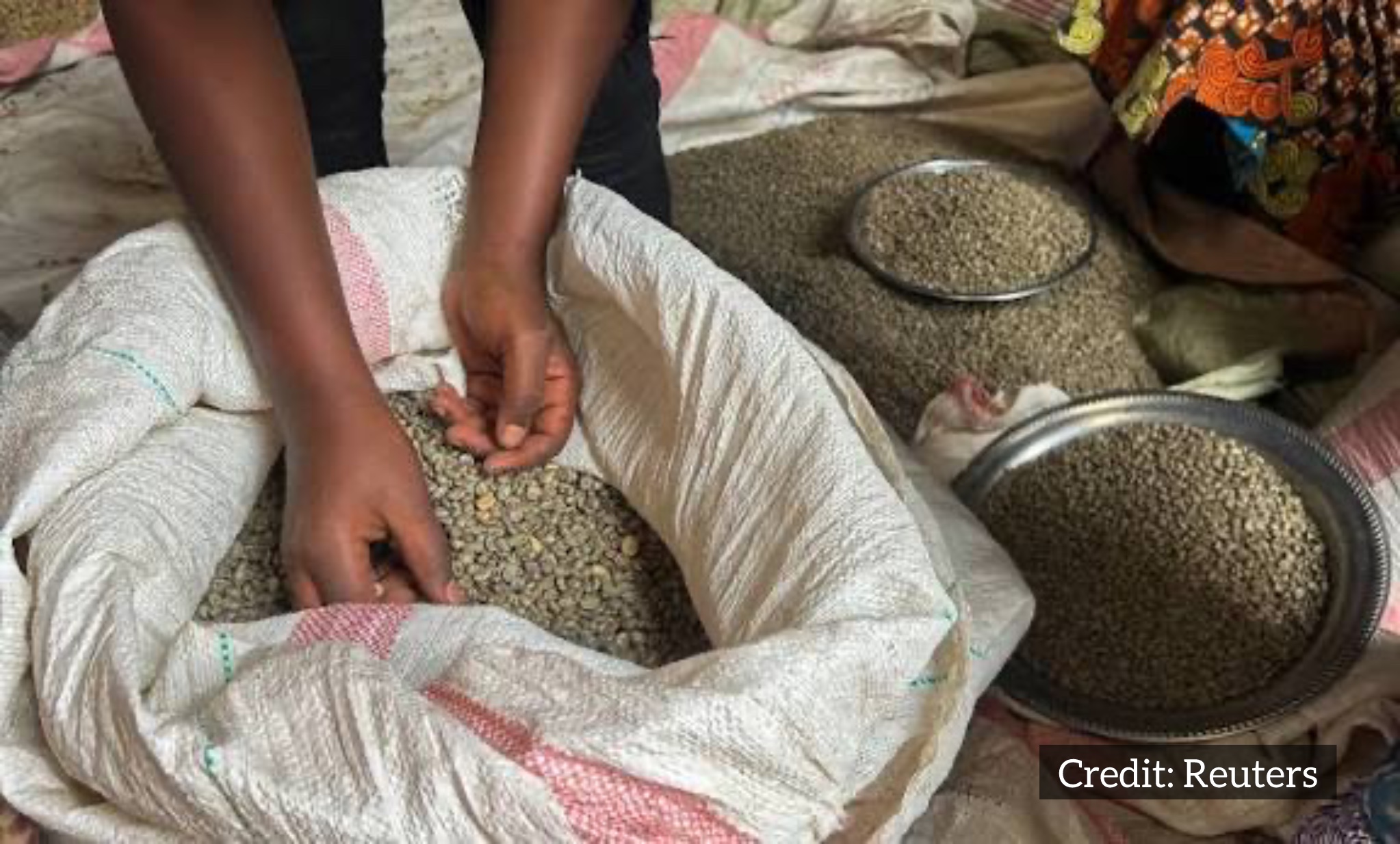
Now, those achievements hang in the balance. A visit to the state-owned coffee facility in Bukavu, South Kivu’s capital, revealed empty drying beds that should have been filled with beans this season.
Farmers Bear the Brunt
Officials acknowledge that nature provided good conditions for coffee this year, but violence and disruptions in financial services crippled the sector. “We had a strong harvest, but very few exporters came forward,” said François Kambale Nzanzu, head of the state agriculture office overseeing exports.
For smallholder farmers, the impact is devastating. In Muganzo, South Kivu, farmer Mudekereza Kashugushu Celestin stood in a plantation strewn with fallen trees and shriveled beans. “There’s nothing left of the coffee I had. Even the remaining cherries are rotten and dry,” he lamented.
The losses have cut deep into household incomes. Celestin, who used to earn about $300 annually from his harvest, said this year’s yield brought him just $50, barely enough to cover basic needs, let alone school fees for his children.
The Uncertain Future of Congolese Coffee
As conflict spreads and instability endures, the future of DRC’s coffee sector remains uncertain. Farmers who had begun to see coffee as a pathway out of poverty now fear being pushed back into hardship.
Observers warn that unless security improves and trade routes are reopened, the country risks losing not only a valuable export commodity but also the fragile hope of rebuilding a once-thriving agricultural economy.