

Cameroon’s Youth Erupt: “Enough Is Enough” — A Nation Protests Paul Biya’s 43-Year Rule

|
Getting your Trinity Audio player ready...
|
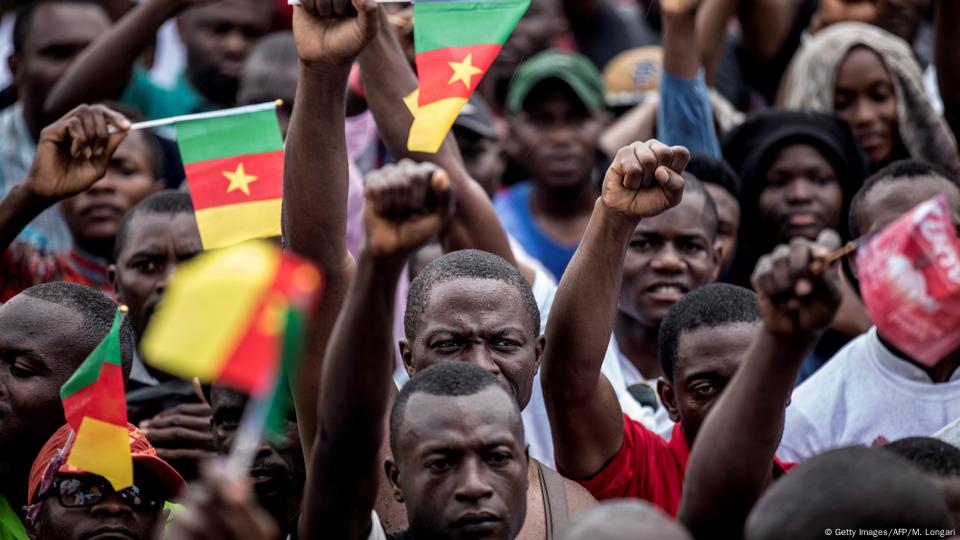
Yaoundé / Douala, October 2025 — A rising wave of frustration and defiance is sweeping across Cameroon as tens of thousands of young people take to the streets demanding more than just a change of face. They want change in democracy, accountability and a reason to believe in their future. Their target: President Paul Biya, aged 92 and in his 43rd year in office.
What’s happening in the streets
In the run-up to and aftermath of the October 12 presidential election, multiple reports confirm that protestors in cities such as Douala, Yaoundé and Garoua have clashed with security forces. Roads blocked, tyres burned, tear-gas deployed and arrests mounting. Internet access in parts of the country has been heavily disrupted, hindering on-the-ground coverage and giving added voice to fears of a “managed” narrative.
Why the anger runs deep — and young
The protests are not only about the election or about one man staying in power for too long (that part is obvious). They reflect deeper issues:
- Youth unemployment and disenfranchisement: More than 60 % of Cameroonians are under 25 — yet many feel excluded from meaningful economic opportunity and political decision-making.
- Questionable electoral credibility: The opposition candidate Issa Tchiroma claims victory; the government says no such thing. The Constitutional Council dismissed all petitions ahead of results. Tensions high.
- Long-standing governance fatigue: With Biya in office since 1982, for many youth the question is simple: When will leadership change for real?
- Marginalisation of regions and voices: In anglophone regions and other less-resourced parts of the country, young citizens feel the system leaves them behind.
Big media notes — but here’s what many don’t say
Yes, major outlets report on the clashes and the results. But what they tend to down-play: the sense among youth that this isn’t just a moment — it’s a buildup of decades of waiting for real change. There’s a generational edge to the protests: not just who rules, but how they rule and whether the young can even imagine a future.
Here’s what often misses headlines:
- Protestors are speaking in social media hashtags, local WhatsApp groups, and creative street art, not just at formal rallies.
- The internet shutdowns aren’t just technical—they serve as a tool to suppress mobilisation, especially among young people.
- Many young Cameroonians feel that the system (not just the person) needs rebooting: electoral bodies, judiciary, regional representation, transparency.
The leadership question (yes we’re asking it)
In a country where a person could legitimately ask “why is this still happening?” — the youth are especially blunt: Why is a 92-year-old still president of a country where most of the population was born after he took office? That question isn’t cynical—it’s grounded in expectations of renewal, representation, and change.
What this means for Africa’s future
For Africa’s youngest continent by median age, Cameroon’s youth uprising is a signal flare. It tells us that governance, legitimacy and leadership need to keep pace with people’s hopes. When young people feel sidelined, the consequences are social, economic and democratic.
The future doesn’t belong just to leaders who stay forever—it belongs to those who empower the next generation, open spaces for participation and recognise that the world is watching.
Joining the voice of Cameroon’s youth
As the nation stands at this moment, the youth are not invisible. They carry flags, signs, hashtags, slogans and demands. Their message: we want a seat at the table, a voice in our future, and leaders who reflect us, not merely rule over us.
Cameroon youth say: enough is enough.
And while the tone here is firm, the voice remains hopeful: Leadership matters. Renewal is possible. Africa’s youth will make sure it happens.