


|
Getting your Trinity Audio player ready...
|
The Breakthrough
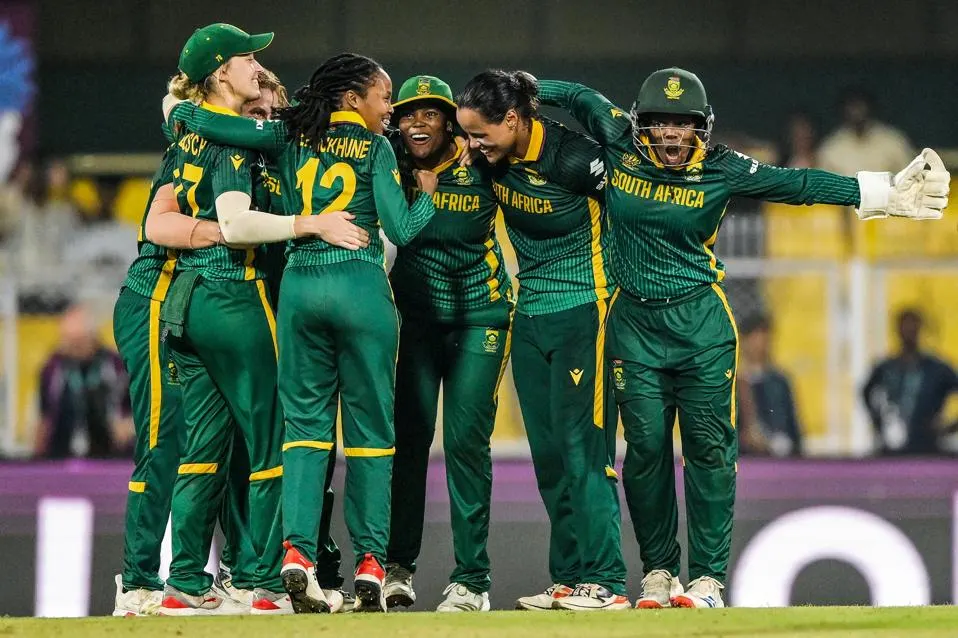
In a powerful display of skill and tenacity, Proteas Women (South Africa’s national women’s cricket side) have reached their first-ever final in a major global tournament. This milestone marks a defining moment not only for the team, but for women’s sport and representation in South Africa and across the continent.
How They Got There
-
The team secured a dominant semi-final victory, defeating England Women by 125 runs. South Africa posted 319/7 in 50 overs, while England were all-out for 194 in 42.3 overs.
-
Their campaign summary shows a consistent performance through power-hitting (notably from Laura Wolvaardt’s 169) and disciplined bowling.
-
Key to their success has been a blend of experience and emerging talent, fitness, mental resilience and strategic planning.
Why This Matters
-
Representation: For South African girls and young women, seeing the Proteas Women in a World-cup final sends a message: top-level sport is open to you too.
-
Momentum: After near-misses in past tournaments, this achievement can serve as a launchpad for further growth—in infrastructure, investment and youth engagement.
-
African sport on the world stage: While many African nations boast strong men’s teams, women’s sport is often under-resourced. This breakthrough challenges that status quo.
The Bigger Picture
-
This isn’t just a sports win — it’s a symbol of shift. A national narrative moving toward inclusion, equity, visibility in sport.
-
The win has commercial implications: increased sponsorship, media rights, investment, and grassroots programmes.
-
For South Africa and beyond, it pushes the question: when women win, do all of us benefit?
What’s Still Ahead
-
The final will test not just skill but stamina, pressure handling and strategic depth. Can the Proteas convert this milestone into a championship?
-
Sustainability is key. Momentum must be supported with resources for youth development, domestic leagues, and post-tournament legacy programmes.
-
Elevated expectations bring scrutiny—how the team manages that will be integral to the long-term impact.
Voice of Youth & Future Leaders
Young women in Cape Town, Johannesburg and Pretoria aren’t just watching the final—they’re imagining themselves in the helmets, gloves and vests. They’re thinking: If she did it, maybe one day I can too. This landmark moment needs to become more than one team’s success: it should become a generation’s inspiration.