
Egypt’s Khaled El-Enany Elected UNESCO Director-General, Marking Africa’s Return to the Global Stage

|
Getting your Trinity Audio player ready...
|
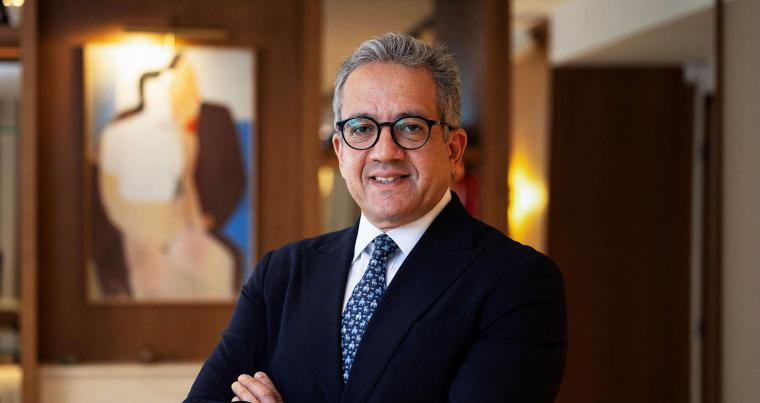
In a historic decision, the UNESCO General Conference has elected Dr. Khaled El-Enany of Egypt as the new Director-General of the United Nations Educational, Scientific and Cultural Organization (UNESCO) — making him the first Arab and only the second African to lead the organization since 1987.
El-Enany secured an overwhelming 172 out of 174 votes, signaling rare consensus among member states. His election follows his decisive victory at the UNESCO Executive Board in October, where he received 55 out of 58 votes, defeating his Congolese opponent Firmin Mataku, who garnered only two.
He succeeds Audrey Azoulay, who has served since 2017, and will officially assume office on November 15, 2025.
An Egyptian Historian with a Global Vision
Dr. El-Enany, a former Minister of Tourism and Antiquities, is best known for his work modernizing Egypt’s cultural heritage sector — overseeing major projects including the Grand Egyptian Museum and national digitization of heritage archives.
His appointment signals a renewed global confidence in African leadership within UNESCO. El-Enany pledged to “strengthen cooperation between nations, protect cultural diversity, and advance education and innovation as the foundation for peace.”
“UNESCO must not just preserve the past,” he said after the vote in Paris. “It must prepare humanity for the future — through science, culture, and education that unite, not divide.”
Africa’s Cultural Diplomacy on the Rise
El-Enany’s win is more than symbolic — it marks Africa’s return to a seat of influence in global cultural diplomacy. The last African to lead UNESCO was Senegal’s Amadou-Mahtar Mbow (1974–1987), who shaped the organization’s legacy during the postcolonial era of African intellectual empowerment.
“This victory belongs to all of Africa,” said one AU diplomat in Paris. “It reflects a continent no longer asking for inclusion but taking leadership in shaping global narratives.”
Why This Matters for Africa
Africa holds some of the world’s richest cultural, linguistic, and ecological heritage — yet remains underrepresented in global preservation and policy frameworks. With El-Enany’s election, African nations gain renewed leverage in decisions about education funding, heritage protection, and scientific collaboration.
From Timbuktu to Luxor, Africa’s story is no longer being told about the continent — it is now being told by it.