

|
Getting your Trinity Audio player ready...
|
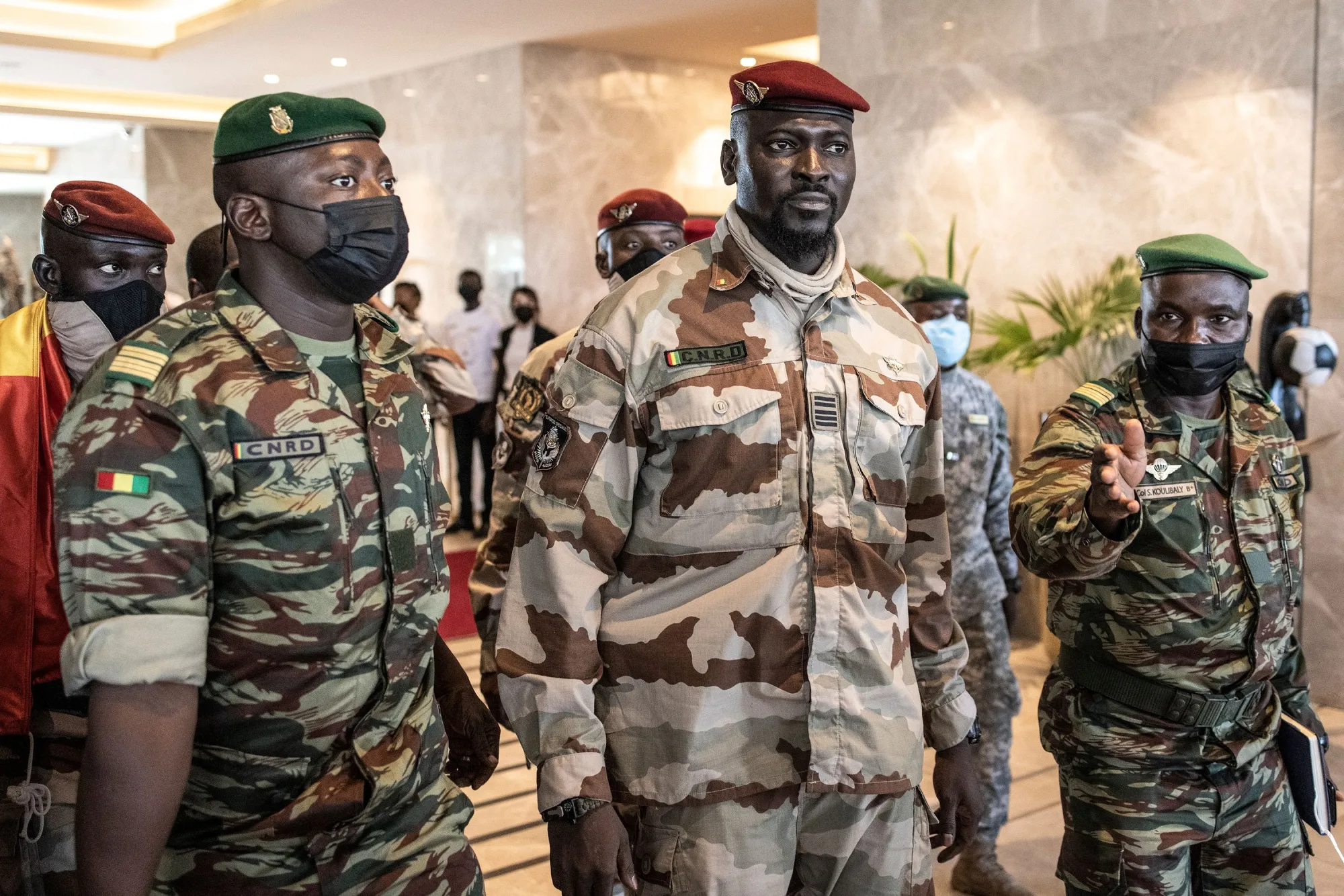
Guinea’s Supreme Court has released its provisional list of candidates for next month’s presidential election — and topping it is General Mamady Doumbouya, the junta leader who seized power in 2021 after toppling long-time president Alpha Condé.
The ruling opens the door for Doumbouya to transform his military takeover into a civilian presidency, four years after promising the world he would hand power back to the people.
From Coup to Candidacy
Doumbouya’s candidacy caps months of speculation and political engineering. Opposition figures Lansana Kouyaté and Ousmane Kaba were barred from running on what observers call “technical grounds,” while other challengers — including Faya Millimono and Aboulaye Yero Baldé — were cleared but face limited media access and movement restrictions.
Last month, a government-led referendum gave voters the green light for Doumbouya’s eligibility — a move critics described as “a carefully managed plebiscite rather than democracy in action.”
“It’s the classic playbook,” said one Guinean analyst. “Overthrow a regime, rewrite the rules, and return as the savior.”
A Democracy on Pause
Since seizing power, Doumbouya’s transitional government has suspended political parties, silenced opposition media, and restricted civil society activity. ECOWAS had set a 2024 deadline for elections, which Guinea missed — extending the junta’s mandate by another year.
The December 28 vote will therefore mark Guinea’s first attempt at civilian transition since 2021, but few expect a genuine contest.
“The system has been reset, not reformed,” said a civil society leader in Conakry. “Everything points to Doumbouya consolidating the coup through the ballot box.”
A Regional Pattern
Guinea joins a widening bloc of military-led states across West Africa — including Mali, Niger, and Burkina Faso — where juntas have justified their hold on power with promises of reform and security, only to extend their rule indefinitely.
The pattern is clear: soldiers come to “restore democracy,” then run for president. What follows is neither military discipline nor democratic renewal — but a hybrid of both, where elections legitimize control instead of challenging it.
What This Means for Africa
The Guinean case is a warning for Africa’s fragile democracies: without institutional accountability, coups become campaigns and elections become coronations.
As the continent enters another cycle of transitions — from Mali to Chad — the question is not whether leaders can organize elections, but whether citizens can still believe in them.
Africa’s young voters have seen this movie before. And they’re not applauding.