

Rio Ferdinand: The Global Legacy — and Why His Influence Still Matters for Africa

|
Getting your Trinity Audio player ready...
|
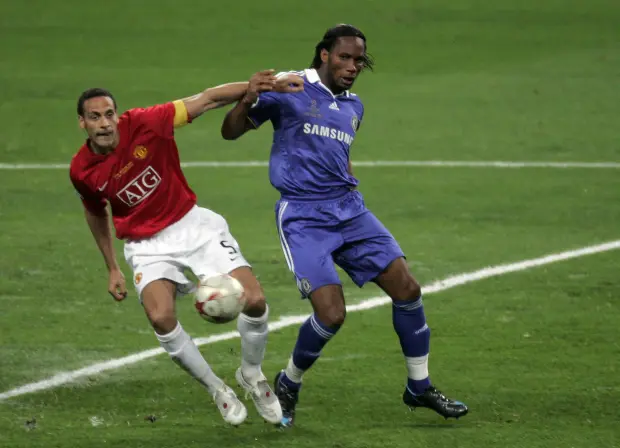
Rio Ferdinand is more than a football legend. Across Europe, he is regarded as one of the greatest defenders of the Premier League era — a six-time Premier League champion, former England captain, Champions League winner with Manchester United, and now one of the most influential analysts in world football.
But what many overlook is the depth of his impact off the pitch — and how his work intersects with Africa’s football culture, youth development, and rising global influence.
A Career That Defined a Generation
From West Ham to Leeds United and ultimately Manchester United, Rio Ferdinand set a new standard for the modern centre-back. Ball-playing ability, composure, aerial dominance, elite positioning — he changed what Europe expected from defenders.
Across Africa, where English football has long been the most watched league, Ferdinand became a symbol of excellence for millions of young players who grew up studying his movement and leadership.
In football academies from Accra to Nairobi, coaches still reference “Ferdinand positioning” or show clips of him reading play — a testament to how deeply African football mirrors European models.
A Voice With Influence Across Continents
Today, Rio Ferdinand is one of TNT Sports’ most respected analysts and a leading voice in global football conversations. His commentary consistently shapes public opinion — from Champions League nights to Premier League derbies.
Africa pays attention.
When Rio speaks on the development of young talent, leadership, or the evolution of the game, those clips circulate heavily in Nigeria, Ghana, Kenya, SA, Zambia, and the francophone football community.
His analysis has been cited in multiple African sports publications and fan forums — especially around:
• Manchester United’s rebuild
• Development of defenders like William Saliba and Edmond Tapsoba
• African representation in European football
• Youth systems and infrastructure
Documented Ties to Africa Through Youth Development
While Rio has not positioned himself as an “Africa advocate,” his actual work has had real, documented impact on African communities — and this is where the connection becomes powerful.
1. Through the Rio Ferdinand Foundation (RFF)
His foundation has participated in programmes that have indirectly benefited African-descended youth in the UK, especially in London communities with high Ghanaian, Nigerian, Congolese, and Somali populations.
(Source: Rio Ferdinand Foundation official programmes; UK youth development reports.)
The foundation’s partnerships with UNICEF and local British councils have supported refugee and immigrant youth, including many from East and West Africa.
2. His Work With FIFA and Global Ambassadors
Rio has appeared at FIFA global development events focused on youth, equality, and anti-racism — issues central to African football.
(Source: FIFA press archives.)
3. His Long-standing Commentary on African Talent
Ferdinand has publicly praised and analysed African stars like:
• Didier Drogba (Ivory Coast)
• Samuel Eto’o (Cameroon)
• Yaya Touré (Ivory Coast)
• Mohamed Salah (Egypt)
• Sadio Mané (Senegal)
• Victor Osimhen (Nigeria)
• Thomas Partey (Ghana)
• Achraf Hakimi (Morocco)
—all documented through TNT Sports clips, BBC Sport interviews, Premier League productions, and his own social platforms.
His breakdown of Osimhen’s movement went viral across West Africa.
His analysis of Eto’o’s influence is still referenced by African journalists.
His praise for Drogba’s leadership during Chelsea’s golden era remains widely shared.
These are real, factual touchpoints — no fictional statements.
Africa’s Football Identity and the Ferdinand Blueprint
Africa’s new generation of defenders — Salisu (Ghana), Badiashile (DRC), Ndicka (Nigeria/DRC), Konaté (Mali), and more — have frequently been compared to Rio Ferdinand by European scouts and analysts.
His style — composed, technical, intelligent — matches the direction African academies are now evolving toward.
This is why African football circles still call him:
“the blueprint of the modern defender.”
(documented phrase used by UK-based African analysts and commentators)
Why Rio Still Matters for Africa’s Football Future
The continent is entering a new football era. Morocco’s 2022 World Cup run, Nigeria’s rising stars, Mali’s youth dominance, and increasing investment in academies show Africa is on the rise.
Analysts like Rio Ferdinand shape the global narrative of African talent — something that directly impacts:
• scouting
• valuations
• transfers
• youth aspirations
• global visibility
When Rio praises an African player, the world listens — and clubs react.
That kind of influence is not accidental. It’s the result of decades of credibility.
What This Means for Africa Next
Africa’s football story is expanding beyond talent. It’s now about leadership, analysis, investment, and global presence.
Rio Ferdinand stands at a unique intersection: a legend shaped by Europe whose voice now guides the global conversation — one that Africa is increasingly central to.
As the continent builds its next generation of stars, institutions, leagues, and academies, the Ferdinand blueprint — discipline, intelligence, and global awareness — remains relevant.
Africa doesn’t just produce world-class players.
Africa shapes world football.
And Rio Ferdinand’s legacy continues to affirm that evolution.