
Trump’s DR Congo Peace Deal Collapses as M23 Rebels Capture Uvira

|
Getting your Trinity Audio player ready...
|
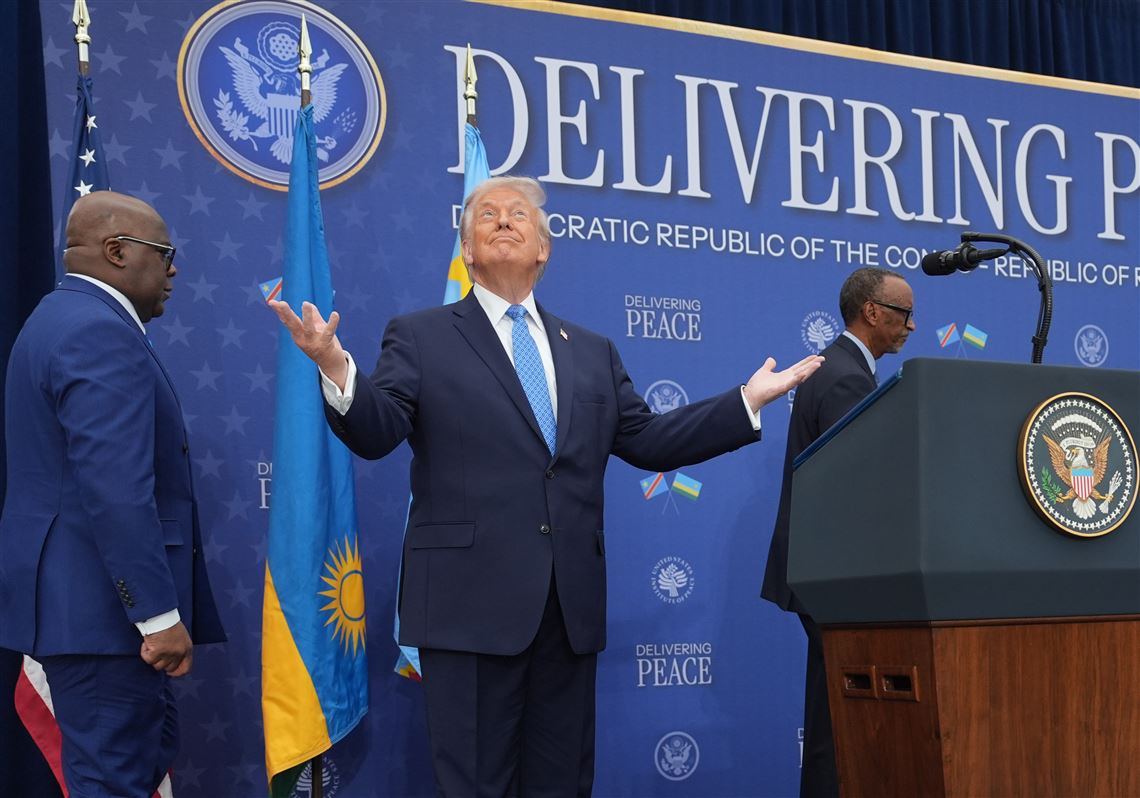
The peace deal signed in Washington last week between DR Congo’s President Félix Tshisekedi and Rwanda’s President Paul Kagame has fractured almost instantly, after the M23 rebel group captured the major city of Uvira in South Kivu.
US President Donald Trump described the Washington accord as “historic” and “a great day for Africa,” but within days, the situation shifted dramatically. The US ambassador to the UN accused Rwanda of steering the Great Lakes region toward renewed conflict, while UN experts have previously said Rwanda exercises “de facto control” over M23 operations. Rwanda denies the allegations, though its presence at the signing ceremony signaled its influence over the group. The rebels themselves are not party to the US deal and continue separate negotiations under a Qatar-led peace process.
Why M23 Moved on Uvira
According to political scientist Prof Jason Stearns, M23 pushed for leverage in ongoing negotiations, while Kigali reportedly believes Tshisekedi cannot be trusted. Analysts say the assault undermines every diplomatic effort underway and raises questions about timing, given that Kagame and Tshisekedi were in Washington as the offensive began.
Uvira, located about 27 km from Burundi’s capital, holds strategic weight. Researcher Bram Verelst explains that more than 10,000 Burundian troops operate in South Kivu, and Uvira has been their primary supply route. By capturing it, M23 disrupts Burundi’s influence in the conflict and applies pressure that could force its withdrawal.
Analyst Yale Ford notes that Uvira, with an estimated 700,000 residents, was DR Congo’s final major army hub in South Kivu. With its fall, M23 is expected to install a parallel administration and use the gain to strengthen its negotiating position.
Burundi’s Complicated Position
Burundi and Rwanda remain long-standing rivals, each accusing the other of backing rebel movements. If M23 consolidates control in South Kivu, Burundi fears a strengthened Red Tabara, a Tutsi-majority rebel group responsible for attacks on Burundian soil.
Despite closing its border with DR Congo, Burundi continues to allow civilians to cross after screenings. Aid agencies report that roughly 50,000 people have fled to Burundi in the past week alone. The economic consequences may deepen Burundi’s existing shortages of fuel and foreign currency, given its dependence on eastern DR Congo.
How M23 Captured Uvira
After earlier capturing Goma and then Bukavu, M23 advanced south. Analysts estimate the group has over 10,000 fighters, but recent success likely required reinforcement by Rwandan military units. According to Prof Stearns, “discipline matters more than manpower,” and Rwanda’s armed forces maintain a high level of military organization. Drone warfare has also shaped the conflict, with Rwanda reportedly deploying the technology more effectively than DR Congo’s forces.
Peace Process at Risk
The US ambassador said Rwanda is pushing the region “toward more instability and toward war.” A joint statement from the US, EU, and several European governments demanded the immediate withdrawal of the Rwanda Defence Force and a halt to M23 operations.
The capture of Uvira stunned policy experts. Just as Rwanda and DR Congo were signing the Washington Accord, Rwandan troops reportedly massed near Kamanyola before pushing into Uvira. Rwanda denies involvement and has accused DR Congo and Burundi of bombing villages near its border.
Both Kigali and Kinshasa accuse the other of undermining the peace deal. Analysts now describe the agreement as “stuck,” largely because of disagreements around disarming the FDLR — a militia with roots in the 1994 genocide — which Rwanda views as a direct security threat.
Economic cooperation laid out in the accord, including power and mining partnerships intended to unlock US investment, also appears unlikely as long as fighting continues.
What Tshisekedi Can Do
Tshisekedi faces rising public anger after repeated promises to end eastern conflict have gone unmet. He is also navigating tensions within his own military command. Analysts say he is relying heavily on the US to pressure Rwanda, as DR Congo’s forces struggle to respond militarily.
The battlefield and diplomatic future now rests with international mediators — mainly the US, Qatar, and other partners — who must decide how much political capital they are willing to commit to restoring momentum.
THE VOICE OF AFRICA’S INSIGHT
The collapse of the peace deal reflects the volatility built into a region shaped by decades of external interests, complex alliances, and unresolved national wounds. But history reminds us that Africa’s story is not defined by its crises. DR Congo, Rwanda, Burundi — all are young nations compared to the powers attempting to influence them. Their futures will ultimately be shaped by citizens who are younger, more connected, and more determined than any generation before them. Even in moments of instability, the long arc bends toward African self-determination, and the next chapter belongs to the people who refuse to let conflict determine their identity or their destiny.