

Egypt Expands Regional Energy Role With New Gas and Petroleum Agreements With Syria
|
Getting your Trinity Audio player ready...
|
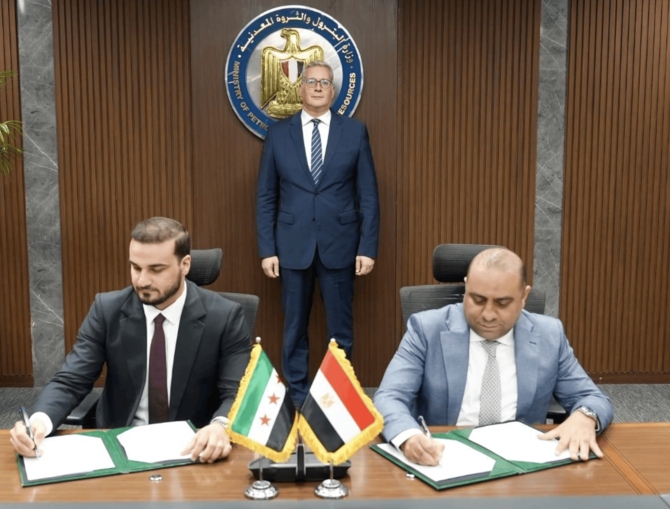
Egypt has signed two new energy memorandums of understanding with Syria, reinforcing Cairo’s ambition to position itself as a central energy transit and logistics hub for the Eastern Mediterranean and the wider Middle East.
The agreements, concluded during high-level talks between Egypt’s Minister of Petroleum and Mineral Resources Karim Badawi and a Syrian delegation led by Deputy Minister of Energy for Oil Affairs Ghiath Diab, focus on supplying natural gas for electricity generation and providing petroleum products to support Syria’s energy needs.
Under the arrangements, Egypt will leverage its existing liquefied natural gas infrastructure — including regasification vessels, pipelines, and transmission networks — to deliver gas to Syria’s power sector. A separate framework addresses the supply of refined petroleum products as part of broader efforts to stabilize energy availability in the country.
Syria’s energy system has been heavily damaged by years of conflict, infrastructure degradation, and constrained investment. The new cooperation reflects growing regional recognition that rebuilding power and fuel networks will require coordinated external support, technical expertise, and access to established energy systems.
Egypt’s petroleum ministry said the agreements underscore the country’s expanding role as a regional logistics platform for both conventional and alternative energy resources. Officials emphasized Cairo’s readiness to provide operational support, technical knowledge, and infrastructure access as part of wider efforts to assist the Syrian people and promote regional stability.
Beyond immediate supply arrangements, discussions also explored opportunities to rehabilitate Syria’s oil and gas infrastructure and integrate it more effectively into regional networks, drawing on Egyptian experience in production, processing, and export operations.
The deals with Damascus follow a series of recent energy cooperation initiatives involving Lebanon and Cyprus, reinforcing Egypt’s strategy of routing Eastern Mediterranean gas through its liquefaction and export facilities. Speaking previously at the ADIPEC energy conference in Abu Dhabi, Badawi highlighted Egypt’s fully integrated infrastructure as a fast, cost-effective, and reliable pathway for delivering regional gas resources to global markets.
Plans to connect Cyprus’s Cronos gas field to Egypt’s energy network were cited as a key example of this approach, enabling current and future discoveries to be processed and exported through Egyptian facilities while deepening regional energy integration.
As energy security and diversification continue to shape geopolitical priorities across the Middle East, Egypt’s growing portfolio of cross-border agreements signals its intent to act not only as a producer and consumer, but as a strategic energy bridge linking suppliers, markets, and rebuilding economies.
Egypt energy agreements, Egypt Syria energy ties, Middle East energy cooperation, Eastern Mediterranean gas, regional energy hub, natural gas supply, petroleum products, LNG infrastructure, energy transit hub, regional integration, power generation gas, Syria energy reconstruction, Egypt petroleum ministry, Karim Badawi, Ghiath Diab, cross-border energy, gas pipelines Middle East, energy diplomacy, regional logistics hub, Mediterranean energy markets