

Ethiopia Calls for Real African Unity as AU Executive Council Opens in Addis Ababa
|
Getting your Trinity Audio player ready...
|
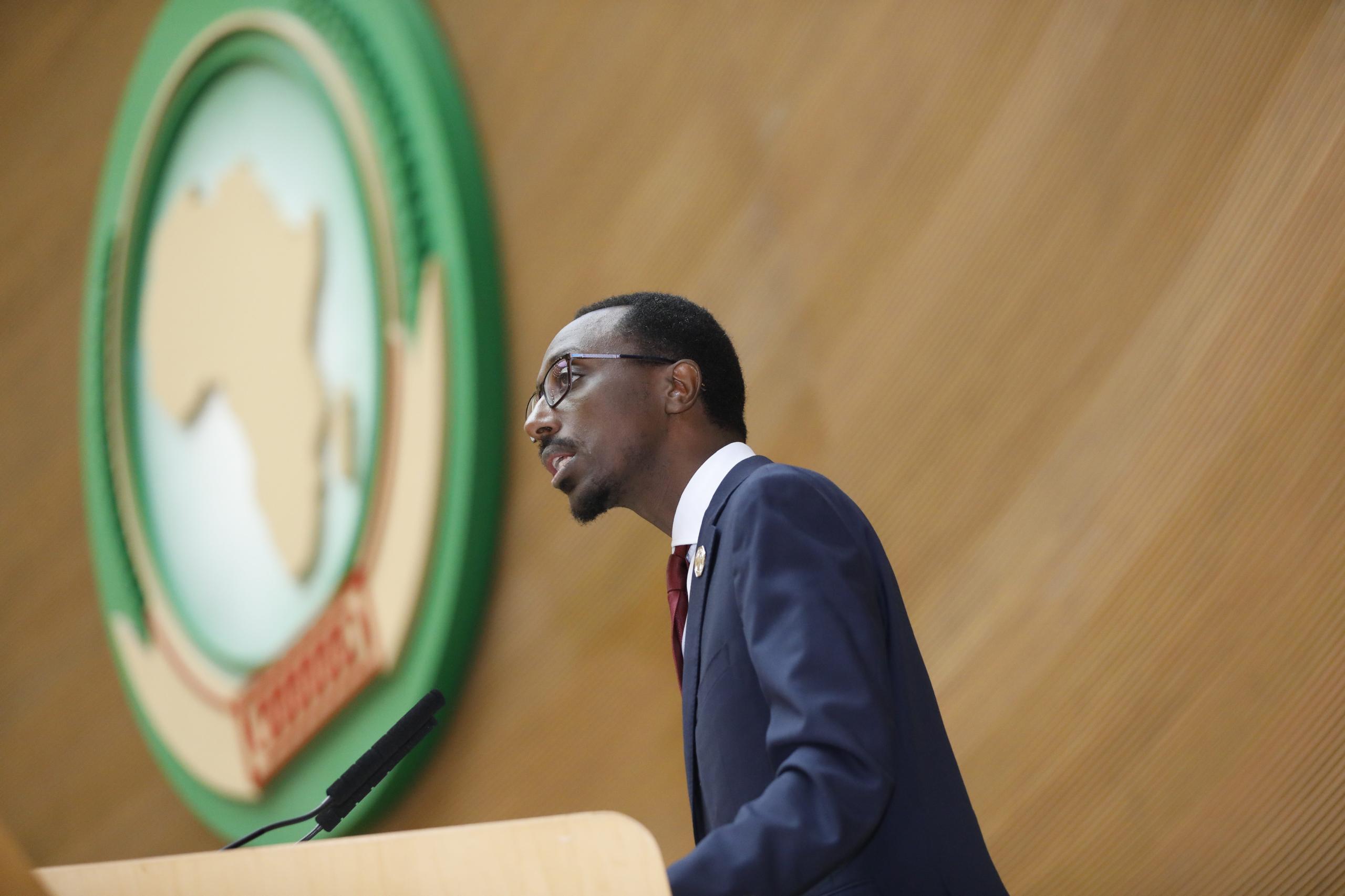
At the African Union headquarters in Addis Ababa, Ethiopia’s Minister of Foreign Affairs, H.E. Dr. Gedion Timothewos, delivered the opening remarks at the 48th Ordinary Session of the Executive Council of the African Union, welcoming delegates and setting a direct tone: Africa’s unity has to be more than ceremony because the continent is operating in a tougher global environment where power, minerals, technology, and trade routes are driving decisions.
He opened by welcoming the Executive Council Chair, H.E. Amb. Tete António, Minister of External Relations of Angola, and acknowledged Angola’s leadership of the Council over the past year. He also welcomed the new leadership of the AU Commission, naming H.E. Mahmoud Ali Youssouf, Chairperson of the African Union Commission, and H.E. Selma Malika Haddadi, Deputy Chairperson, alongside H.E. Mr. Claver Gatete, Executive Secretary of the United Nations Economic Commission for Africa.
The message Ethiopia put on the table
Dr. Gedion’s central argument was that the African Union was created to secure political independence and economic integration, and that this mission becomes even more urgent in the current geopolitical climate.
He pointed to what he described as mixed developments across the continent.
On the positive side, he said Africa has shown stronger alignment on major international questions, including UN Security Council reform, climate justice, and reform of the global financial architecture. He also noted elections across the continent, and said Guinea and Gabon have rejoined the Union through the restoration of constitutional order, while “more and more countries” are relying on the AU Commission for electoral support and observation missions.
On the negative side, he warned that Africa continues to face unconstitutional changes of government, which he said weaken the Union’s norms. He also described a world where multilateralism and global cooperation are being eroded, and where international relations are increasingly shaped by competition for technological supremacy, control of critical mineral resources, and major logistics routes. In that environment, he argued, trade and economic cooperation are increasingly being treated as tools of politics and security.
Then he said the quiet part out loud: that in this context, “many big and middle powers” are treating Africa as a site of competition, and that a mentality of domination, extraction, and exploitation still influences how many external actors view the continent.
His conclusion from that was straightforward: African unity must be real, and the African Union must be strong, because Africa cannot rely on “charity or goodwill” but needs what he called true partnership, which in his view requires strength that comes from unity.
Integration, growth, and the work still unfinished
Dr. Gedion also highlighted economic and social developments he linked to continental integration efforts, including Agenda 2063 and the African Continental Free Trade Area, describing the free trade area’s aspiration as something that has turned into “a living reality” with accelerating implementation. He also referenced progress in primary health care, agricultural productivity, and climate action, while stressing that Africa remains “very far from the Africa we want” and must redouble efforts.
What Africa’s “common voice” must push for next
He outlined priorities he said should define Africa’s common voice in the coming years. These included defending African ownership of African solutions, peace, constitutional order, and sovereignty through strong continental leadership. He also called for pushing demands for fair global partnerships and financial reform, including debt relief and climate financing grounded in equity and respect.
On representation, he argued that global platforms cannot be credible or effective without Africa’s rightful role in shaping decisions. He specifically referenced the need for UN Security Council reform for permanent representation, stronger influence in international economic forums, meaningful participation in global climate negotiations, and stronger involvement in global health governance, particularly during public health crises.
Ethiopia’s COP 32 note and the water theme
Dr. Gedion also said Ethiopia is preparing to host COP 32, framing it as an opportunity for Africa to lead the global conversation on climate justice and sustainable development. He linked this to the AU theme referenced in the text you provided, focused on sustainable water availability and safe sanitation, and called for careful consideration of how to rejuvenate the ecosystems that support Africa’s water resources. He referenced major rivers and lakes across the continent and said Africa’s approach should be guided by the principle of Ubuntu, taking into account the needs and aspirations of all concerned.
What this speech signals for the Summit week
This opening remark wasn’t written to entertain anyone. It was designed to set the room’s direction: Africa’s institutions have to move with more discipline, more unity, and fewer illusions about how global power works.
If the Executive Council takes the speech seriously, the practical implications are clear. Member States will need to coordinate more tightly, protect constitutional governance, and push harder for fair global financial terms that match Africa’s development reality, not somebody else’s comfort.
And whether people like the tone or not, the point stands: a continent building its future cannot outsource its leverage. Africa is young, Africa is rising, and Africa’s next chapter is not about being managed by the world but about being organized enough to negotiate with it on equal ground.