

Guinea Keeps Weather Services Running After Crisis With Targeted CREWS Support
By Maxine Ansah

|
Getting your Trinity Audio player ready...
|
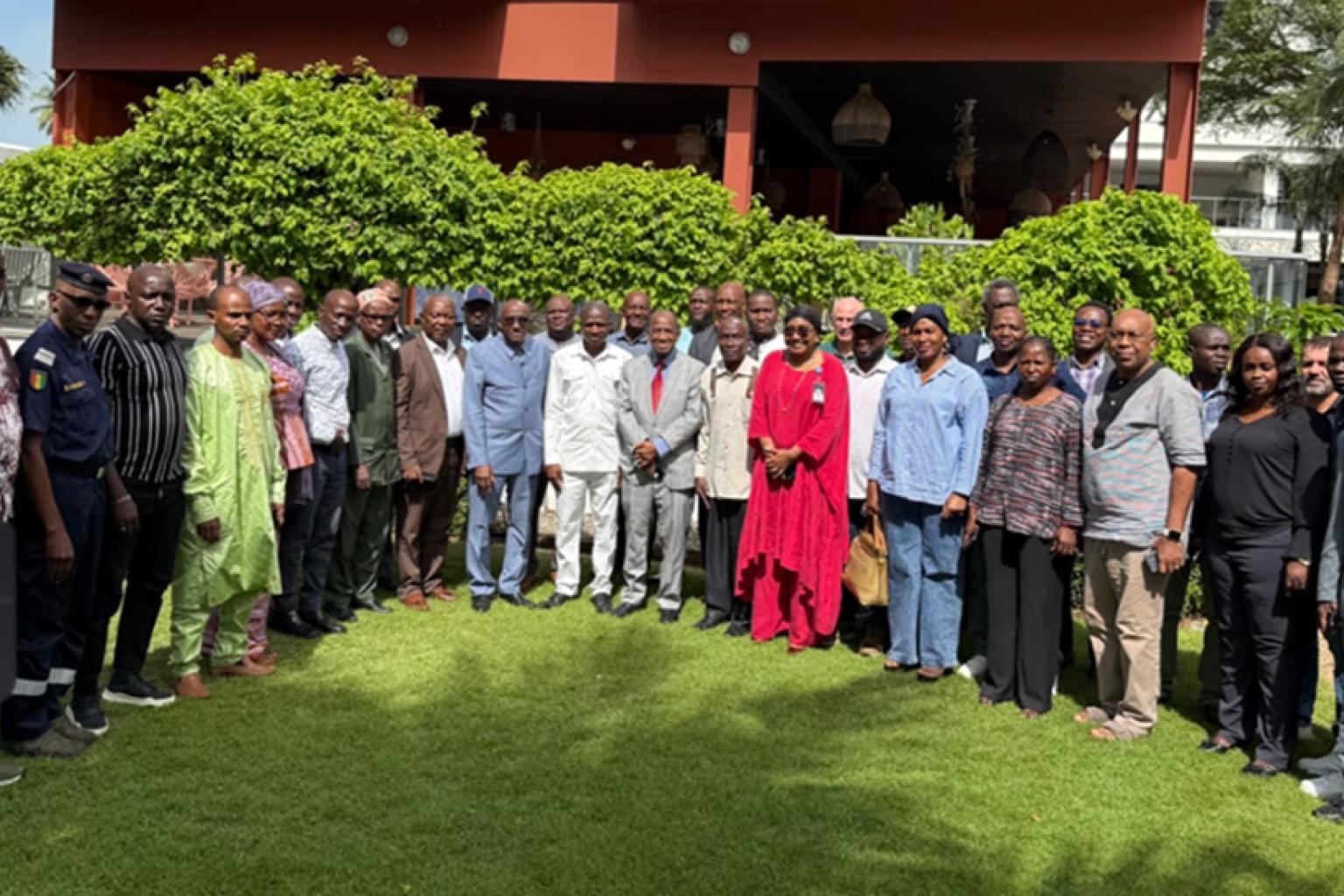
Guinea’s National Meteorological Service has emerged from a period of acute crisis with its core operations intact, following a one-year accelerated support project financed by the Climate Risk and Early Warning Systems Initiative. The US$250,000 intervention ensured continuity of meteorological services after a major infrastructure shock, while laying the institutional and legal groundwork for longer-term investments.
The project was delivered through the Accelerated Support Window of Climate Risk and Early Warning Systems Initiative, with implementation led by the World Meteorological Organization. It concluded in October 2025, having met its primary objective of maintaining uninterrupted service delivery and strengthening Guinea’s meteorological governance framework.
On 18 December 2023, an explosion at a fuel depot in Conakry caused severe damage to the premises and equipment of Guinea’s National Meteorological Service, known as ANM. At a moment when operations could have collapsed, the institution opted for continuity. Temporary premises were secured, staff remained active, and essential forecasting and warning services continued as the agency moved towards semi-autonomous status.
The CREWS support proved critical during this transition. It allowed ANM to sustain its national mandate at a time of physical displacement, while simultaneously preparing the legal and institutional reforms required to strengthen its long-term viability.
Beyond emergency continuity, the project played a strategic bridging role. It connected earlier support from UNDP funded by the Global Environment Facility with forthcoming investment under the CLIMAGUI programme financed by Agence Française de Développement. By meeting effectiveness conditions set by AFD, the CREWS intervention unlocked a larger phase of capacity development for Guinea’s meteorological and climate services.
Operationally, the project covered temporary accommodation, stable internet connectivity, and digital systems that allowed uninterrupted forecasting, data exchange, and communication. It also supported major advances in early warning dissemination. Over 100 warning bulletins on rain, storms, and lightning were published using the Common Alerting Protocol format, leading to Guinea becoming the first African country onboarded by Google Public Alerts, based on the quality and consistency of its warnings.
Institutionally, the project strengthened ANM’s internal systems. Staff were trained on quality management documentation, forming the basis for future ISO 9001 certification. Key regulatory and governance instruments were drafted to formalise ANM’s status as an agency with defined staffing, operational authority, and investment budgets.
Strategic planning was another pillar of the intervention. A validated long-term strategic plan was developed in line with national development frameworks, alongside an operational action plan translating priorities into funded activities. A comprehensive socio-economic assessment of meteorological services was also completed, analysing user demand, service gaps, willingness to pay, and options for a sustainable revenue model.
These outputs now underpin the next phase of investment. The Government of Guinea and AFD have launched CLIMAGUI, which will upgrade hydrometeorological equipment, strengthen forecasting capacity, and train staff in modern observation and data management systems. The government has also committed to constructing a new ANM headquarters, expected to be completed in 2026.
Importantly, the legal, institutional, and strategic frameworks developed under the CREWS project are designed to maximise the impact of this incoming finance and to support further resource mobilisation. A third phase of the CREWS West Africa Project is under development and will continue supporting Guinea through stronger integration with regional forecasting and early warning centres across the continent.
For Guinea, this experience underscores how rapid, well-designed support can stabilise essential public services during crisis while advancing deeper reforms. For Africa more broadly, it highlights the importance of resilient national institutions that can absorb shocks, maintain continuity, and build towards modern early warning systems that protect lives and livelihoods. In a region where climate risks are intensifying, investments in meteorological services are not technical luxuries, but foundational tools for sustainable development.