
Africa’s 2026 Water Mandate: AU Sets the Course for Sanitation and Sustainable Growth
By Maxine Ansah

|
Getting your Trinity Audio player ready...
|
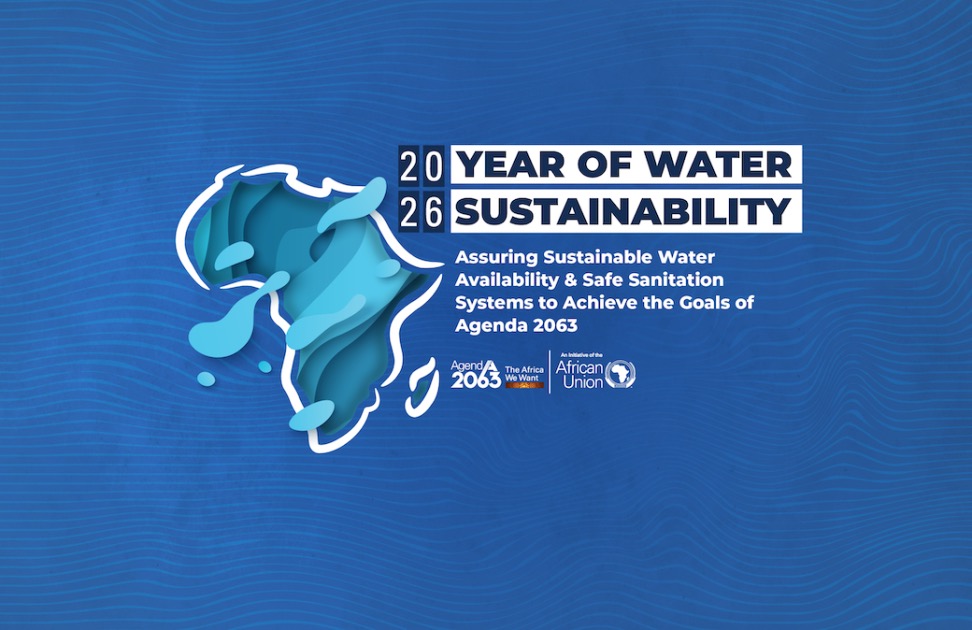
At its 39th Ordinary Session held on 14 February 2026 in Addis Ababa, African Union Heads of State and Government adopted a decisive theme for the year: “Assuring Sustainable Water Availability and Safe Sanitation Systems to Achieve the Goals of Agenda 2063.”
The decision places water and sanitation at the centre of Africa’s development agenda for 2026. It signals a continental recognition that safe water systems are not a peripheral social service but a strategic pillar of economic transformation, public health and long term stability.
The theme aligns directly with African Union Agenda 2063, the continent’s blueprint for “an integrated, prosperous and peaceful Africa, driven by its own citizens and representing a dynamic force in the global arena.” By prioritising water security and sanitation, the Union is advancing the health aspirations embedded within that vision.
Central to this push is the Africa Water Vision 2026, which calls for equitable and sustainable management of water resources for poverty alleviation, socio economic development, regional cooperation and environmental protection. The Vision supports inclusive and climate resilient water security and strengthens integrated water resources management under the Water, Energy, Food and Ecosystems nexus framework. The approach recognises water as a cross cutting economic asset that underpins agriculture, industry, energy production and ecosystems.
Implementation of the 2026 theme is being championed by the Department of Agriculture, Rural Development, Blue Economy and Sustainable Environment, in line with AU Assembly Decisions. The department’s mandate links sustainable agriculture, rural growth and environmental stewardship to broader continental transformation objectives, including those under the Comprehensive Africa Agricultural Development Programme.
The urgency is clear. As climate change intensifies droughts and flooding across the continent, water management has become a defining governance issue. According to the World Health Organization, waterborne diseases remain a leading cause of mortality in Africa. Inadequate sanitation and poor hygiene contribute significantly to illness and lost productivity, with up to 80 percent of ailments affecting the labour force linked to poor hygiene and sanitation conditions.
Water scarcity and supply disruptions continue to limit economic growth. Three out of four jobs on the continent are water dependent. Scarcity, worsened by climate change, has also become a driver of migration. Yet the transition to a greener economy offers opportunities for decent jobs, particularly through investments in resilient water infrastructure and sustainable resource management.
The AU’s 2026 theme therefore frames water and sanitation not as isolated environmental concerns but as entry points to achieve broader socio economic goals. Member States, civil society and the private sector are being urged to collaborate. Local community participation in planning and implementation is considered vital to ensure sustainability and accountability. The Union is also advocating robust policy frameworks to monitor progress and adapt to evolving conditions.
Regional cooperation will be critical. Many of Africa’s rivers and lakes cross national borders. Effective management of transboundary water resources requires coordinated policies, innovative purification technologies and equitable sharing mechanisms.
The AU is developing an inclusive implementation strategy for the 2026 theme. The strategy will highlight innovative solutions and emphasise the roles of youth, women and marginalised communities in driving sustainable change. It also seeks to build a new narrative on water, one that recognises its central role in economic growth, job creation and industrialisation, and that strengthens the business case for investment in water systems at national and regional levels.
By placing water at the heart of its annual agenda, the African Union is reframing the continent’s development debate. Infrastructure, health, agriculture and industry converge around a simple but transformative principle: sustainable water and safe sanitation are foundations of prosperity.
For Africa, where many states are still young in institutional age yet ambitious in vision, the 2026 theme is both practical and symbolic. It is a reminder that development begins with the basics and that securing water today secures opportunity tomorrow. If implemented with seriousness and solidarity, this focus on water could become one of the most concrete steps towards the Africa envisioned in 2063: resilient, self driven and fully aware of the power of its own resources.