
From Zimbabwe to the World: Adrian Dingiswayo and the Rise of Africa-Led Humanitarian Leadership
By Maxine Ansah


|
Getting your Trinity Audio player ready...
|
Rewriting the Narrative of Leadership
Across Africa, a new generation is refusing to inherit narratives of dependency. They are building institutions, shaping policy conversations and redesigning the meaning of humanitarian leadership. At the centre of this shift stands Adrian Qubekhani Dingiswayo, a Zimbabwean changemaker whose work stretches from grassroots community action to European Union and United Nations diplomatic platforms.
For Adrian, Africa-led humanitarian leadership begins with a mindset shift. “We stop seeing Africa as a recipient of solutions and start recognizing it as a producer of them,” he says. Leadership, in his view, must be rooted in proximity. Those who understand realities on the ground must design, fund and implement responses that reflect lived experience. It must be dignity-centred, community-driven and sustainable, not externally dictated.
He believes this also requires shifting the narrative from dependency to agency. Across the continent, young leaders and grassroots institutions are already responding innovatively to poverty, education gaps, food insecurity and climate vulnerability. Africa-led leadership, he argues, amplifies those voices rather than overshadowing them.
Zimbabwe, in that vision, is not peripheral. It is central. Adrian describes it as a country forged by resilience, intellectual depth and community solidarity. Despite economic strain, Zimbabweans mobilise around one another through faith communities, youth movements and social impact initiatives. He sees Zimbabwe not as waiting for intervention but as a laboratory of innovation and courage.
From Relief to Structural Change
“Emergency relief alone does not dismantle the conditions that created the crisis,” Adrian explains. While hunger and displacement demand immediate action, he treats relief as an entry point rather than a destination.
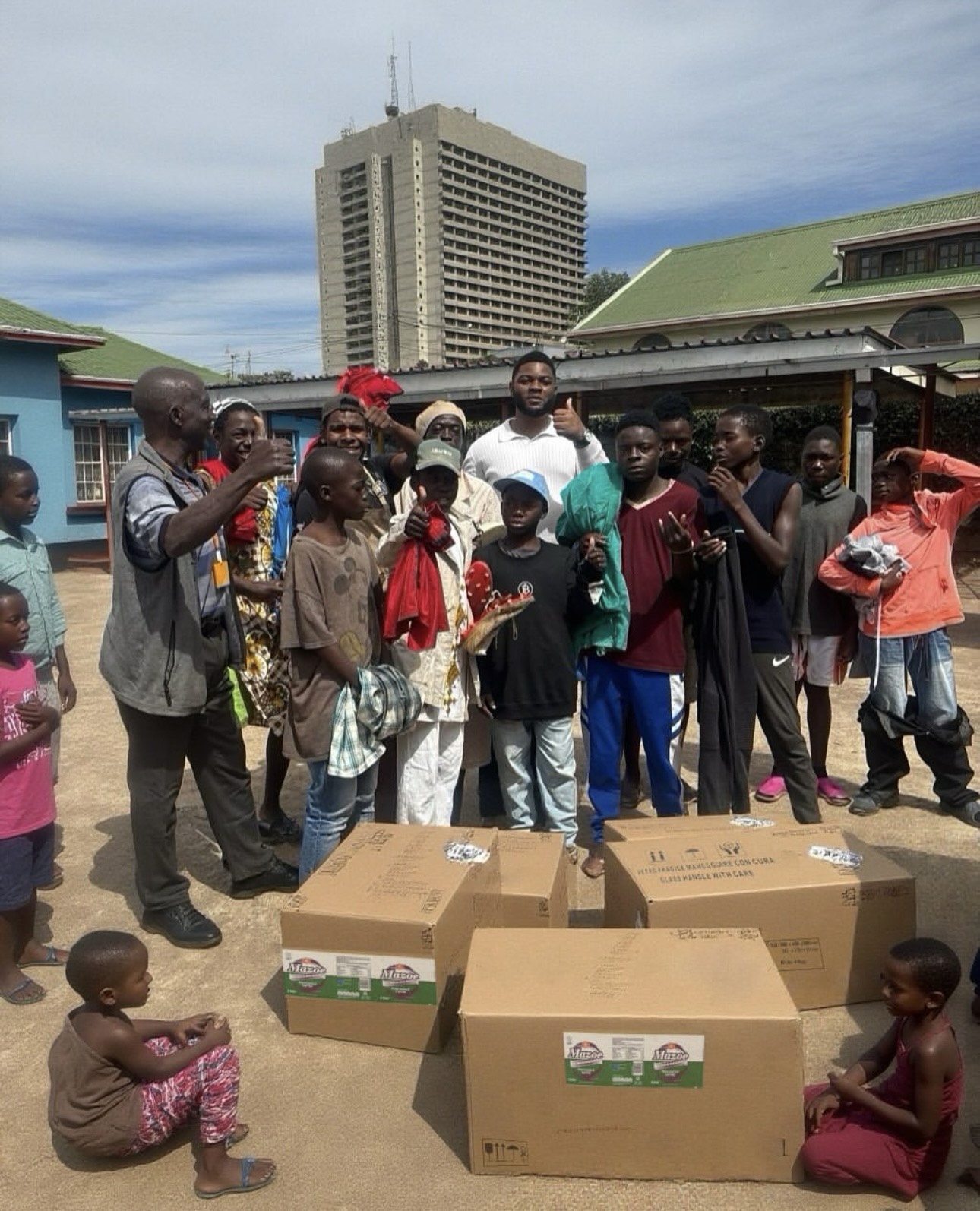
When meals or clothing are distributed, his team gathers data, listens to communities and identifies systemic gaps in education, employment access, local governance and infrastructure. The goal is to transition from charity to capacity building by strengthening local leadership, improving skills development and connecting communities to sustainable economic pathways.
Instead of repeating short-term aid cycles, Adrian builds partnerships with schools, local entrepreneurs, faith-based institutions and youth networks. He invests in education support, mentorship structures and income-generating initiatives that reduce long-term dependency. Structural change requires patience, accountability and community ownership.
Building Institutions That Outlive the Founder
“Charity can address an immediate need, but institutions shape generations,” Adrian says. The school constructed in Mapfekera represents a deliberate move from temporary assistance to permanent opportunity. Education infrastructure becomes a multiplier, influencing health outcomes, economic mobility, civic participation and social confidence.
Institutions create continuity and accountability. A school becomes a centre where teachers, parents, local leaders and young people intersect around a shared vision for progress. Impact must be measured in decades, not moments.
Governance as Infrastructure
As initiatives expanded from feeding programmes to housing, solar access and an orphanage, governance grew alongside impact. “The foundation of our operations is transparency, community participation and documented oversight,” he explains. Every project begins with needs assessments, defined budgets, timelines and measurable outcomes.
Financial records are tracked and reviewed. Decision-making is structured rather than personality driven. Accountability to communities remains central, supported by feedback mechanisms, reporting cycles and impact evaluations.
From Zimbabwe to Diplomatic Platforms
“It is not something I view as personal elevation, but as positional responsibility,” Adrian says of his appointment within European Union and United Nations platforms. He represents rural students without digital access, young entrepreneurs navigating instability and volunteers building solutions without capital.
He shifts conversations from abstract policy language to grounded priorities such as education access, climate justice, digital equity, economic inclusion and mental health. His focus is influence that translates into policy shifts, funding pathways and partnerships.
Media as Strategy
Through his podcast, The Morning Muse, Adrian uses storytelling as a strategic instrument. “Storytelling has the power to influence how societies allocate attention, and attention often precedes policy and investment.” By amplifying credible African youth voices, the platform challenges deficit-based portrayals of the continent.
Recognition Without Losing the Ground
“International validation only has value if it strengthens the credibility of the work within the communities where it began.” Awards are redirected toward mission and community impact. Local legitimacy remains the priority.
A Blueprint for a Generation
Adrian’s long-term vision is to see African youth recognised as architects of their own development. He hopes to leave a legacy of opportunity, dignity and sustainable impact. Africa’s next chapter, he believes, will be written by its young people.
Adrian Dingiswayo, Zimbabwe youth leader, Africa-led humanitarian leadership, African youth diplomacy, youth social entrepreneurship Africa, Zimbabwe humanitarian work, youth development Africa, African youth empowerment, street children Zimbabwe, Africa development leadership, youth diplomacy EU UN, Diana Award recipient Zimbabwe, African changemakers, youth policy Africa, grassroots leadership Zimbabwe, Africa youth innovation, community development Zimbabwe, African social impact, youth-led development Africa, Mapfekera school project, orphanage project Zimbabwe, solar kits Africa students, meal distribution Africa, youth governance Africa, Africa youth advocacy, young African diplomat, African podcast influence, The Morning Muse podcast, Zimbabwe social entrepreneur, African humanitarian infrastructure, education access Zimbabwe, African youth institutions, Africa policy reform youth, youth unemployment Africa solutions, African development model, community anchored impact, Zimbabwe innovation leadership, Africa youth platform, youth global recognition Africa, African leadership narrative, African institutional building, youth mentorship Africa, Africa youth empowerment movement, Zimbabwe community solidarity, Africa sustainable impact, African youth consultation, climate justice Africa youth, digital equity Africa, African youth voice global, social protection Africa children, birth registration policy Africa, youth vocational training Africa, African grassroots initiatives, youth investment Africa, African public policy youth, Zimbabwe resilience leadership, Africa humanitarian systems, youth capacity building Africa, African diaspora partnerships, Africa private sector youth partnerships, youth funding Africa, African community development model, youth media influence Africa, Africa narrative change, African economic inclusion youth, Africa education infrastructure, Zimbabwe youth impact story, Africa innovation laboratory, youth institutional leadership Africa, African development partnerships, Africa social entrepreneurship sustainability, youth governance framework Africa, African policy influence youth, Africa mental health youth advocacy, African youth global platforms, youth accountability Africa, Africa development ecosystem youth, Zimbabwe continental leadership, African youth architects, Africa opportunity framework youth, youth dignity Africa, African structural change leadership, youth empowerment policy Africa, Africa interdependence leadership, youth investment partnerships Africa, Africa leadership transformation, youth-led institutions Africa, African community ownership model, youth impact scalability Africa, Africa future leaders youth, Zimbabwe youth global stage, African changemaker profile, youth continental influence Africa, Africa next generation leadership