
Leymah Gbowee’s Legacy Lives On: How the Gbowee Peace Foundation Africa is Shaping West Africa’s Next Generation of Peacebuilders
By Maxine Ansah

|
Getting your Trinity Audio player ready...
|
The story of Leymah Roberta Gbowee is one of urgency, conviction and transformation. Born on 1 February 1972 in Monrovia, Liberia, her life was abruptly reshaped when civil war broke out as she approached adulthood. What followed was not retreat, but mobilisation.
At just seventeen, as conflict consumed Liberia, Gbowee turned to faith and community as instruments of resistance. She began organising Christian women, later forming a historic alliance with Muslim women. This collaboration led to the creation of the Women of Liberia Mass Action for Peace, an interfaith, nonviolent movement that would become central to ending Liberia’s civil war in 2003.
The movement, operating under the Women in Peacebuilding Network, demonstrated the political and social force of grassroots women’s activism. It remains one of the most significant examples of civilian-led peacebuilding in modern African history.
Gbowee’s commitment to peace was not abstract. As a young mother and trained social worker, she worked directly with ex-child soldiers, confronting the psychological aftermath of war. This experience shaped her belief that women hold a critical responsibility to secure a stable future for the next generation. Her work fused trauma healing with advocacy, bridging humanitarian response and long-term peacebuilding.
In 2011, her efforts gained global recognition when she was awarded the Nobel Peace Prize. The honour acknowledged her leadership in mobilising Christian and Muslim women in a nonviolent campaign that helped bring an end to Liberia’s civil war. Her journey is documented in her memoir Mighty Be Our Powers and the award-winning documentary Pray the Devil Back to Hell, both of which chronicle the scale and strategy of the movement.
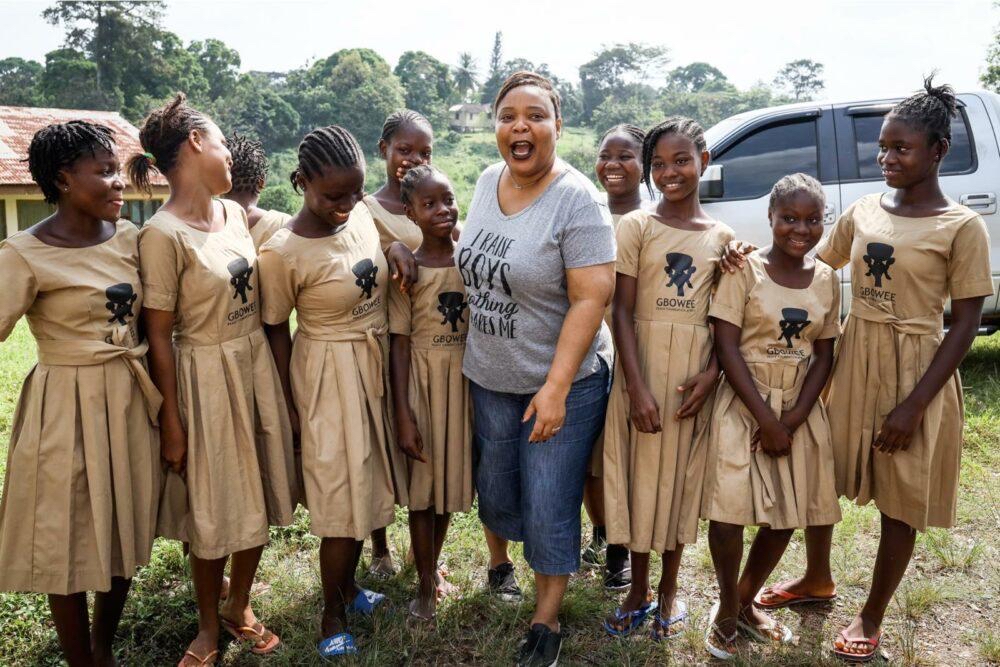
Rather than marking a conclusion, the Nobel Prize became a turning point. In 2012, Gbowee established the Gbowee Peace Foundation Africa (GPFA), translating her activism into institutional impact. The foundation was created with a clear mandate: to raise a new generation of peacebuilders and democratic leaders across Liberia and the wider West African region.
GPFA operates through three core programme areas: education, leadership and community empowerment. These pillars are designed to address the structural gaps that often fuel conflict, particularly limited access to education and leadership opportunities for women and young people. The foundation positions empowerment not as charity, but as a strategic investment in peace and governance.
The organisation’s approach reflects Gbowee’s lived experience. By equipping young people, especially women, with tools for leadership and civic engagement, GPFA aims to create societies that are not only peaceful but also inclusive and resilient. Its work extends beyond Liberia, reinforcing regional stability through youth-focused interventions.
Institutionally, the foundation is supported by a United States-based partner, strengthening its global reach and operational capacity. This dual presence enables GPFA to mobilise resources, partnerships and advocacy platforms across continents.
Beyond her foundation, Gbowee continues to shape global discourse on peace and security. She served as Executive Director of the Women, Peace and Security Program at the Earth Institute at Columbia University, while advising organisations working across human rights, youth development and sustainable development. Her international advocacy reinforces a consistent message: peace is not sustainable without inclusion, and inclusion is not possible without opportunity.
The vision driving the Gbowee Peace Foundation Africa is both practical and generational. It recognises that post-conflict recovery is not only about ending violence, but about building systems that prevent its return. Education, leadership and empowerment are therefore not parallel goals; they are interconnected strategies for long-term stability.
As West Africa continues to navigate complex political and social challenges, institutions like GPFA signal a shift towards locally grounded, youth-driven solutions. The foundation’s work underscores a broader reality: sustainable peace is built not only in negotiation rooms, but in classrooms, communities and the everyday choices of empowered citizens.
In that sense, Leymah Gbowee’s legacy is not confined to history. It is actively unfolding through a generation that is being prepared to lead differently, think critically and act collectively. The future of peace in Africa, as her work suggests, will depend on how effectively this next generation is equipped to carry the responsibility forward.
Leymah Gbowee, Gbowee Peace Foundation Africa, Liberia peace movement, Women of Liberia Mass Action for Peace, Nobel Peace Prize 2011, African peacebuilders, women in peacebuilding Africa, youth leadership Liberia, West Africa democracy initiatives, peacebuilding NGOs Africa, Liberian civil war resolution, interfaith peace movement Africa, women empowerment Liberia, GPFA programmes, African youth development organisations, peace and security Africa, grassroots activism Liberia, trauma counselling child soldiers, Liberia post war recovery, African women leaders Nobel Prize, education empowerment Africa, community leadership West Africa, NGO Liberia youth, democracy building Africa, women leadership programmes Africa, peace advocacy organisations, Columbia University women peace security, Earth Institute programmes, sustainable development Africa youth, Liberia NGOs women empowerment, social worker peace activism, interfaith cooperation Africa, post conflict societies Africa, civic engagement youth Africa, leadership training Liberia, African humanitarian work, youth empowerment initiatives West Africa, nonviolent movements Africa, grassroots women movements, Liberia history civil war peace, African NGOs impact, youth peacebuilding Africa, African democracy programmes, women rights advocacy Africa, peace education Africa, leadership opportunities women Africa, Liberia development programmes, Nobel laureate Africa women, international peace advocacy, Liberia youth empowerment NGO, Africa inclusive societies, community empowerment Liberia, African peace initiatives, youth civic leadership Africa, women peace security agenda, African NGO leadership training, Liberia education initiatives, peace foundation Africa, GPFA USA partnership, youth democracy Africa, women leadership training Liberia, peace advocacy Liberia, grassroots mobilisation Africa, interfaith peace Liberia, African social impact organisations, youth leadership development Africa, NGO programmes Liberia, African peacebuilding strategies, women empowerment NGOs West Africa, post war leadership Africa, community resilience Liberia, Africa youth empowerment programmes, women democracy builders Africa, Liberia social development NGO, peace and governance Africa, African youth change makers, women led movements Africa, Africa conflict resolution NGOs, leadership education Africa youth, Liberia humanitarian organisations, African civic engagement programmes, peacebuilding leadership Africa, youth empowerment Liberia NGO, African development leadership programmes