
UABS Policy Briefing Series: G20 2026, IMF Pressures and UNPFAD Shape New U.S.–Africa Policy Moment
By Maxine Ansah

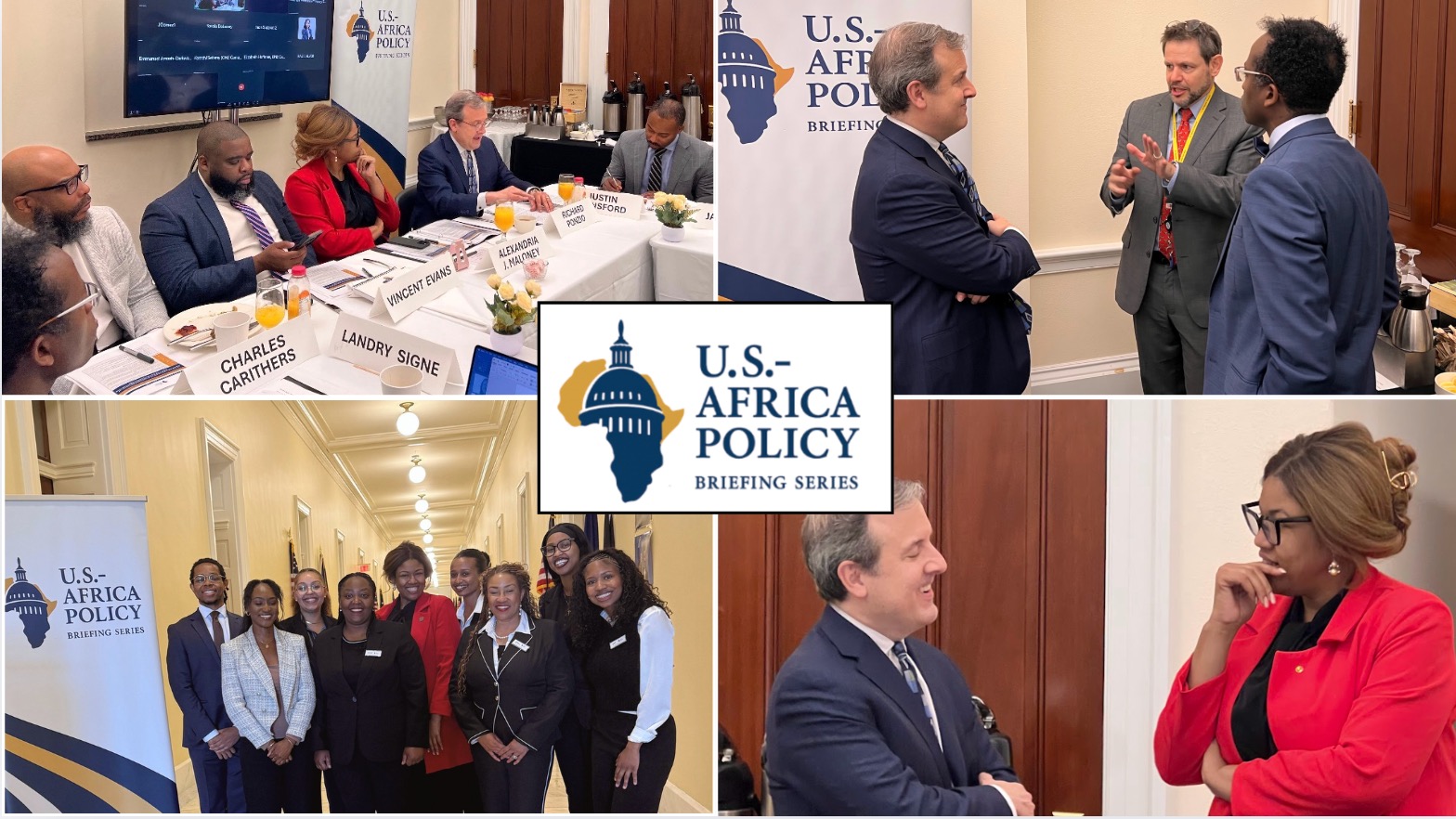
Inside the U.S.–Africa Policy Briefing Series report
A new post-session report from the U.S.–Africa Policy Briefing Series is offering a clear view into how Washington is recalibrating its engagement with Africa ahead of the United States’ 2026 G20 presidency.
The closed-door roundtable, held on 21st April 2026 at Capitol Hill, brought together congressional staff, African diplomats, policy experts and private sector stakeholders to assess the immediate direction of U.S.–Africa relations across global governance, economic engagement and diaspora policy.
At the centre of the discussion were three policy fronts: the African Union’s role within the G20, the economic realities emerging from the IMF and World Bank Spring Meetings, and the United States’ positioning within the UN Permanent Forum on People of African Descent.
G20 2026: African Union inclusion faces practical test
The report underscores that while the African Union’s admission as a permanent G20 member marks a structural breakthrough, real influence will depend on execution rather than symbolism.
Participants pointed to persistent barriers such as visa access, limited inclusion in informal convenings, and weak coordination with regional bodies like ECOWAS. Without addressing these gaps, African participation risks remaining largely ceremonial.
As host nation, the United States holds significant control over participation frameworks and agenda-setting. The report notes that congressional engagement, through oversight, funding and diplomatic signalling, will be decisive in determining whether Africa’s presence translates into policy impact.
The stakes extend beyond diplomacy. G20 decisions on supply chains, energy and emerging technologies directly intersect with African economies and, by extension, U.S. economic and security interests.
IMF Spring Meetings: mounting pressure and fragmented U.S. tools
Economic realities emerging from the IMF and World Bank Spring Meetings formed the second pillar of the discussion.
The report highlights rising sovereign debt, constrained fiscal space and increasing reliance on private capital across African economies. At the same time, tighter global financial conditions are limiting access to affordable financing.
Despite a strategic shift in U.S. policy from aid to investment, participants noted that implementation has not kept pace. Development finance tools such as the U.S. Development Finance Corporation, EXIM Bank and Prosper Africa remain fragmented across agencies, slowing delivery and weakening impact.
This fragmentation is increasingly significant as competing global actors deploy faster and more centralised financing models. The report suggests that without structural coordination and faster execution, the United States risks losing ground in African markets that are critical to global supply chains and future growth.
UNPFAD: diaspora policy and global perception at stake
The third focus area centres on the United States’ evolving position within global diaspora policy frameworks.
Recent disengagement from the UN Permanent Forum on People of African Descent, alongside positions taken on key UN resolutions, has introduced new diplomatic dynamics. These developments are being closely observed and carry implications for U.S. credibility and alignment with African partners.
At the same time, the report identifies a growing movement to strengthen coordination among legislators of African descent globally. This presents an opening for renewed U.S. leadership, particularly through congressional platforms such as the Congressional Black Caucus.
Participants emphasised that multilateral forums like theUN Permanent Forum on People of African Descent are increasingly shaping narratives around development, human rights and international cooperation. Absence from these spaces creates room for other actors to define the agenda.
Cross-cutting issues shaping the policy landscape
Beyond the three core areas, the report highlights additional policy pressures influencing U.S.–Africa engagement. These include ongoing instability in Sudan, the strategic importance of African critical minerals, the future of AGOA trade frameworks, and the rising influence of artificial intelligence and digital infrastructure across African markets.
Each of these issues intersects with broader questions of economic coordination, supply chain resilience and global governance, reinforcing the need for a more cohesive U.S. strategy.
African diplomatic missions: central to execution
A consistent theme throughout the report is the critical role of African diplomatic missions in Washington.
Embassies are positioned as key actors in shaping policy alignment, facilitating coordination with U.S. institutions and ensuring that African priorities are clearly communicated ahead of the 2026 G20. Structured engagement, including briefings, roundtables and sustained dialogue, is identified as essential to improving policy outcomes.
The report stresses that effective U.S.–Africa engagement will depend not only on internal coordination within Washington but also on proactive, unified diplomatic strategy from African counterparts.
A defining moment for U.S.–Africa engagement
Across all three policy areas, the report arrives at a clear conclusion: where U.S. engagement is limited, fragmented or absent, other global actors are stepping in to shape the terms of partnership.
The Road to G20 2026 is therefore not only a diplomatic milestone but a test of strategic coherence. With the United States set to host one of the most consequential global forums, the coming months will determine whether policy ambition is matched by delivery.
For African stakeholders, the message is equally direct. Early coordination, sustained engagement and unified positioning will be essential to ensuring that Africa’s growing institutional presence translates into tangible influence.
As global power centres shift and partnerships evolve, this moment offers a rare alignment of opportunity and urgency. If managed with clarity and intent, it could redefine the architecture of U.S.–Africa relations in a way that is more balanced, responsive and reflective of Africa’s central role in the global economy.
UABS policy briefing, U.S Africa policy 2026, G20 2026 Africa, African Union G20 membership, IMF Spring Meetings Africa, World Bank Africa economy, UNPFAD policy, diaspora policy US Africa, Congressional Black Caucus Africa, US Africa relations 2026, Africa global governance, AU G20 role, US development finance Africa, Prosper Africa initiative, DFC Africa investment, EXIM Bank Africa, Africa debt crisis 2026, African economies IMF report, US Africa diplomacy, Africa policy Washington DC, Capitol Hill Africa briefing, African diplomatic missions US, ECOWAS G20 participation, global partnerships Africa, Africa supply chains critical minerals, cobalt Africa supply chains, lithium Africa economy, Africa clean energy minerals, AGOA policy future, US Africa trade policy, Africa investment opportunities US, diaspora engagement policy, global Black policy coordination, UN Africa relations, multilateral engagement Africa, Africa economic outlook 2026, Africa finance challenges, US Africa strategic interests, Africa emerging technologies policy, AI Africa policy, Africa infrastructure finance, Africa private sector investment, Africa development finance tools, US Treasury Africa policy, Africa economic partnerships, Africa policy think tanks US, Africa diplomacy strategy, Africa global influence, Africa policy coordination US, US Africa summit impact, Africa governance G20, Africa participation barriers G20, visa access African delegates, Africa multilateral forums, Africa policy alignment US, Africa congressional engagement, Africa policy recommendations US, Africa economic resilience, Africa global markets role, Africa US relations analysis, Africa diaspora economy, remittances Africa US, Africa entrepreneurship diaspora, Africa trade flows US, Africa energy markets global, Africa logistics sector policy, Africa technology partnerships, Africa policy report 2026, Africa international cooperation, Africa global agenda setting, Africa policy institutions US, Africa foreign policy US, Africa investment barriers US, Africa finance coordination US, Africa policy reform US, Africa economic coordination global, Africa policy stakeholders US, Africa diplomatic strategy Washington, Africa global partnerships G20, Africa development challenges IMF, Africa capital access issues, Africa economic policy US, Africa policy roundtable findings, Africa global positioning US, Africa policy insights report, Africa economic transformation policy, Africa US collaboration 2026, Africa governance institutions global, Africa policy leadership US, Africa diplomatic engagement strategy, Africa international forums participation, Africa policy narrative global, Africa policy opportunities 2026