
Djibouti’s President Guelleh Unveils New Cabinet With Increased Female Representation
|
Getting your Trinity Audio player ready...
|
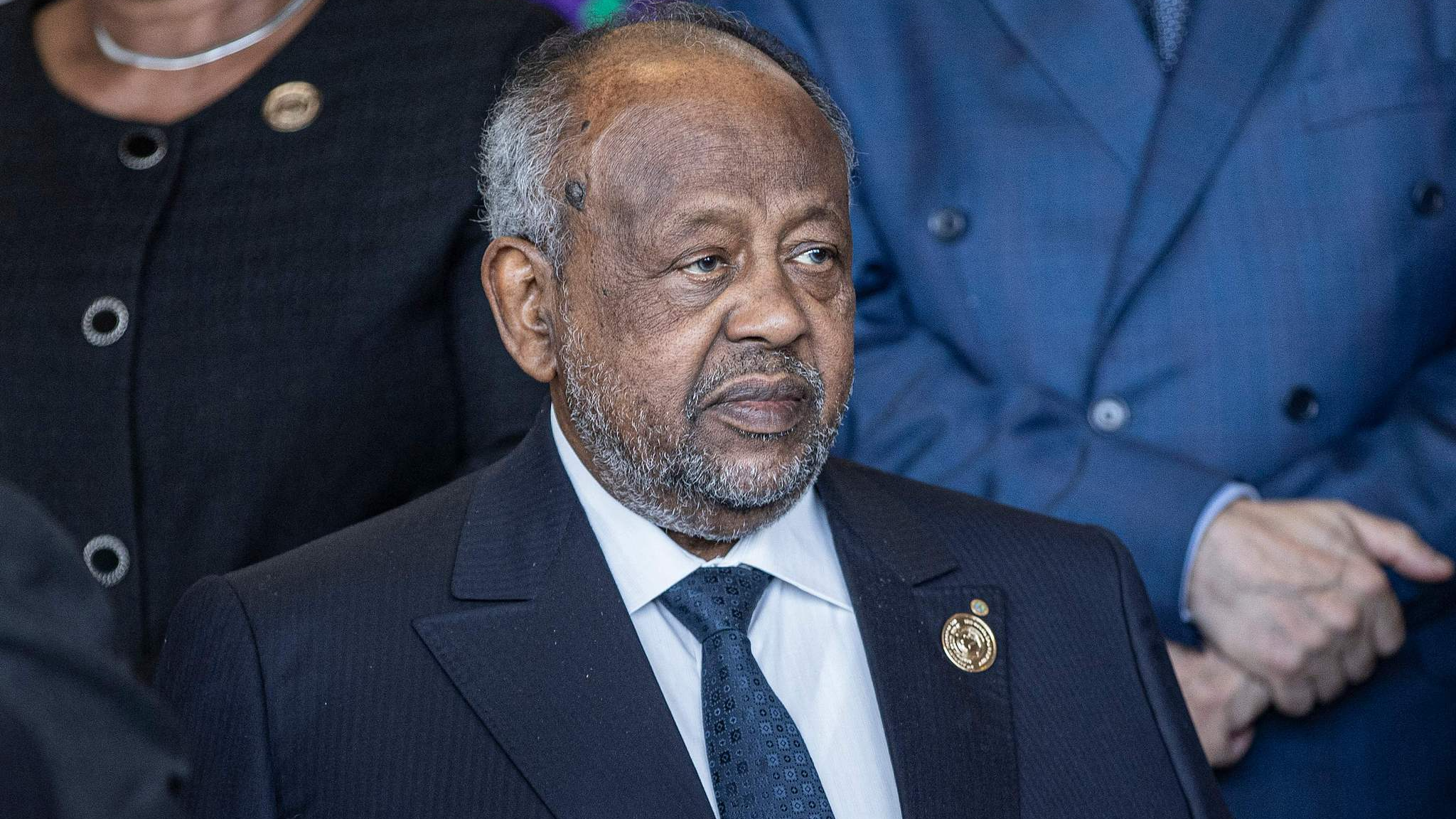
Djibouti has announced a new 26-member cabinet following the re-election of President Ismaïl Omar Guelleh, marking the first government formation of his latest term in office.
The appointments, confirmed through a presidential decree, include eight women — seven heading ministries and one serving as secretary of state — reflecting a measured but notable expansion of female representation in government.
Continuity at the Core of Power
Despite the reshuffle, key positions remain unchanged.
Ilyas Moussa Dawaleh retained the Economy and Finance portfolio, while Abdoulkader Houssein Omar was appointed Minister of Foreign Affairs and International Cooperation, alongside his role as government spokesperson.
Hassan Omar Bourhan continues as Defence Minister, with Omar Abdi Said overseeing the Interior Ministry.
The structure signals continuity in strategic sectors, particularly finance, security, and foreign policy — areas central to Djibouti’s role as a regional logistics and military hub.
Women Take Larger Role in Cabinet
The new cabinet places increased emphasis on female leadership.
Among the appointments, Mouna Osman Aden was named Minister of Health, while Hana Farah Assoweh now leads the Women and Family Affairs ministry.
Other key roles include Ouloufa Ismail Abdo at Social Affairs, Amina Abdi Aden at Urbanism and Housing, and Safia Mohamed Ali Gadileh at Digital Economy and Innovation.
Fatouma Ali Abdallah was appointed Secretary of State for Sports.
The appointments reflect a broader trend across parts of Africa, where governments are gradually increasing women’s participation in leadership — though often within controlled political frameworks.
First Cabinet After Contested Political Cycle
The government follows Guelleh’s victory in the April 2026 presidential election, where he secured 97.81 percent of the vote.
His opponent, Mohamed Farah Samatar, received 2.19 percent, in a race that once again underscored the imbalance between the ruling coalition and opposition forces.
Guelleh, now 78, has been in power since 1999, making him one of Africa’s longest-serving leaders.
His latest re-election was made possible by constitutional changes that removed the presidential age limit — a move that effectively extended his eligibility to remain in office.
Stability or Stagnation?
Djibouti’s leadership has long emphasized stability, positioning the country as a reliable partner in a volatile region.
Its strategic location along major global shipping routes and its role as host to multiple foreign military bases have reinforced that narrative.
However, the political landscape tells a more complex story.
While cabinet reshuffles and increased female representation signal incremental change, the broader structure of power remains firmly centralized.
The Bigger Picture
The new cabinet reflects a familiar balance.
On one hand, continuity in key ministries ensures policy stability and reinforces existing governance structures.
On the other, the inclusion of more women and sectoral reshuffling suggests an awareness of evolving expectations around representation and governance.
For Djibouti, the challenge is not forming governments — it is defining how much they are meant to change.
Djibouti cabinet 2026, Ismail Omar Guelleh, Djibouti government, Djibouti politics, East Africa politics, African leadership, women in government Africa, female ministers Africa, Djibouti ministers, Djibouti election 2026, Guelleh presidency, long serving African leaders, African governance, Djibouti economy leadership, Djibouti foreign policy, Abdoulkader Houssein Omar, Djibouti defence ministry, Djibouti interior ministry, Djibouti cabinet reshuffle, African cabinet appointments, women empowerment Africa politics, gender representation Africa, African political systems, Djibouti stability, Horn of Africa politics, African Union politics, Djibouti governance structure, African elections analysis, presidential decree Africa, Djibouti reforms, African leadership trends, Africa political continuity, African democracy challenges, Djibouti opposition, Mohamed Farah Samatar, Djibouti ruling party, Union for Presidential Majority, African political power, Djibouti constitution reform, Africa term limits debate, African presidents long rule, governance Africa analysis, Djibouti policy direction, African cabinet women leaders, Africa gender equality politics, Djibouti public administration, African government systems, Africa political reform, Djibouti strategic location, Horn of Africa security, Djibouti military base hub, Africa governance stability, Djibouti leadership style, African political transitions, Africa policy continuity, Djibouti international relations, African diplomacy, Djibouti development strategy, Africa political structure, African cabinet diversity, Djibouti leadership changes, Africa governance debate, Djibouti institutional power, African politics news, Africa leadership accountability, Djibouti election results, African government formation, Djibouti executive power, Africa political landscape, African state leadership, Djibouti ministers list, Africa governance challenges, Horn of Africa leadership, Djibouti political analysis, Africa policy making, African government trends, Djibouti reforms debate, Africa institutional leadership, Djibouti national policy, African governance systems, Africa political reporting, Djibouti public sector, African democracy discourse, Africa leadership continuity, Djibouti cabinet women, African political institutions