
Somaliland Renews Push for Recognition as Independence Day Celebrations Highlight Diplomatic Stalemate
|
Getting your Trinity Audio player ready...
|
Somaliland marked its independence day with renewed calls for international recognition, as leaders urged the global community to formally acknowledge its statehood.
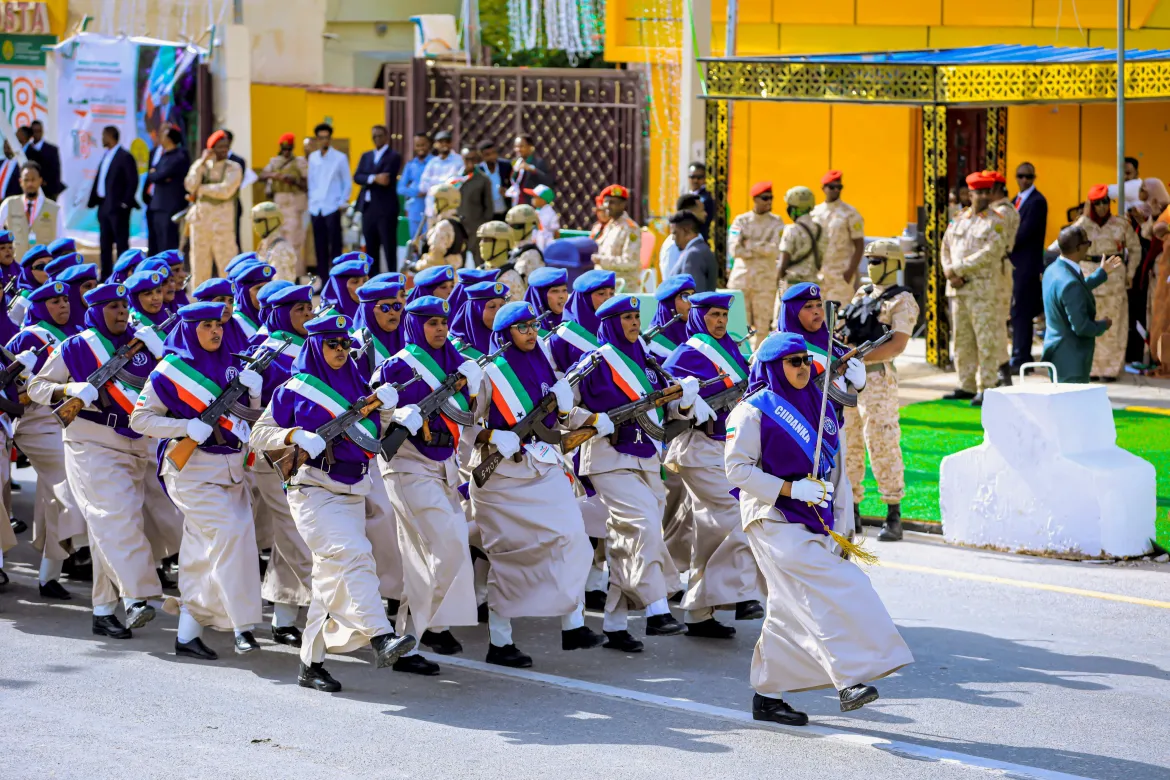
Thousands gathered in the capital, Hargeisa, for celebrations that included military parades and public events.
Leadership Pushes Diplomatic Case
President Abdirahman Mohamed Abdullahi said Somaliland had met the standards expected of a peaceful and democratic state.
“The Republic of Somaliland has fulfilled all the requirements of a responsible, peaceful, law-abiding, and democratic nation,” he said.
He called on the international community to move beyond questions of legitimacy.
“The question Somaliland asks the world is no longer whether we deserve recognition, but rather: when will the rest of the world recognise the Republic of Somaliland?” he added.
Israel Recognition Shifts the Conversation
The latest push comes five months after Israel became the first nation to formally recognize Somaliland.
The move was celebrated by many within the territory as a breakthrough after decades of diplomatic isolation.
However, it has also introduced new complexities, including concerns about regional tensions and opposition from parts of Somaliland’s eastern regions.
A Longstanding Claim Without Broad Support
Somaliland declared independence from Somalia in 1991, following the collapse of the Somali central government.
Despite maintaining relative stability and establishing its own governing institutions, it has yet to gain widespread international recognition.
No other country has followed Israel’s decision, leaving Somaliland’s status unresolved on the global stage.
Recognition, Politics and Regional Dynamics
The situation reflects broader geopolitical sensitivities in the Horn of Africa, where recognition of breakaway regions can influence regional stability and diplomatic relations.
For many governments, acknowledging Somaliland raises questions about sovereignty, precedent and political balance in a region already shaped by complex alliances.
At the same time, Somaliland’s leadership continues to frame its case around governance, security and democratic credentials.
Looking Ahead
While the celebrations in Hargeisa highlighted national pride and political ambition, they also underscored the gap between internal state-building and external recognition.
For now, Somaliland remains in a diplomatic grey zone, functioning as a state without full international acceptance.
Yet its persistence reflects a broader reality across Africa.
Many nations on the continent are still navigating the long path of political evolution, institution building and global positioning. Somaliland’s story, like many others, is still unfolding. With time, dialogue and shifting global dynamics, pathways that seem closed today can open tomorrow, shaped by a continent that continues to define its own future on its own terms.