
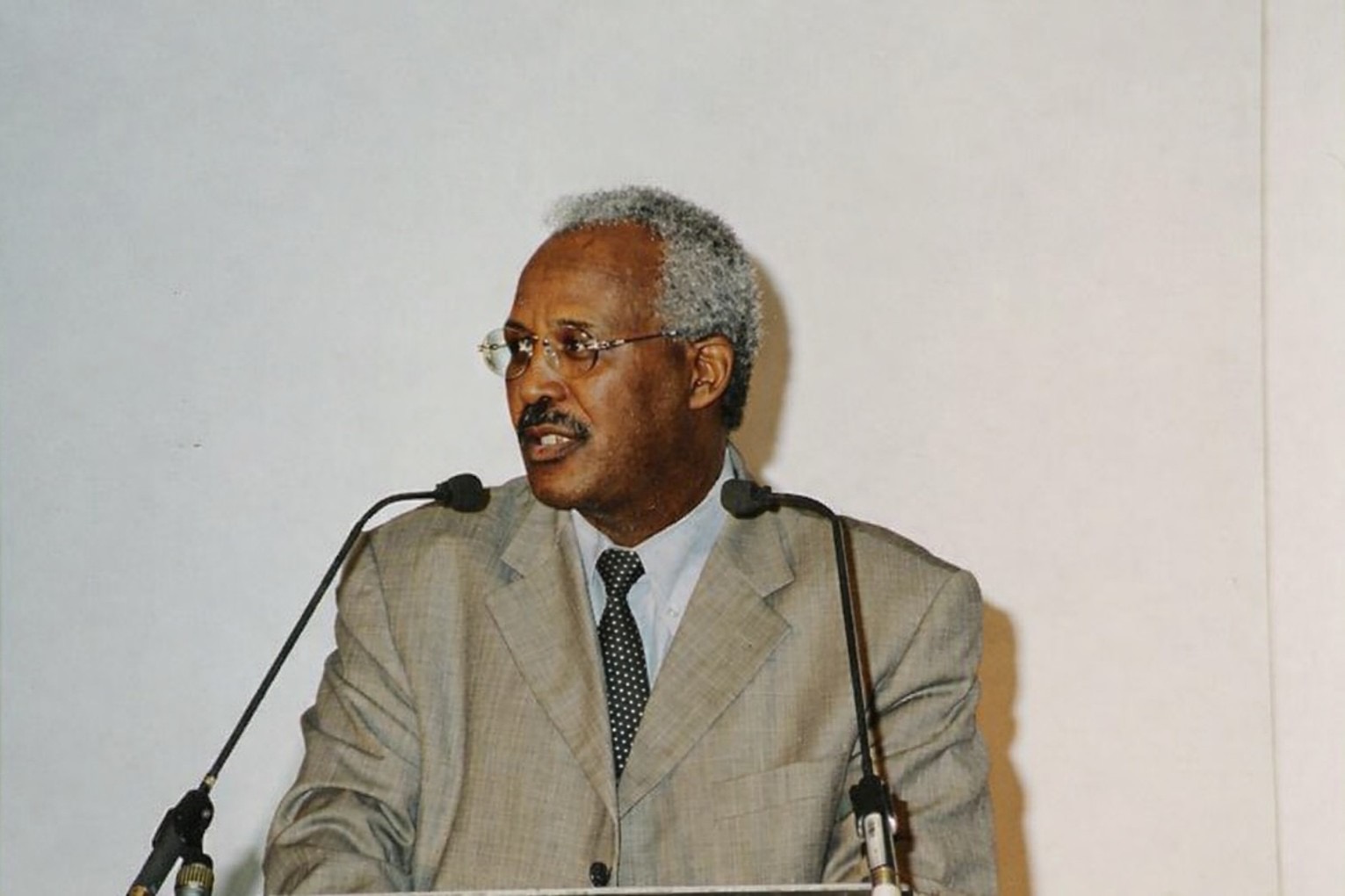
Meet Yibrah Tesfazghi, the Eritrean Refugee Who Grew GE Africa’s Revenue from $150 Million to $3.8 Billion

|
Getting your Trinity Audio player ready...
|
Yibrah Tesfazghi’s rise from humble beginnings in Eritrea to one of General Electric’s most influential African executives is a story of perseverance, vision, and leadership against the odds.
Over a 38-year career at General Electric, Tesfazghi broke barriers as the first Black African to hold a senior regional leadership role within GE International. Under his leadership, GE Africa’s revenue surged from approximately $150 million to $3.8 billion within three years, transforming the division into one of the company’s fastest-growing and most profitable operations.
Yet behind the impressive financial achievements lies a deeper story about overcoming discrimination, challenging entrenched corporate structures, and redefining what African leadership can achieve on the global stage.
Lessons from Eritrea’s Divided Reality
Growing up in Asmara, Tesfazghi was exposed early to the realities of inequality.
He recalls observing stark differences between wealthy and poor families, experiences that shaped his understanding of social and economic disparities. Those childhood observations later evolved into a determination to prove that opportunity should not be limited by background or geography.
His perspective was further shaped by political instability and personal hardship. One of his earliest memories involved witnessing Ethiopian security forces raid his grandfather’s home and arrest a family member involved in Eritrea’s independence movement.
The experience left a lasting impression and reinforced values that would guide his leadership philosophy throughout his career.
Finding Strength Through Migration
Political upheaval eventually forced Tesfazghi and his family to navigate life across multiple countries, including Ethiopia, Sweden, and Saudi Arabia.
Each transition required adaptation to unfamiliar cultures and systems while maintaining a strong sense of identity.
Rather than viewing displacement as a setback, Tesfazghi used every new environment as an opportunity to learn, grow, and develop the resilience that would later define his leadership style.
The Eleven-Month Test That Defined His Leadership
One of the most significant moments of Tesfazghi’s career occurred while working on a major power project in Saudi Arabia.
As head of finance, logistics, and administration for a large-scale power plant project employing thousands of workers, he became involved in a prolonged dispute with a senior project manager who questioned his authority and oversight responsibilities.
The conflict resulted in an investigation that lasted nearly a year.
During that period, Tesfazghi was removed from his position and subjected to intense scrutiny. Despite the pressure, he remained committed to transparency, professionalism, and ethical conduct.
When the investigation concluded, he was fully cleared, while evidence of misconduct emerged against the individual who had challenged his authority.
The experience reinforced a lesson that would shape the rest of his career: integrity remains a leader’s most valuable asset.
Breaking Through the Glass Ceiling
In 2003, Tesfazghi achieved what many considered a historic breakthrough when he became the first Black African appointed to a senior regional leadership role within GE International.
Initially, he viewed the promotion as proof that multinational corporations were becoming more inclusive.
However, he soon discovered that formal advancement did not automatically eliminate deeper barriers.
While he had gained a seat at the table, access to informal networks, sponsorship opportunities, and strategic decision-making circles often remained limited.
He describes these invisible obstacles as “hidden walls” that frequently exist behind the more visible glass ceiling.
Building the African Dream Team
Tesfazghi’s most transformative decision came when he replaced GE Africa’s traditional reliance on external agents and intermediaries with a locally recruited leadership structure known as the African Dream Team.
His philosophy was simple: Africans understand African markets better than anyone else.
Rather than depending on third-party representatives, he recruited talented professionals from across the continent who understood local business environments, political dynamics, regulations, and customer expectations.
The move significantly improved customer relationships, accelerated decision-making, and strengthened operational efficiency.
Integrity as a Business Strategy
While many executives focus on revenue targets and growth projections, Tesfazghi placed integrity at the centre of GE Africa’s strategy.
When presenting his vision to colleagues and stakeholders, he summarized his approach in four words: “Never compromise on integrity.”
That principle guided every aspect of the business, from customer engagement to contract negotiations and internal governance.
The emphasis on ethical leadership helped strengthen trust with governments, customers, and business partners across the continent.
Transforming GE Africa’s Growth Trajectory
The results of the African Dream Team strategy were extraordinary.
GE expanded across multiple sectors, including power generation, healthcare, transportation, aviation, security, and industrial infrastructure.
By eliminating unnecessary intermediaries and empowering local talent, the company became more competitive while reducing costs and improving execution.
Within three years, revenue increased from approximately $150 million to $3.8 billion.
The achievement demonstrated that investing in local leadership could deliver both commercial success and sustainable long-term growth.
Why Inclusion Creates Competitive Advantage
Tesfazghi argues that diversity and inclusion should not be viewed as social initiatives alone.
In his experience, inclusive leadership produces measurable business value.
Teams with diverse perspectives identify risks more effectively, develop stronger customer relationships, and create solutions better suited to local markets.
For GE Africa, empowering African professionals improved bid accuracy, enhanced customer trust, and strengthened organizational resilience.
According to Tesfazghi, inclusion is ultimately a business advantage rather than a compliance exercise.
From Hidden Walls to Artificial Intelligence
Today, Tesfazghi believes discrimination has evolved rather than disappeared.
Instead of obvious barriers, he warns that exclusion increasingly appears through systems, algorithms, and institutional practices that may unintentionally reinforce bias.
He argues that artificial intelligence, recruitment platforms, and investment models often reflect assumptions embedded within the data used to build them.
Without greater African participation in shaping these technologies, future forms of exclusion could become more difficult to identify and challenge.
A Legacy Beyond Revenue
Although GE eventually dismantled the African Dream Team, many of its members went on to occupy senior leadership positions across the continent.
Tesfazghi views their success as one of the strongest validations of the model he championed.
Today, his story serves as a powerful example of how resilience, integrity, and inclusive leadership can transform both businesses and lives.
From a childhood shaped by displacement and inequality to leading one of Africa’s most successful corporate growth stories, Tesfazghi’s journey demonstrates that talent exists everywhere—even when opportunity does not.