
Nigeria Hosts Africa’s First Playback Theatre Festival as Storytelling Takes Center Stage

|
Getting your Trinity Audio player ready...
|
For one week, Nigeria’s capital became a vibrant hub of creativity as artists, educators, development practitioners, and theatre enthusiasts from across Africa and beyond gathered in Abuja for a groundbreaking cultural event.
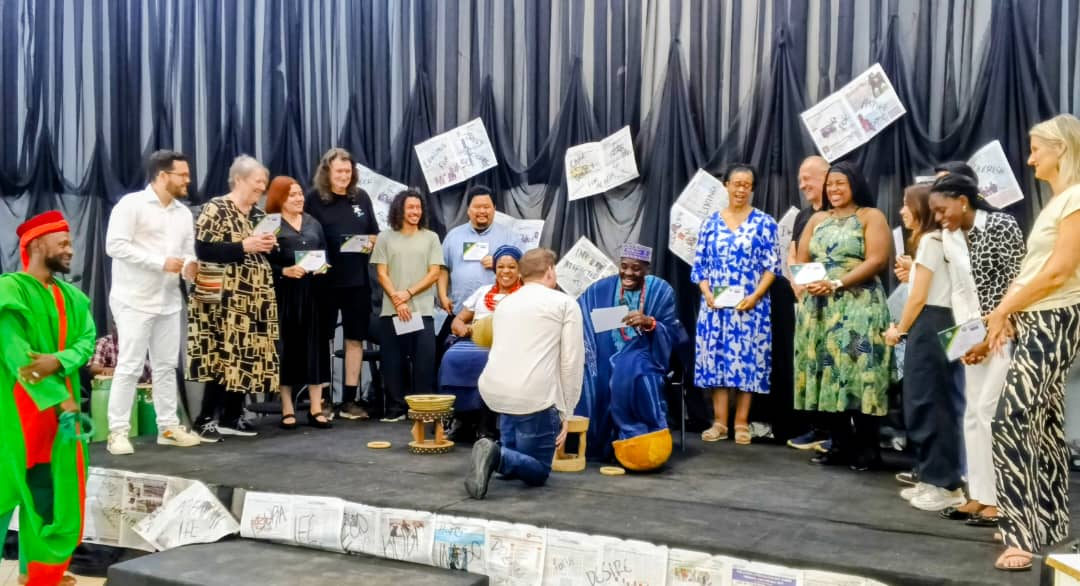
The inaugural Africa Improvisation and Playback Theatre Festival, themed “One Story at a Time: Improvisation for Social Justice,” showcased the transformative power of storytelling, highlighting how theatre can foster healing, dialogue, and community development far beyond the stage.
A Festival Where Every Story Matters
Inside packed halls across Abuja, laughter, reflection, and emotion flowed freely as performers transformed audience experiences into spontaneous theatrical performances.
Unlike traditional theatre, playback theatre relies on real-life stories shared by audience members. Actors then recreate those experiences in real time through movement, dialogue, and improvisation, creating a unique connection between performers and spectators.
The festival, held under the banner #MeetInNigeria, marked the first event of its kind on the African continent and attracted participants from multiple countries eager to explore how improvisational theatre can drive social impact.
Beyond Entertainment: Theatre as a Tool for Change
While the performances entertained audiences, organizers stressed that the festival’s purpose extended much deeper.
The event was jointly organized by the Access to Creative Play Foundation and Ensemble Improv Theatre Company to create opportunities for collaboration, cultural exchange, and community engagement.
For many practitioners, theatre serves as a practical tool for addressing social challenges, strengthening communication, and helping vulnerable communities process difficult experiences.
According to Access to Creative Play Foundation Executive Director Oluwadamilola Abdulai-Apotieri, storytelling has been central to the organization’s work with internally displaced persons for more than a decade.
The foundation uses theatre-based approaches to build resilience, provide psychosocial support, and help individuals navigate trauma through shared experiences and creative expression.
From Hospitals to Prisons
One of the festival’s most compelling messages was that improvisation can be applied far beyond performance spaces.
Abdulai-Apotieri explained that applied improvisation is increasingly being used in healthcare, corporate training, education, and correctional facilities.
In medical settings, improvisation exercises can improve patient communication and bedside manners. In workplaces, they help strengthen teamwork, leadership, and problem-solving skills. Within prisons, similar techniques are being used to encourage resilience and personal growth.
The versatility of improvisational theatre demonstrates how creative arts can contribute to real-world solutions in unexpected ways.
A Universal Language Across Cultures
Participants from different countries emphasized that theatre remains one of the most effective ways to bring people together regardless of language, nationality, or background.
Stephanie Ryan, a theatre actress from the United States, described theatre as a powerful vehicle for building confidence, improving listening skills, and encouraging collaboration.
Its universal nature was evident throughout the festival as participants from diverse cultures connected through shared experiences and emotional storytelling, often without requiring extensive translation.
The ability to create understanding across cultural divides is one reason playback theatre has continued to grow globally for more than five decades.
The Global Rise of Playback Theatre
Playback Theatre was founded in 1975 and is now practiced in more than 70 countries worldwide.
The format allows audience members to share personal experiences that performers immediately reinterpret on stage through unscripted scenes, movement, music, and dialogue.
Because each performance is shaped by audience contributions, no two shows are ever identical. This spontaneity creates an environment where participants feel heard, validated, and connected to others through shared human experiences.
Nigeria’s Growing Role in Creative Innovation
Hosting Africa’s first playback theatre festival signals Nigeria’s growing influence within the continent’s cultural and creative industries.
Already recognized as a powerhouse in film, music, and literature, the country is increasingly becoming a destination for innovative artistic movements that combine creativity with social impact.
The success of the Abuja festival suggests there is growing appetite for cultural initiatives that go beyond entertainment and actively contribute to education, healing, and community development.
As participants departed the event, one message stood out above all: stories remain among humanity’s most powerful tools for building empathy, understanding, and lasting social change.