
South Africa Regenerative Farming Turns Ducks Into Natural Vineyard Pest Control

|
Getting your Trinity Audio player ready...
|
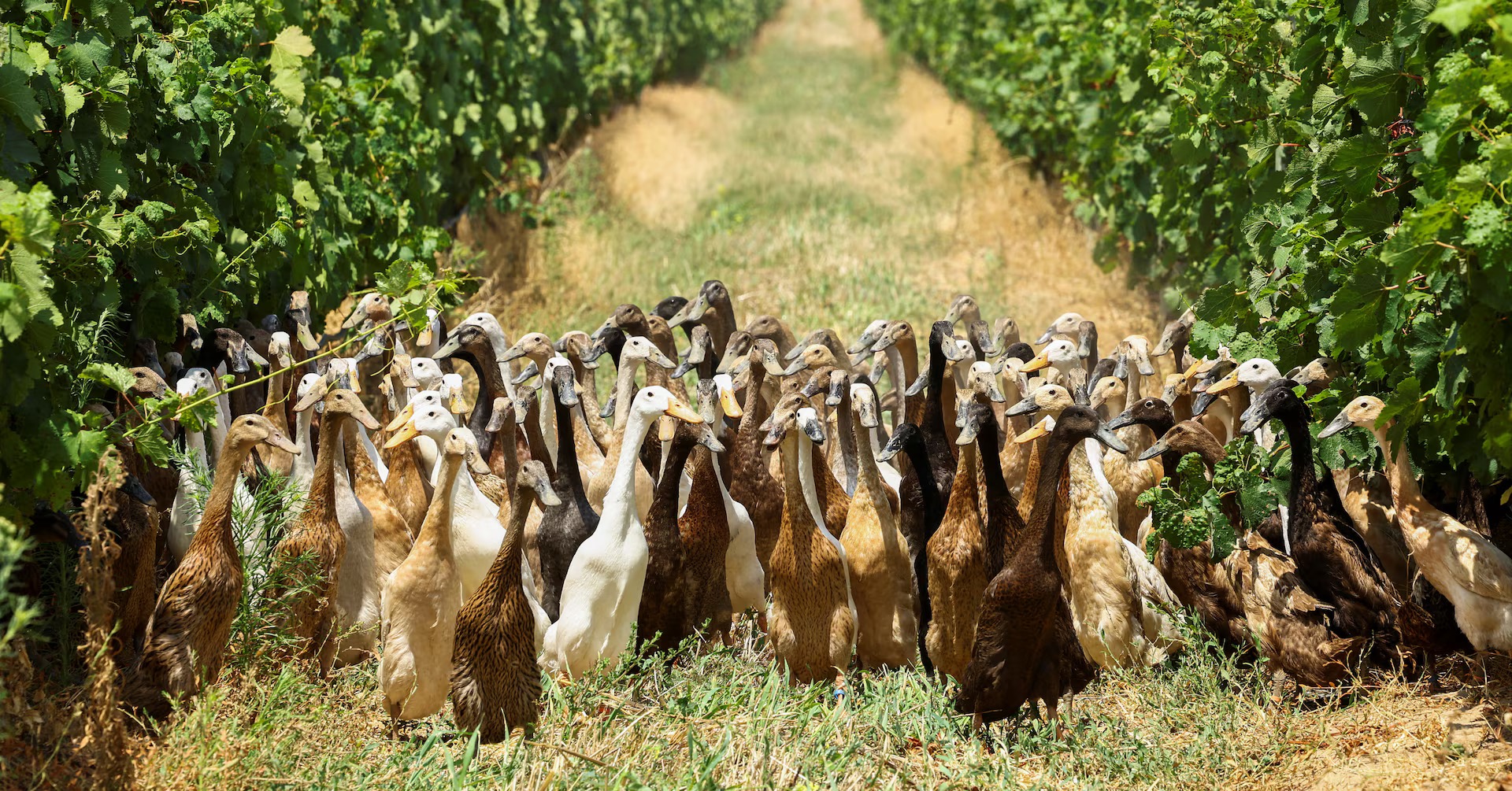
More than 1,000 ducks are being put to work in the vineyards of South Africa’s Western Cape as one historic wine estate expands its use of animals to reduce reliance on pesticides and support healthier soil.
At Vergenoegd Löw Wine Estate, Indian runner ducks move through the vineyard twice a day as part of a regenerative farming system that also involves sheep and cattle. The birds function as natural pest controllers. They eat snails, aphids, worms and other insects that could otherwise damage crops.
The cattle and sheep have different roles. Cattle graze longer cover crops, reducing their height before sheep enter the vineyards and feed on shorter grass and weeds. As the animals move through the fields, they also naturally fertilise the soil.
The approach forms part of a wider effort to reduce chemical intervention and maintain the long-term health of the land. Vergenoegd Löw has been using its runner ducks as pest controllers since the 1980s. What was once an unusual farming practice is now part of a wider movement towards more sustainable vineyard management in the region. The estate’s management says other South African wine farms are also using runner ducks and livestock for pest control and grazing.
The logic behind regenerative agriculture is relatively simple. Instead of treating a farm as a production system dependent on repeated chemical inputs, regenerative methods attempt to strengthen natural ecological processes. Animals can manage insects and vegetation while contributing nutrients back into the soil. The goal is not merely reducing pesticides but maintaining productive land over the long term.
The estate says excessive use of artificial fertilisers and pesticides can gradually degrade soil quality. Protecting the soil is therefore directly connected to the quality and sustainability of agricultural production.
The ducks have also become a tourist attraction. Visitors can watch the flock moving through the estate, giving the farming practice an additional role in the vineyard’s tourism offering. That combination of agriculture and tourism reflects the wider economic importance of South Africa’s wine regions. Vineyards contribute not only through agricultural production but through hospitality, employment and destination tourism.
Climate pressures are making sustainable agriculture increasingly important across Africa. Farmers are facing changing rainfall patterns, rising temperatures, soil degradation and growing pressure to produce more food and agricultural goods with fewer environmental costs.
No single farming method will solve those challenges.
But systems that reduce chemical dependence while preserving productivity may become increasingly valuable.
For Africa, regenerative farming is also a reminder that innovation does not always require expensive machinery or futuristic laboratories. Sometimes innovation means looking again at natural systems and using them more intelligently. South Africa’s runner ducks may be charming enough to attract tourists, but their real value lies in what they represent: African farmers experimenting with practical ways to protect soil, reduce inputs and keep agriculture productive. As climate pressures grow, those small changes could become increasingly important to the continent’s food and agricultural future.
South Africa regenerative farming, duck brigade South Africa, Vergenoegd Löw Wine Estate, Indian runner ducks, South Africa sustainable agriculture, Western Cape vineyards, natural pest control, regenerative viticulture, South Africa wine farming, eco-friendly agriculture Africa, ducks in vineyards, South Africa pesticide reduction, sustainable wine farming, Western Cape agriculture, South Africa farm innovation, runner ducks pest control, sheep vineyard grazing, cattle vineyard grazing, natural fertiliser vineyards, soil health South Africa, Vergenoegd Löw ducks, South Africa wine estate, South Africa green farming, African regenerative agriculture, sustainable vineyards Africa, South Africa biodiversity farming, South Africa climate smart agriculture, South Africa agricultural innovation, Western Cape wine industry, South Africa tourism agriculture, duck pest control, snail control vineyards, aphid control vineyards, worm control vineyards, livestock integrated farming, regenerative farming Africa, South Africa soil regeneration, low pesticide farming, organic pest control Africa, South Africa environmental farming, South Africa farming news, South Africa positive news, Africa sustainable farming, African agriculture innovation, Western Cape regenerative farming, South Africa vineyard sustainability, South Africa farm ecology, South Africa soil health, African wine industry, Cape wine estates, Vergenoegd Löw 2026, South Africa farm tourism, duck parade South Africa, sustainable tourism South Africa, South Africa eco tourism, wine tourism South Africa, South Africa regenerative agriculture 2026, runner ducks South Africa, natural vineyard management, South Africa sustainable wine, South Africa agriculture 2026, Western Cape farming 2026, Africa climate smart farming, soil conservation Africa, farm animals pest control, integrated livestock vineyards, South Africa eco-friendly wine, regenerative wine estate, natural fertilisation vineyards, South Africa vineyard ecology, Christiaan Cloete, Milan Germishuizen, South Africa ecology ranger, South Africa farm manager, Western Cape sustainable wine, South Africa award winning wine, historic Cape wine estate, South Africa farming innovation 2026, African vineyard innovation, South Africa green agriculture, pesticide alternatives Africa, natural farming South Africa, regenerative farm methods, sustainable agriculture solutions, Africa farm innovation, South Africa farm sustainability, African soil health, South Africa environmental innovation, Western Cape eco farming, South Africa biodiversity agriculture, South Africa regenerative vineyards, Africa sustainable wine, duck farming innovation, South Africa pest control ducks, South Africa agricultural sustainability, South Africa vineyard ducks, African regenerative farming news, South Africa sustainable vineyards 2026, Western Cape duck brigade, TVOA South Africa news