

John Amanam: Africa’s First Hyper‑Realistic Prosthetic Artist for Darker Skin Tones


|
Getting your Trinity Audio player ready...
|
John Amanam, a Nigerian sculptor and former special effects artist, has made history as the first African to create hyper-realistic prosthetic body parts for people with darker skin tones. His work is not only revolutionary in the medical field but also deeply meaningful in its mission to restore dignity, identity, and representation for Black amputees across the world.

Amanam’s journey into prosthetics began in 2018 after a personal family crisis. His younger brother lost several fingers in a tragic accident, and the prosthetic options available were starkly white ill-fitting both physically and culturally. That moment became a turning point. Leveraging his background in fine and industrial arts, Amanam decided to create a realistic prosthetic hand that matched his brother’s skin tone. That act of love and ingenuity laid the foundation for a much larger mission: to create lifelike prosthetics that reflect African skin tones and experiences.
Despite having no formal training in prosthetics, Amanam spent over a year researching materials, sculpting techniques, and skin pigmentation. His expertise in special effects from the Nigerian film industry (Nollywood) gave him a head start in creating forms that looked and felt human. He began experimenting with silicone, pigments, and mold-making to develop prosthetics that mimic not just skin color, but also texture, veins, and even fingerprints. From that research emerged Immortal Cosmetic Art Ltd, a company he founded to craft fingers, ears, noses, limbs, and breast forms that look strikingly real on people of darker complexions. His lab, based in Uyo, Akwa Ibom State, has served hundreds of clients from Nigeria and beyond, many of whom had never before seen prosthetics that matched their skin.
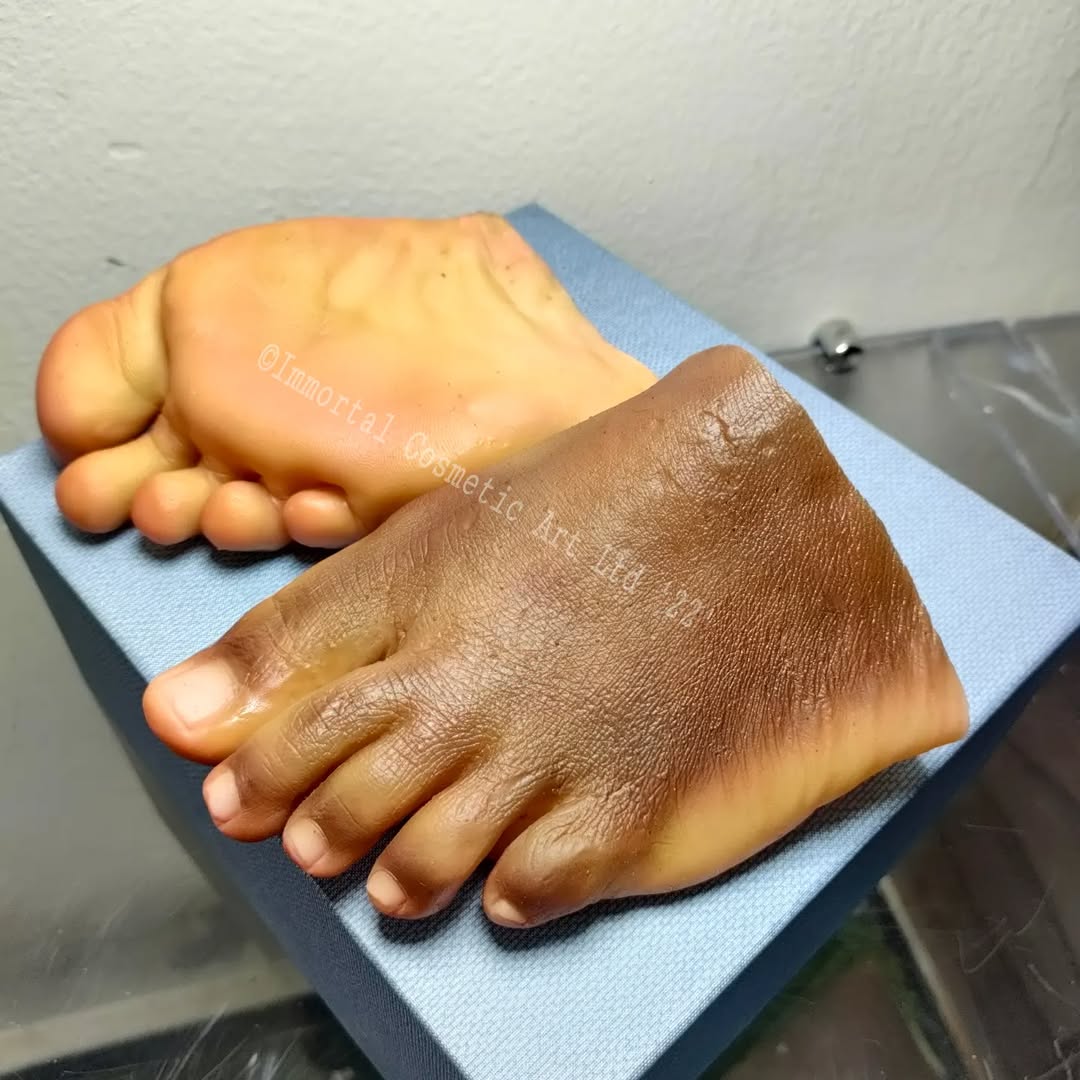
For many amputees, Amanam’s work goes beyond aesthetics it offers emotional healing and social reintegration. Conventional prosthetics are often light-toned, highlighting the amputation rather than helping individuals feel whole again. With Amanam’s work, clients can wear their prosthetics without the fear of drawing unwanted attention, questions, or pity.
“I wanted people who had lost body parts to feel accepted, to feel confident again,” Amanam told reporters. “My aim was to reduce the stigma around disability and skin color.”
The psychological impact has been profound. Clients have reported newfound confidence, the ability to wear short sleeves again, and a sense of reclaiming their appearance and self-worth.
Creating each prosthetic is a labor-intensive process that involves precise measurements, detailed sculpting, and intricate hand-painting to match various shades of melanin. Depending on the complexity, it can take between three weeks to two months to complete a piece. Amanam also works with a small team of trained artisans, most of whom he trained himself. Prices range from ₦90,000 (around $100) for smaller parts like fingers to ₦650,000 ($700+) for full hands. Yet Amanam is committed to affordability. He offers discounted and sometimes free services for low-income individuals through a donation-based initiative called Ubokobong, meaning “hand of God” in Ibibio.
Globally, the prosthetics industry has long overlooked people of color. The default options typically reflect Caucasian skin tones, reinforcing a systemic bias. Amanam’s work confronts that directly. By centering African identity and artistry in medical technology, he is reshaping how prosthetics are designed and who they are made for. His story has gained international attention, featured by media outlets including Reuters, BBC, Al Jazeera, and others. More importantly, it has inspired a new wave of interest in inclusive healthcare solutions designed in Africa, by Africans, for Africans and the global Black community.
Amanam’s long-term goal is to establish a full-scale manufacturing hub and training institute to expand access across Africa. He has also patented his techniques in Nigeria to protect his intellectual property and is seeking support to scale production, reduce costs, and invest in research and development. He dreams of a future where no African child or adult has to wear a prosthetic that makes them feel like an outsider. In his words:
“Everyone deserves to look like themselves even after a loss.”
John Amanam’s innovation is more than a medical breakthrough it’s a cultural and humanitarian achievement. At the intersection of art, science, and compassion, he is restoring more than just limbs. He is restoring self-esteem, identity, and hope for countless individuals whose stories are too often invisible. In a world that still struggles with representation in even the most basic medical devices, Amanam stands as a symbol of what is possible when innovation meets purpose and when Africa leads its own solutions.