


|
Getting your Trinity Audio player ready...
|
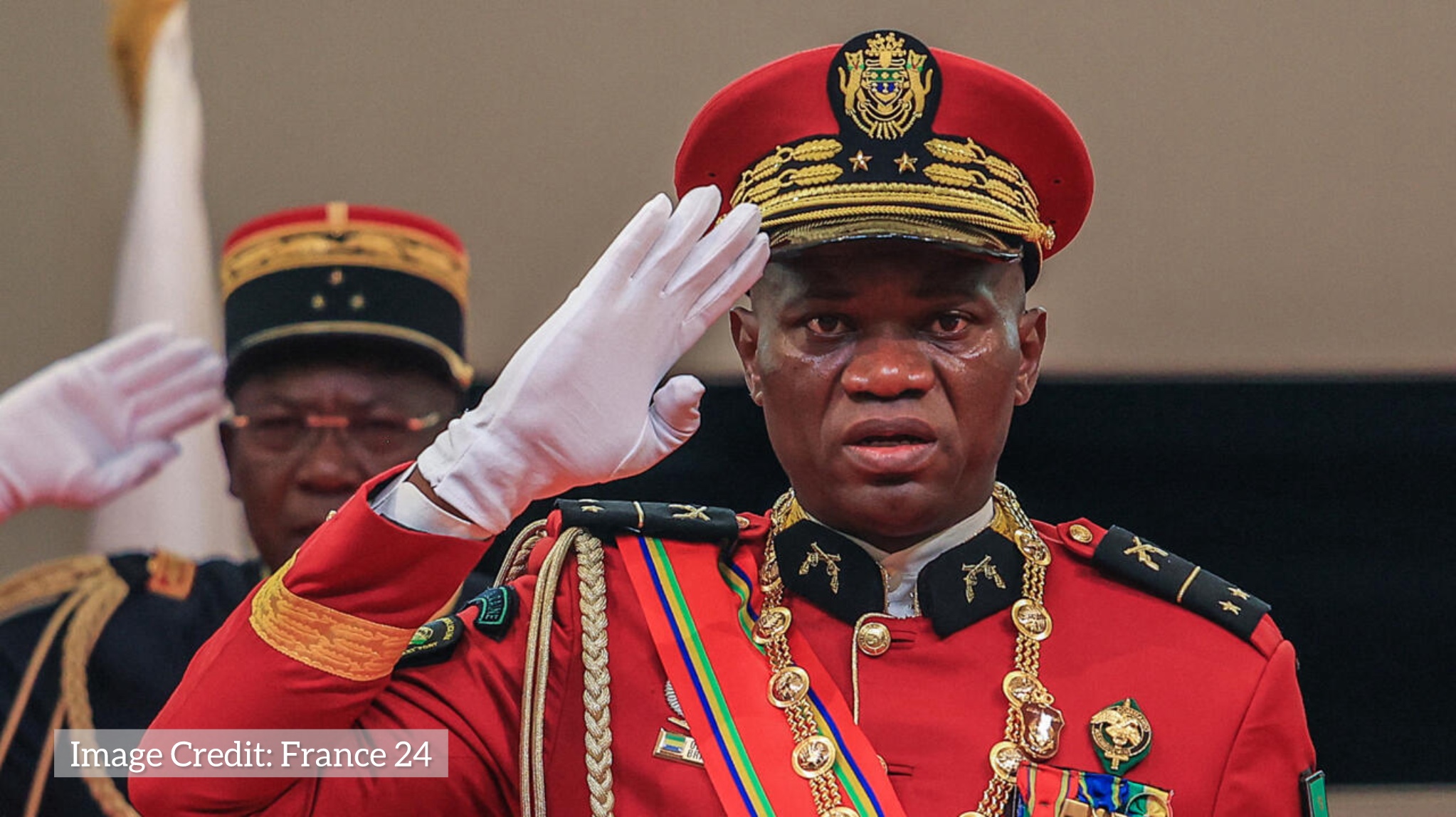
Gabonese President Brice Oligui Nguema has formally entered the political arena with the establishment of a new political organization aimed at reinforcing his leadership and guiding the country’s future direction. The announcement marks a pivotal development nearly two years after he assumed power through a military coup.
On Saturday, President Oligui introduced the Democratic Union of Builders, Union Démocratique des Bâtisseurs (UDB) in French, signaling his ambition to shape Gabon’s political landscape through democratic structures rather than military oversight. According to official party communications, the UDB is focused on fostering national unity and spearheading the country’s reconstruction efforts after decades of political continuity under a single ruling family.
From Coup Leader to Elected President
Oligui’s emergence as Gabon’s head of state followed the military ousting of former President Ali Bongo in August 2023. That coup ended a 56-year political dynasty dominated by the Bongo family, beginning with Omar Bongo’s presidency in 1967 and later continued by his son, Ali Bongo, from 2009 until his removal.
In April 2025, Oligui won the presidential election with an overwhelming majority, reportedly securing nearly 95% of the vote. His electoral victory marked a significant shift from interim military governance to a more formalized, civilian-led administration. However, questions remain about the transparency of the electoral process and the inclusiveness of the political transition.
A Party to Define the Future
The formation of the UDB serves not only as a platform to institutionalize President Oligui’s leadership but also as a vehicle for political legitimacy and policy direction. The party positions itself as a force for renewal, development, and unity, promising to move the country beyond its legacy of centralized power and stagnation.
With a platform centered on national cohesion, infrastructure development, and economic reform, the UDB seeks to present itself as the architect of a new Gabon, one where democratic values and inclusive governance take center stage. The party’s name itself underscores a commitment to “building” both in a literal and symbolic sense.
A Delicate Balancing Act
While the creation of the UDB marks a notable departure from purely military rule, it also reflects a common trend seen in other post-coup governments across Africa, where military leaders transition into civilian roles through political party formation. Analysts suggest that this move may be designed to solidify power ahead of potential domestic and international scrutiny.
President Oligui has previously positioned himself as a reformist, pledging to restore democratic norms and revamp governance systems. However, the concentration of power, especially following a nearly uncontested electoral win, has raised concerns among civil society organizations and international observers about the genuine depth of political pluralism in Gabon.
Looking Ahead
As Gabon charts a new course under President Oligui’s leadership, the success of the Democratic Union of Builders will depend on its ability to deliver tangible progress and maintain public trust. Whether the UDB becomes a genuine platform for national development or a mechanism for political consolidation remains to be seen.
What is certain is that the launch of this party marks a new phase in Gabon’s evolving political story, one that could reshape its future for generations.
Read Also: A River Between Hope And Heartbreak: The Human Toll Of DRC’s Ongoing Crisis