
A River Between Hope and Heartbreak: The Human Toll of DRC’s Ongoing Crisis
Written By Maxine Ansah

|
Getting your Trinity Audio player ready...
|
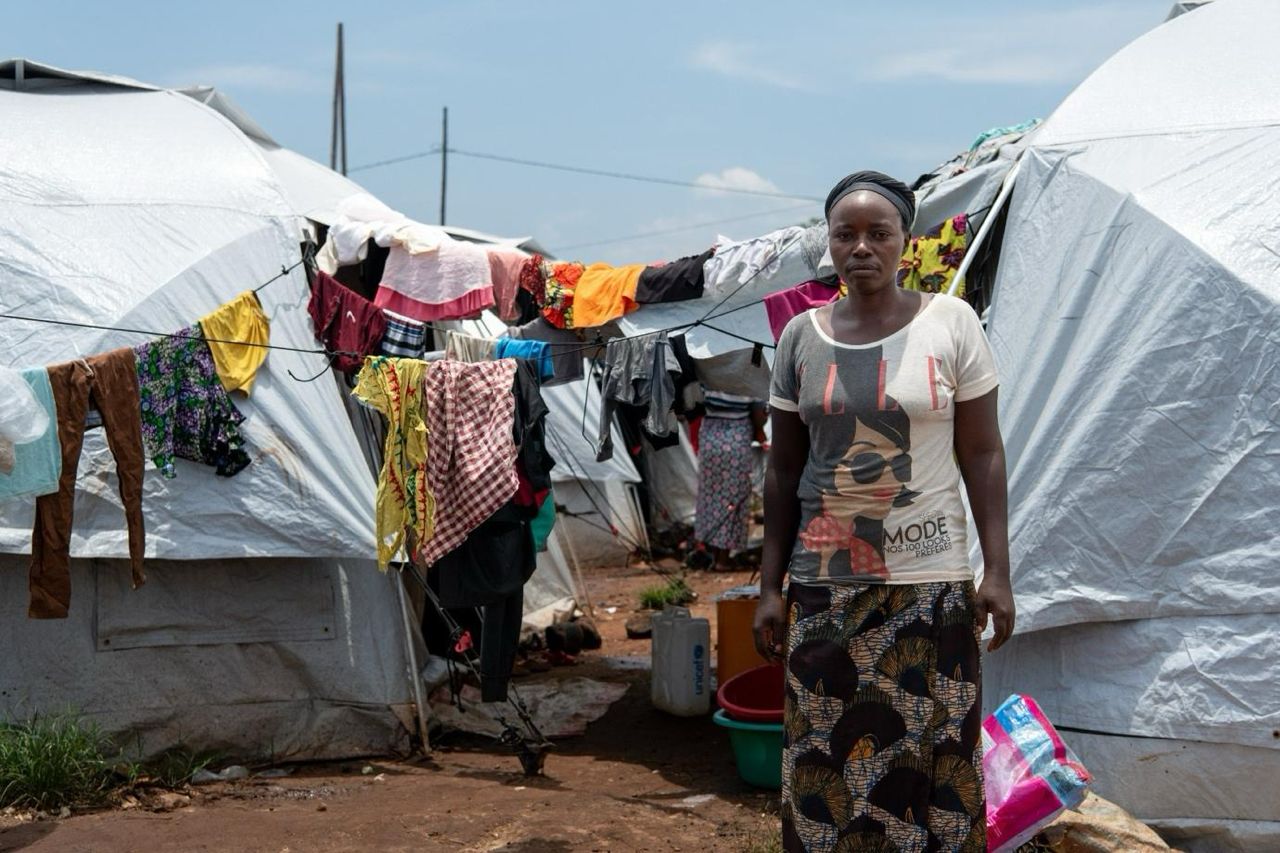
In the mud-soaked grounds of Rugombo Stadium in Cibitoke Province, Burundi, hundreds of makeshift shelters line the field once meant for sport and community gatherings. Among them sits Elizabeth Uwimana, her gaze fixed on a distant point beyond the camp’s boundaries. Her voice, barely above a whisper, carries a story of loss, survival and haunting uncertainty.
“The river took them from me,” she says, recalling the day her two eldest children were swept away by the Rusizi River as the family fled escalating violence in eastern Democratic Republic of the Congo (DRC). That moment, in February 2025, would fracture the life Elizabeth had tried to rebuild after earlier displacement. Her children have not been seen since.
Elizabeth is one of more than 70,000 people who crossed into Burundi between January and March 2025, escaping a resurgence of conflict in eastern DRC. The latest wave of violence, marked by intensified clashes between the M23 rebel group and Congolese government forces, shattered the fragile peace that had temporarily settled over communities like Kamanyola, where Elizabeth and her family had sought refuge two years earlier.
“We thought the fighting would stop, but it only grew worse,” she recounts. “We had no choice but to flee.”
The journey to safety was perilous. Separated from her husband in the chaos, Elizabeth guided her four children through dense forests and dangerous terrain. The only escape was across the Rusizi River, a route thousands of others were also taking. “The river was our only way out. I didn’t think twice.” When the waters surged, she held tightly to her children, but the force of the current was too strong. Her phone, which held the last photos of her missing children and her only means of contacting her husband, was lost to the river as well.
Elizabeth’s story is deeply personal, yet heartbreakingly common. The International Organization for Migration (IOM) reports that the displacement into Burundi is among the largest in recent decades. Alongside the tens of thousands of Congolese fleeing violence are Burundian returnees, many of whom had previously migrated to the DRC in search of work or safety. Now, over 80 per cent of them return to a country where they have no home, no income and no support systems.
As of March 2025, IOM had assessed the needs of more than 18,000 newly displaced persons in Burundi. Most were living in overcrowded spaces such as schools, churches and stadiums, while others were being hosted by local communities already struggling with limited resources.
Living conditions in these shelters are dire. More than 85 per cent of displaced people lack access to safe and adequate housing. Over 75 per cent face immediate food insecurity. Essential items like clothing, cooking utensils and blankets are in short supply.
“We have no clothes, no blankets, not even a pot to cook with,” Elizabeth says. “My two youngest are hungry. We have no food, no clean water – not even soap.”
The onset of the rainy season has only worsened the crisis. Flooded shelters and poor sanitation have turned displacement sites into breeding grounds for disease. Outbreaks of measles and cholera have been reported, raising significant public health concerns.
In response, IOM, in collaboration with the Government of Burundi and humanitarian partners, is delivering life-saving assistance. This includes emergency shelter, essential non-food items, water and sanitation facilities, protection services, health care and mental health and psychosocial support. “We just need a place to sleep, something to cook with, and a few essentials like mats and jerrycans to start over,” Elizabeth says. Efforts are also underway to help vulnerable families relocate to safer and less crowded areas.
Yet the scale of the crisis is immense and growing. Armed violence in eastern DRC shows no signs of abating. Conflict, poverty and climate shocks continue to push people across borders in search of safety. As needs rise, humanitarian organisations face the challenge of mounting an effective response with limited funding and overstretched resources.
Elizabeth’s question lingers in the air like the heavy rain clouds over Cibitoke: “We are safe now, but what comes next?”
It is a question without a simple answer, but one that demands urgent attention. Sustained support for humanitarian action is critical to ensuring the survival, dignity and recovery of people like Elizabeth. Without it, thousands more may be forced to face the future with little more than memories and unanswered questions.