
|
Getting your Trinity Audio player ready...
|
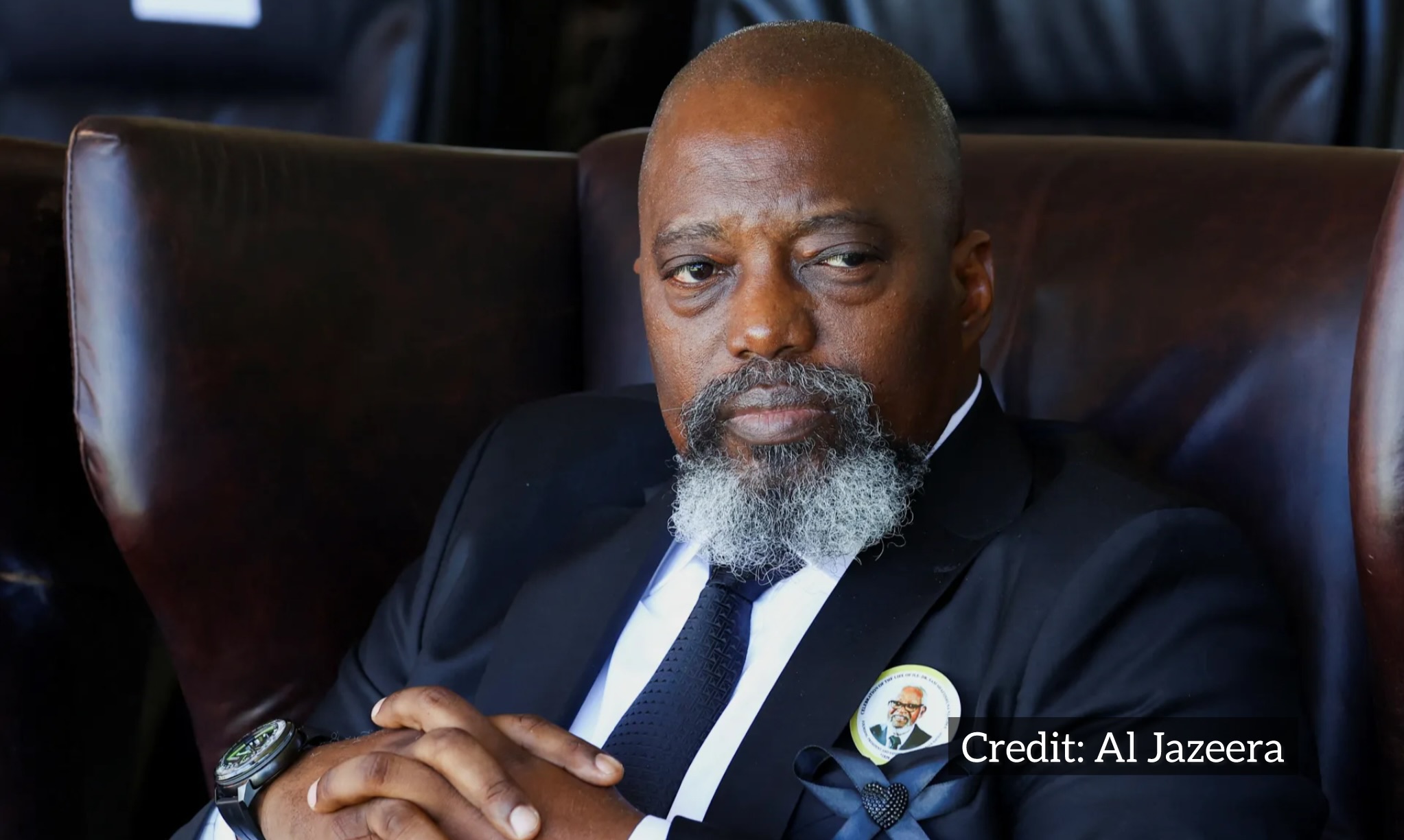
The Democratic Republic of the Congo (DRC) has escalated legal proceedings against its former head of state, Joseph Kabila, with a military prosecutor urging the courts to impose the death penalty. Kabila, who governed the country for nearly two decades, is facing charges of war crimes, treason, and plotting against the current administration.
General Lucien Rene Likulia, the DRC’s military auditor general, formally requested that Kabila be condemned to death during a court hearing on Friday. The former president, currently being tried in absentia, is accused of supporting the Rwanda-backed M23 rebel group, which has taken control of key territories in the resource-rich eastern region this year.
The allegations include homicide, torture, orchestrating an armed insurrection, and attempting to overthrow President Félix Tshisekedi’s government. Prosecutors also cited Kabila’s alleged role in the forcible occupation of Goma, a major city in North Kivu, earlier this year.
Kabila, who has been living outside the DRC since late 2023, primarily in South Africa, has strongly rejected the charges. He described the trial as politically motivated, claiming the judicial system has become “an instrument of oppression.”
His political party, which was banned by authorities earlier this year, has echoed these sentiments. Ferdinand Kambere, the party’s secretary, accused the government of pursuing a campaign of “relentless persecution” against opposition figures.
Joseph Kabila ruled the DRC from 2001 until stepping down in 2018, after nearly 18 years in power. In May 2025, the DRC Senate voted to lift his immunity, clearing the path for prosecution. Since then, the former leader’s assets have been seized, and his presence in rebel-held areas has drawn further scrutiny.
The government alleges that Kabila played a pivotal role in supporting M23 rebels and their political arm, the Congo River Alliance (AFC), accusing him of colluding with Rwanda to destabilize the state. President Tshisekedi has publicly referred to Kabila as the “architect” behind M23’s advances, which have intensified conflict in the eastern provinces of North and South Kivu.
Regional and International Implications
The accusations against Kabila also highlight broader regional tensions, with the DRC repeatedly accusing Rwanda of backing M23, claims Kigali has consistently denied. However, United Nations experts have reported that Rwandan forces played a significant role in recent rebel offensives.
The M23 movement has denied any official connection to Kabila, calling the trial a “malicious strategy” by Kinshasa to silence political dissent.
The DRC reinstated the death penalty in 2024 after lifting a long-standing moratorium, though no executions have yet been carried out. Human rights groups have expressed concern over the renewed use of capital punishment amid rising political tensions and ongoing conflict in the east, which has displaced millions over the past three decades.
Kabila’s trial, though conducted in his absence, is shaping into one of the most consequential legal battles in the DRC’s recent history. The verdict could redefine the country’s political landscape, particularly as accusations of foreign interference and armed insurgency continue to destabilize the mineral-rich eastern corridor.
Whether the former president will return to face justice, or remain abroad while the proceedings unfold, remains uncertain. For now, the case underscores the deep divisions and ongoing power struggles that have long plagued the DRC.