

|
Getting your Trinity Audio player ready...
|
A devastating assault by Boko Haram militants has left at least 60 people dead in a late-night attack on Darul Jamal, a community in Bama Local Government Area, Borno State, Nigeria. The victims were mostly residents who had only recently returned to the area after being displaced by earlier waves of violence.
The assault occurred on Friday night, with militants storming the village under the cover of darkness. Local accounts report that over a dozen homes were set ablaze, forcing more than 100 residents to flee. Governor Babagana Umara Zulum visited the community on Saturday evening to assess the damage and console survivors.
“We sympathize deeply with the victims and their families,” the governor stated, assuring residents that the government would reinforce security measures and provide emergency aid, including food and other essential supplies.
Security experts have linked the massacre to Jama’atu Ahlis Sunna Lidda’awat wal-Jihad (JAS), a faction of Boko Haram notorious for targeting civilians and carrying out abductions for ransom. Taiwo Adebayo, a researcher with the Institute for Security Studies, noted that JAS often attacks communities it suspects of collaborating with either the Nigerian military or its rival faction, the Islamic State West Africa Province (ISWAP).
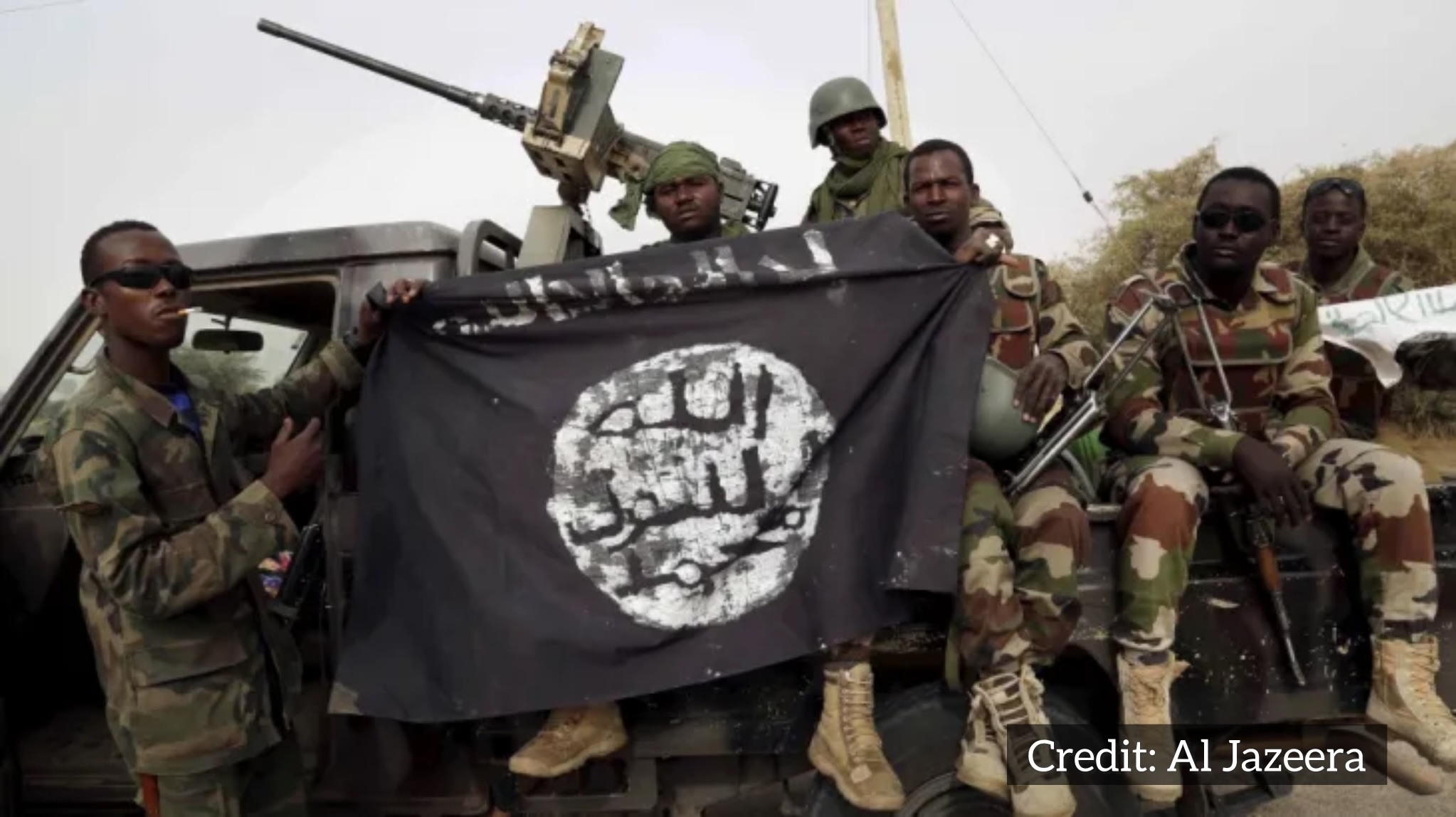
Boko Haram, originally formed in 2009 to oppose Western education and impose its radical interpretation of Islamic law, has waged a brutal insurgency that has claimed around 35,000 civilian lives and displaced over 2 million people, according to United Nations estimates.
The group split in 2021 following the death of its long-time leader, Abubakar Shekau, forming two main factions:
- ISWAP (Islamic State West Africa Province) – known for targeting military installations.
- JAS (Jama’atu Ahlis Sunna Lidda’awat wal-Jihad) – increasingly focused on civilian populations.
Darul Jamal had only recently seen the return of displaced residents, with resettlement efforts led by the Borno State government as part of its broader strategy to restore normalcy to the region. Many of those resettled in July had been forced to flee their homes a decade ago during a surge in Boko Haram activity.
Kaana Ali, a resident of the attacked community, expressed grief and uncertainty:
“I have lost close family friends in this attack. Although the governor is urging us to remain, I fear for my safety.”
The attack highlights the fragile security situation in northeastern Nigeria, where both Boko Haram factions continue to threaten civilian lives despite years of military operations. Authorities have pledged to strengthen local defenses and prevent further displacement, but community trust remains shaken.
Boko Haram’s insurgency has spilled beyond Nigeria’s borders, affecting neighboring countries including Niger, Chad, and Cameroon. As the conflict evolves, the international community continues to call for enhanced regional cooperation, improved intelligence sharing, and support for humanitarian relief efforts to assist affected populations.